Zheng Xiao, Zhang Xiaorong, Wang Yingting, Liu Yangxi, Pan Yining, Li Yijia, Ji Man, Zhao Xueqin, Huang Shengbin, Yao Qingqing
Institute of Advanced Materials for Nano-Bio Applications, School of Ophthalmology & Optometry, Eye Hospital, Wenzhou Medical University, 270 Xueyuan Xi Road, Wenzhou, Zhejiang, 325027, PR China.
Department of Endodontics, School and Hospital of Stomatology, Wenzhou Medical University, Wenzhou, PR China.
Bioact Mater. 2021 Mar 21;6(10):3485-3495. doi: 10.1016/j.bioactmat.2021.03.011. eCollection 2021 Oct.
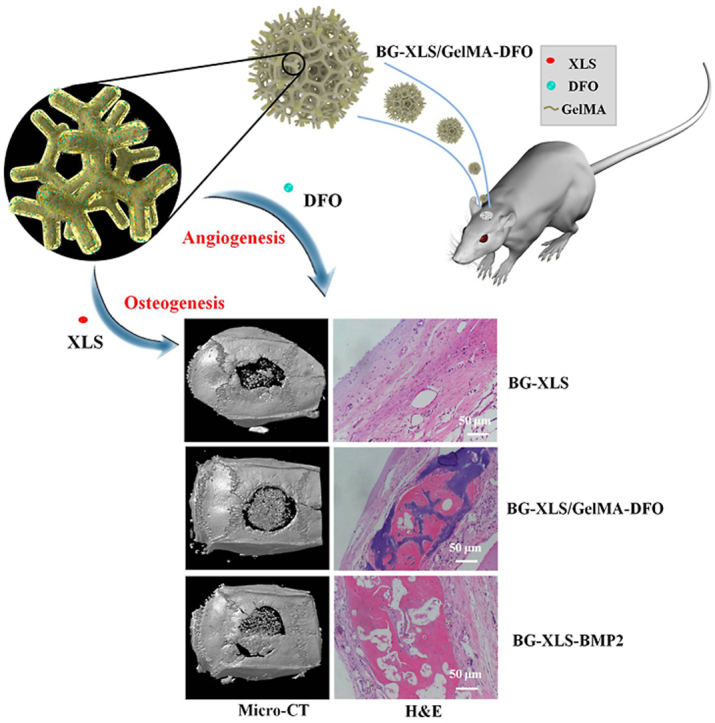
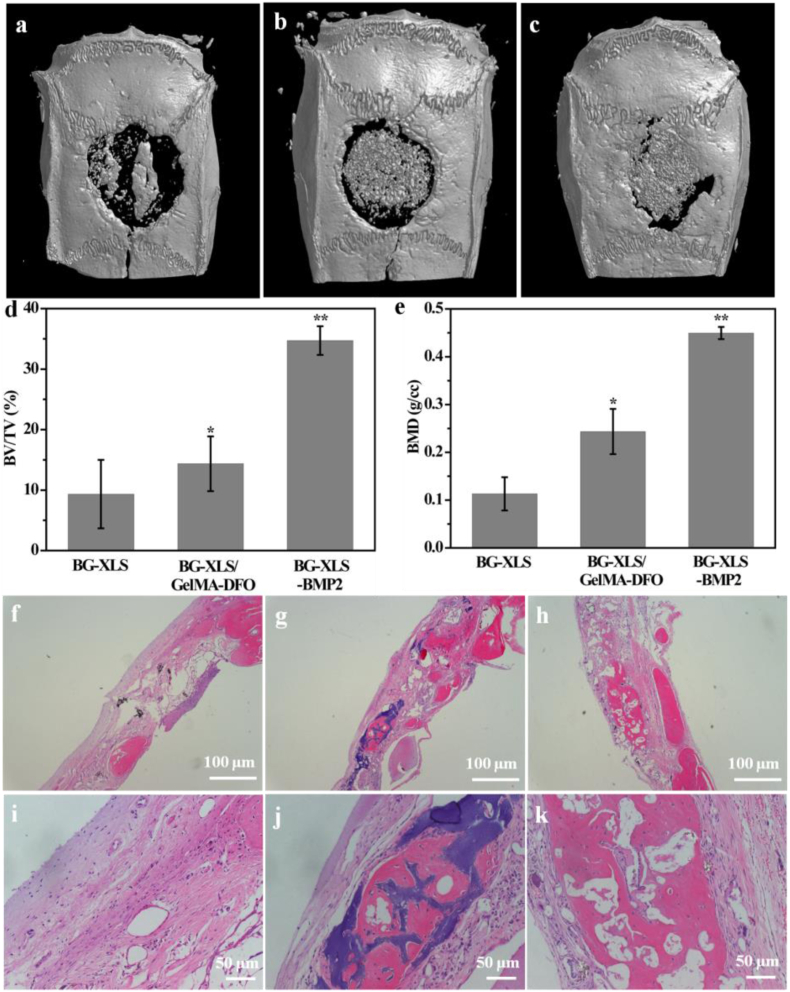
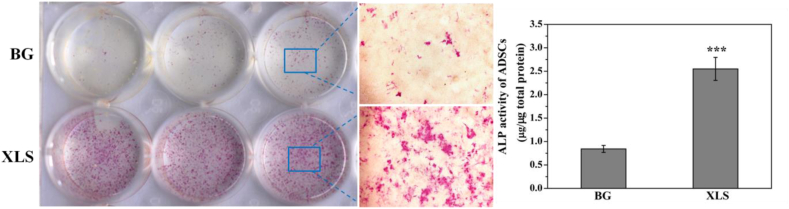
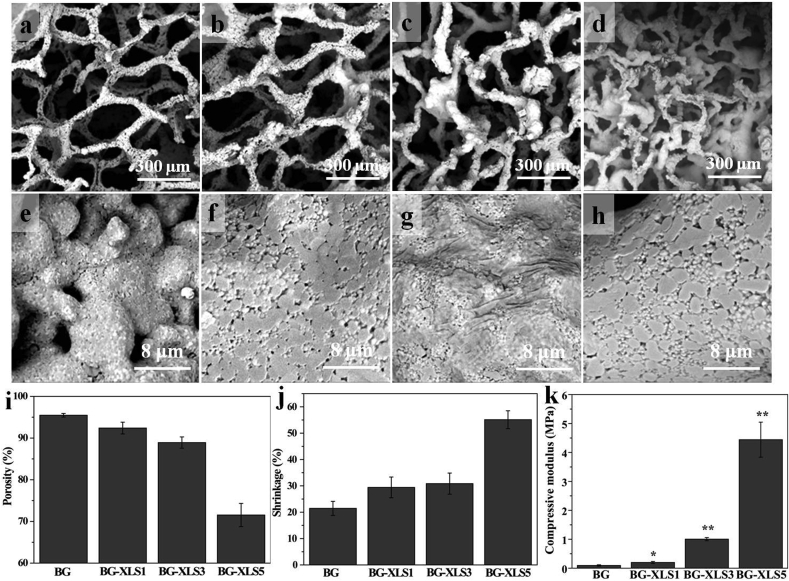
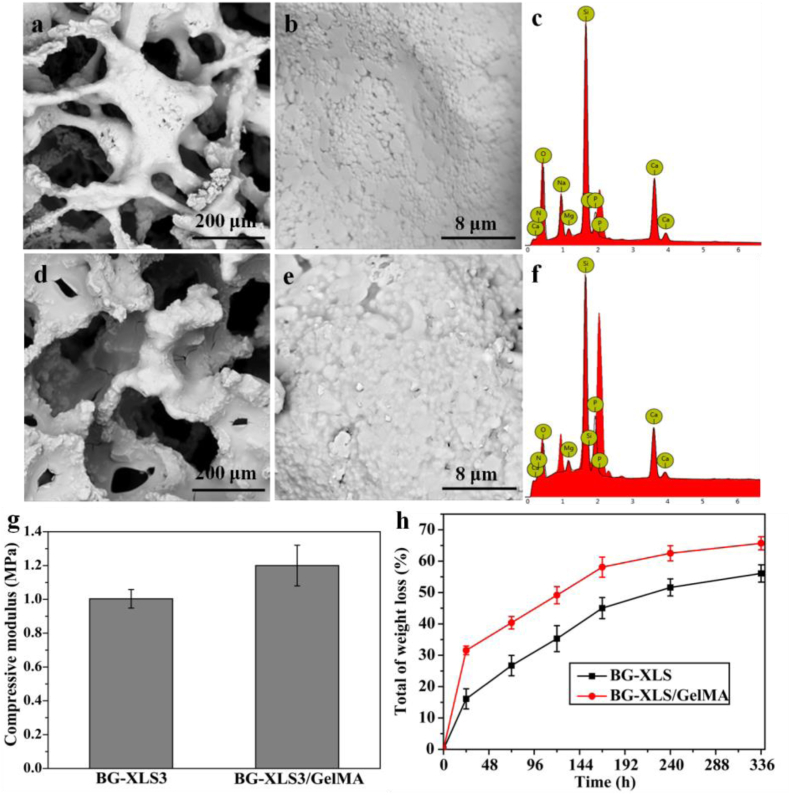
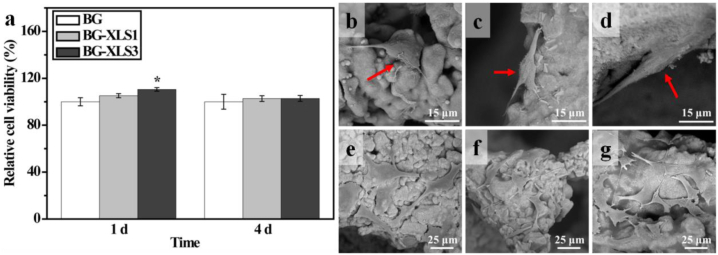
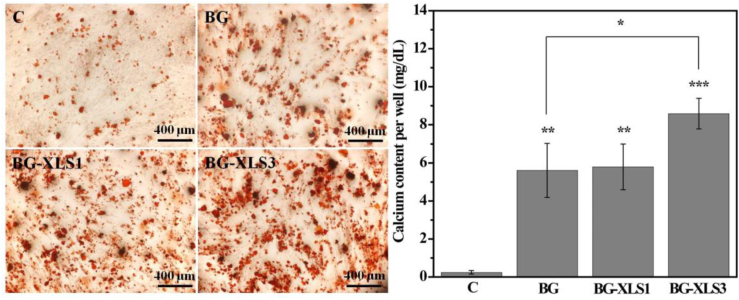
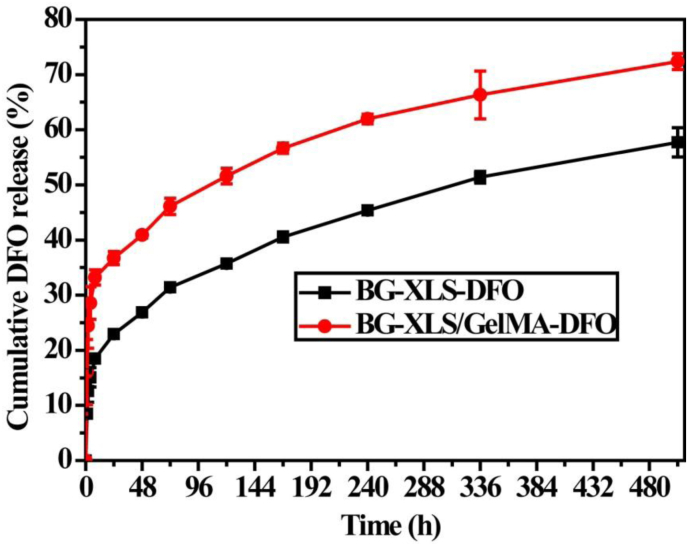
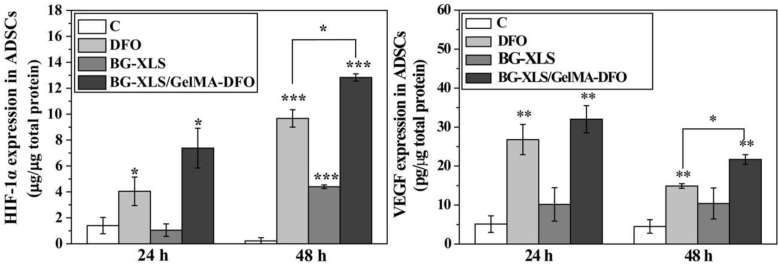
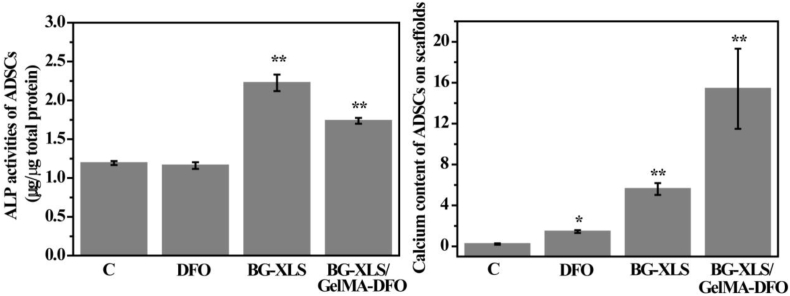
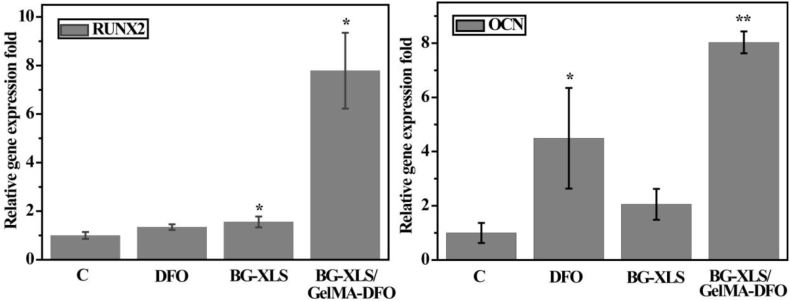
Large bone defect repair requires biomaterials that promote angiogenesis and osteogenesis. In present work, a nanoclay (Laponite, XLS)-functionalized 3D bioglass (BG) scaffold with hypoxia mimicking property was prepared by foam replication coupled with UV photopolymerization methods. Our data revealed that the incorporation of XLS can significantly promote the mechanical property of the scaffold and the osteogenic differentiation of human adipose mesenchymal stem cells (ADSCs) compared to the properties of the neat BG scaffold. Desferoxamine, a hypoxia mimicking agent, encourages bone regeneration via activating hypoxia-inducible factor-1 alpha (HIF-1α)-mediated angiogenesis. GelMA-DFO immobilization onto BG-XLS scaffold achieved sustained DFO release and inhibited DFO degradation. Furthermore, data demonstrated increased HIF-1α and vascular endothelial growth factor (VEGF) expressions on human adipose mesenchymal stem cells (ADSCs). Moreover, BG-XLS/GelMA-DFO scaffolds also significantly promoted the osteogenic differentiation of ADSCs. Most importantly, our data indicated BG-XLS/GelMA-DFO scaffolds strongly increased bone healing in a critical-sized mouse cranial bone defect model. Therefore, we developed a novel BG-XLS/GelMA-DFO scaffold which can not only induce the expression of VEGF, but also promote osteogenic differentiation of ADSCs to promote endogenous bone regeneration.
大骨缺损修复需要能促进血管生成和成骨的生物材料。在本研究中,通过泡沫复制结合紫外光聚合方法制备了具有缺氧模拟特性的纳米黏土(锂皂石,XLS)功能化三维生物玻璃(BG)支架。我们的数据显示,与纯BG支架相比,加入XLS可显著提高支架的力学性能以及人脂肪间充质干细胞(ADSCs)的成骨分化能力。去铁胺是一种缺氧模拟剂,可通过激活缺氧诱导因子-1α(HIF-1α)介导的血管生成来促进骨再生。将甲基丙烯酰化明胶-去铁胺(GelMA-DFO)固定在BG-XLS支架上可实现DFO的持续释放并抑制DFO降解。此外,数据表明人脂肪间充质干细胞(ADSCs)上的HIF-1α和血管内皮生长因子(VEGF)表达增加。而且,BG-XLS/GelMA-DFO支架也显著促进了ADSCs的成骨分化。最重要的是,我们的数据表明BG-XLS/GelMA-DFO支架在临界尺寸的小鼠颅骨缺损模型中能显著增强骨愈合。因此,我们开发了一种新型的BG-XLS/GelMA-DFO支架,它不仅能诱导VEGF表达,还能促进ADSCs的成骨分化以促进内源性骨再生。