Erman Aysegul, Medeiros Mike
Toronto General Hospital Research Institute, University Health Network, Toronto, ON, Canada.
Toronto Health Economics and Technology Assessment Collaborative (THETA) Collaborative, University Health Network, University of Toronto, Toronto, ON, Canada.
Front Psychol. 2021 Mar 23;12:627669. doi: 10.3389/fpsyg.2021.627669. eCollection 2021.
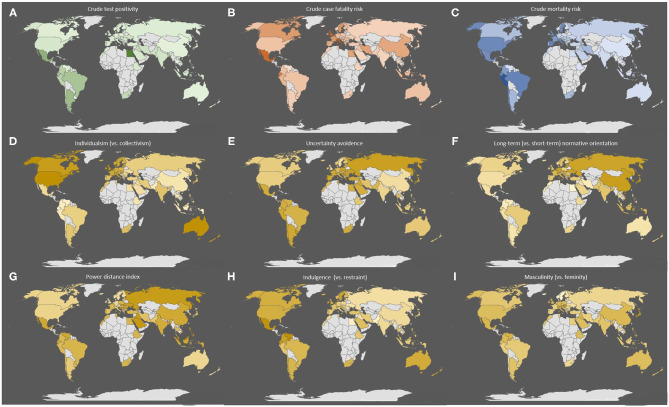
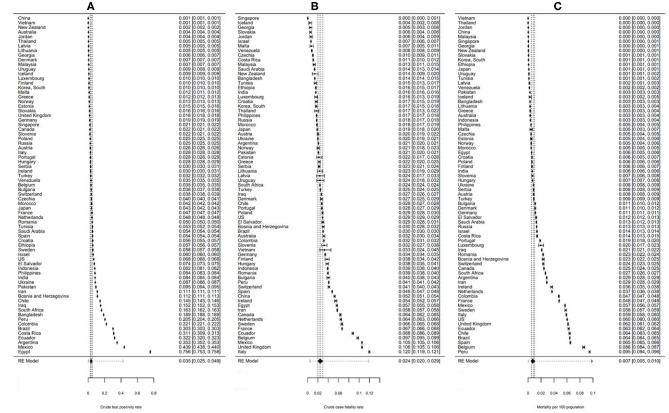
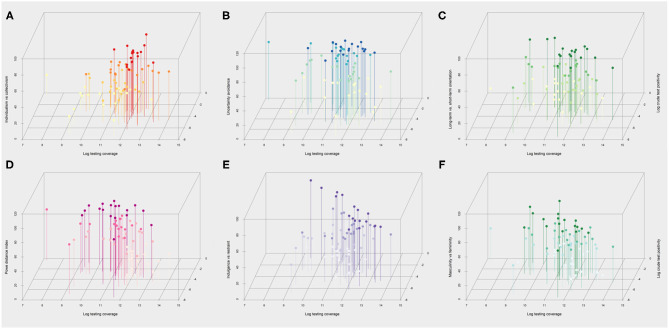
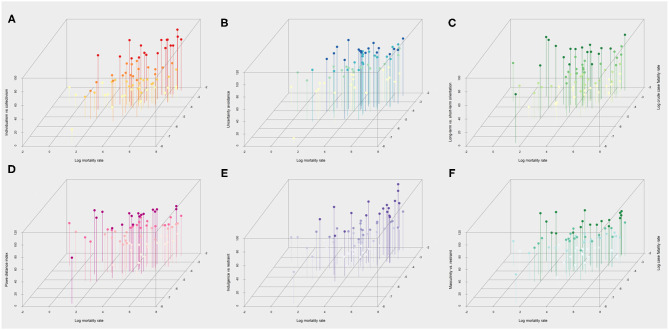
Infections and deaths associated with COVID-19 show a high degree of heterogeneity across different populations. A thorough understanding of population-level predictors of such outcomes is crucial for devising better-targeted and more appropriate public health preparedness measures. While demographic, economic, and health-system capacity have featured prominently in recent work, cultural, and behavioral characteristics have largely been overlooked. However, cultural differences shape both the public policy response and individuals' behavioral responses to the crisis in ways that can impact infection dynamics and key health outcomes. To address this gap, we used meta-analytic methods to explore the global variability of three public health outcomes (i.e., crude test positivity, case/infection fatality, and mortality risk) during the first wave of the pandemic. This set of analyses identified several cultural/behavioral attributes (e.g., uncertainty avoidance and long-term vs. short-term normative orientation) as independent predictors of public health outcomes after adjusting for key demographic, political, economic, and health-system-related predictors; which were robust in sensitivity analyses. In conclusion, this study clearly demonstrates that cultural attributes do in fact account for some of the global disparities in COVID-19-attributed health outcomes. As a consequence, policymakers should more explicitly consider a society's cultural attributes alongside other important parameters such as demographic characteristics and health system constraints in order to develop better tailored and more effective policy responses.
与新冠病毒相关的感染和死亡在不同人群中表现出高度的异质性。深入了解此类结果在人群层面的预测因素对于制定更具针对性和更合适的公共卫生防范措施至关重要。虽然人口统计学、经济和卫生系统能力在近期研究中占据显著地位,但文化和行为特征在很大程度上被忽视了。然而,文化差异以可能影响感染动态和关键健康结果的方式塑造了公共政策反应以及个人对危机的行为反应。为了填补这一空白,我们使用荟萃分析方法来探究疫情第一波期间三种公共卫生结果(即粗检测阳性率、病例/感染死亡率和死亡风险)的全球变异性。这一系列分析确定了几种文化/行为属性(如不确定性规避以及长期与短期规范取向),在对关键人口统计学、政治、经济和卫生系统相关预测因素进行调整后,这些属性可作为公共卫生结果的独立预测因素;在敏感性分析中这些结果很稳健。总之,本研究清楚地表明,文化属性实际上确实导致了新冠病毒相关健康结果中的一些全球差异。因此,政策制定者在制定更具针对性和更有效的政策反应时,应更明确地将一个社会的文化属性与其他重要参数(如人口特征和卫生系统限制)一并考虑。