MRC Centre for Global Infectious Disease Analysis and the Department of Infectious Disease Epidemiology, Imperial College London, London, UK.
Department of Statistics, University of Oxford, Oxford, UK.
Nat Commun. 2021 Apr 12;12(1):2188. doi: 10.1038/s41467-021-22366-y.
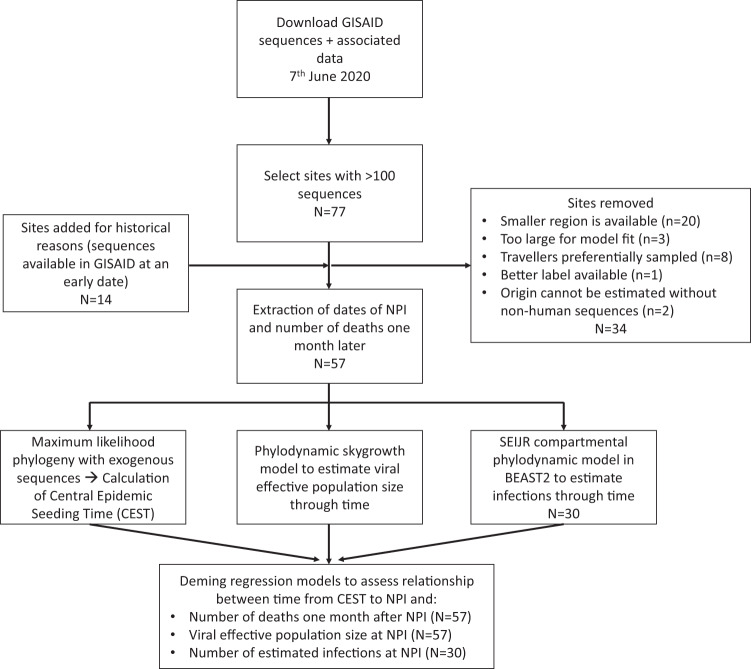
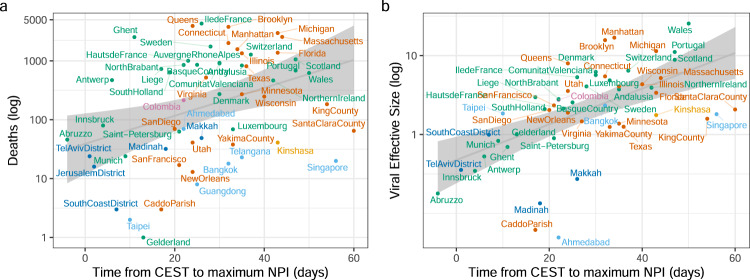
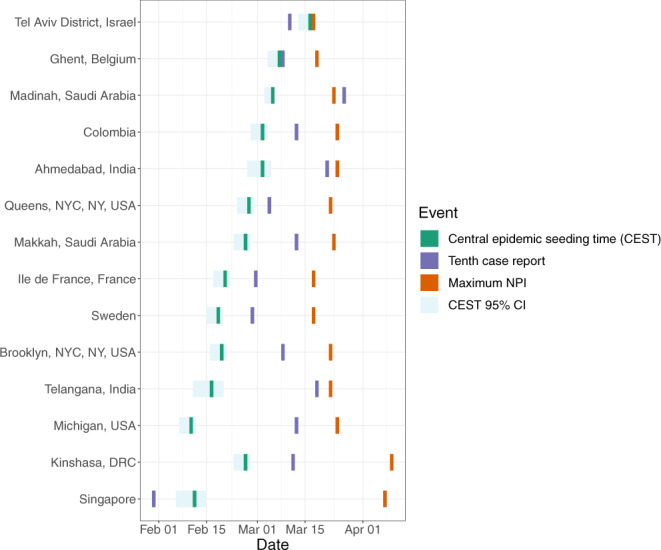
Unprecedented public health interventions including travel restrictions and national lockdowns have been implemented to stem the COVID-19 epidemic, but the effectiveness of non-pharmaceutical interventions is still debated. We carried out a phylogenetic analysis of more than 29,000 publicly available whole genome SARS-CoV-2 sequences from 57 locations to estimate the time that the epidemic originated in different places. These estimates were examined in relation to the dates of the most stringent interventions in each location as well as to the number of cumulative COVID-19 deaths and phylodynamic estimates of epidemic size. Here we report that the time elapsed between epidemic origin and maximum intervention is associated with different measures of epidemic severity and explains 11% of the variance in reported deaths one month after the most stringent intervention. Locations where strong non-pharmaceutical interventions were implemented earlier experienced much less severe COVID-19 morbidity and mortality during the period of study.
为了遏制 COVID-19 疫情,已实施了前所未有的公共卫生干预措施,包括旅行限制和全国封锁,但非药物干预措施的效果仍存在争议。我们对来自 57 个地点的超过 29000 个公开的 SARS-CoV-2 全基因组序列进行了系统发育分析,以估计疫情在不同地点的起源时间。这些估计与每个地点最严格干预措施的日期以及累积 COVID-19 死亡人数和流行病规模的系统发育估计值有关。在这里,我们报告说,从疫情起源到最大干预之间的时间间隔与不同的疫情严重程度指标相关,并且可以解释在实施最严格干预措施一个月后报告的死亡人数的 11%的差异。在较早实施强有力的非药物干预措施的地方,在研究期间 COVID-19 的发病率和死亡率要低得多。