Department of Mechanical and Energy Engineering, Southern University of Science and Technology, Shenzhen, 518055, China.
Sci Rep. 2021 Apr 12;11(1):7907. doi: 10.1038/s41598-021-87010-7.
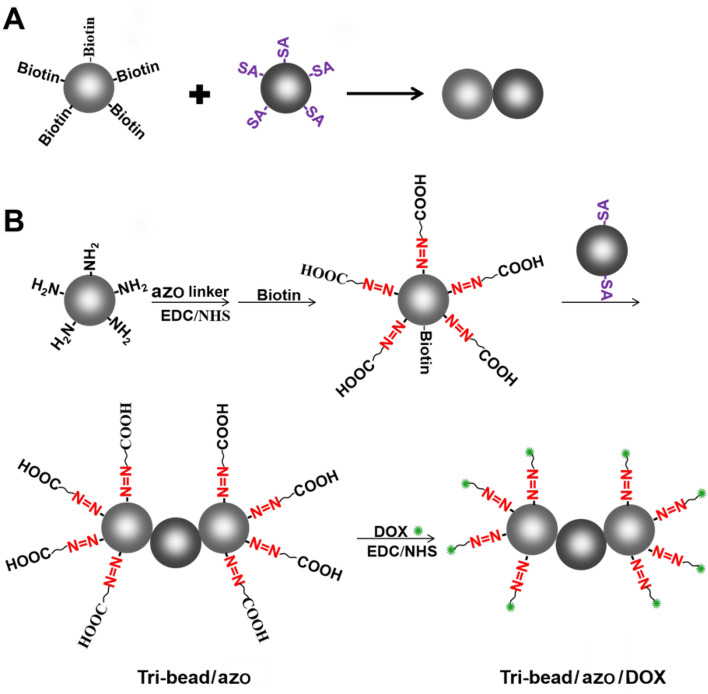
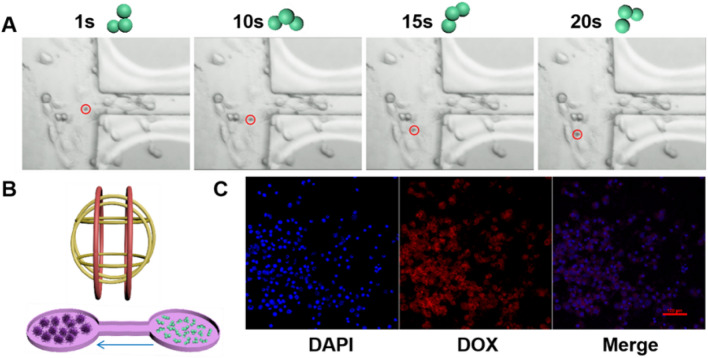
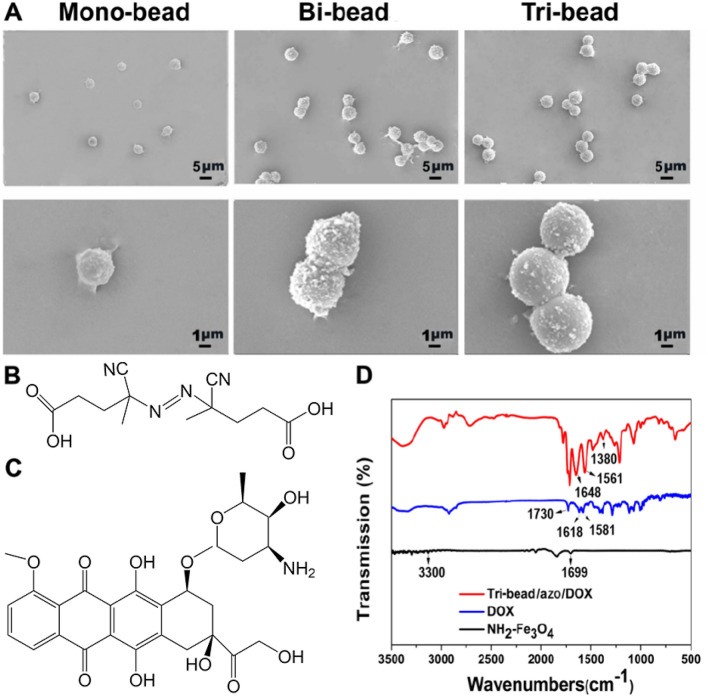
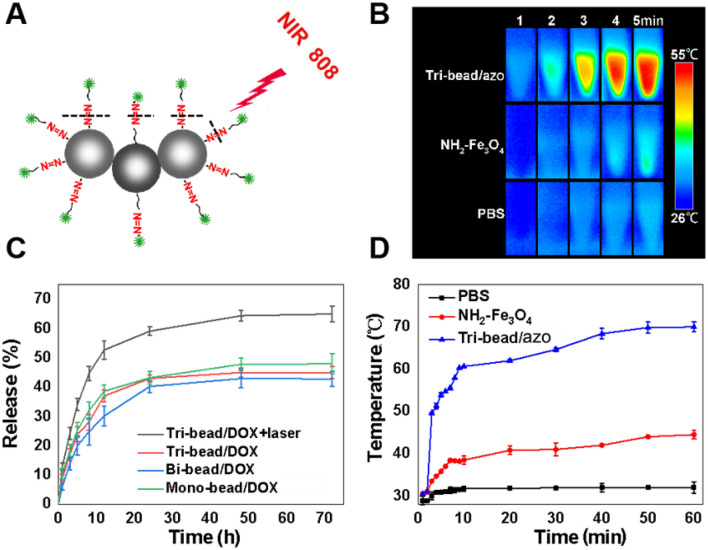
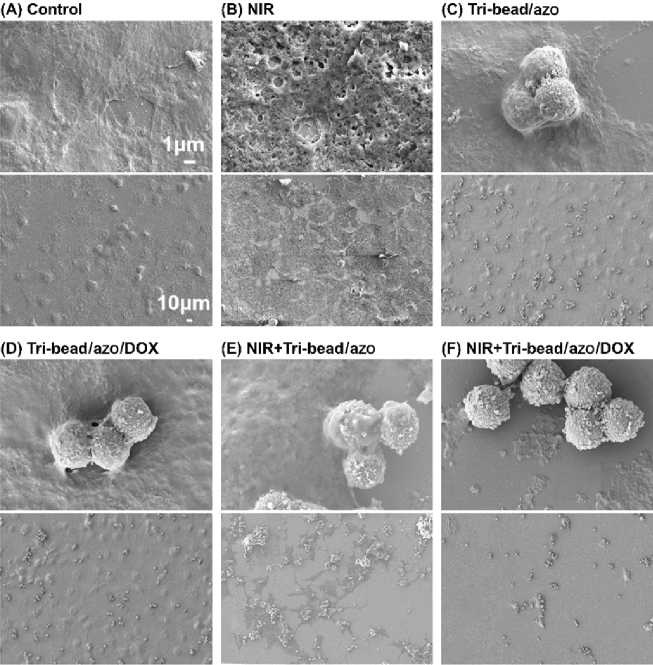
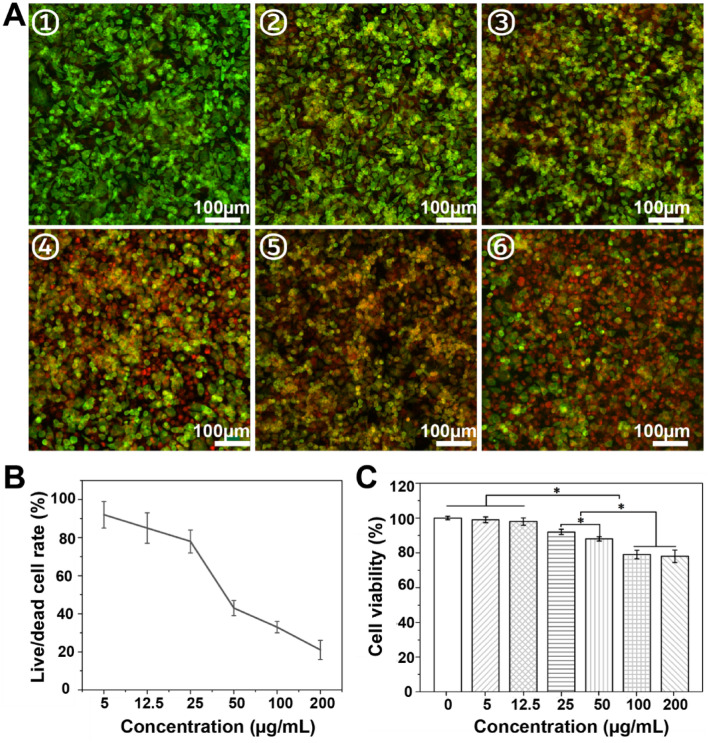
Magnetic micro/nanorobots attracted much attention in biomedical fields because of their precise movement, manipulation, and targeting abilities. However, there is a lack of research on intelligent micro/nanorobots with stimuli-responsive drug delivery mechanisms for cancer therapy. To address this issue, we developed a type of strong covalently bound tri-bead drug delivery microrobots with NIR photothermal response azobenzene molecules attached to their carboxylic surface groups. The tri-bead microrobots are magnetic and showed good cytocompatibility even when their concentration is up to 200 µg/mL. In vitro photothermal experiments demonstrated fast NIR-responsive photothermal property; the microrobots were heated to 50 °C in 4 min, which triggered a significant increase in drug release. Motion control of the microrobots inside a microchannel demonstrated the feasibility of targeted therapy on tumor cells. Finally, experiments with lung cancer cells demonstrated the effectiveness of targeted chemo-photothermal therapy and were validated by cell viability assays. These results indicated that tri-bead microrobots have excellent potential for targeted chemo-photothermal therapy for lung cancer cell treatment.
磁性微/纳米机器人因其精确的运动、操控和靶向能力而在生物医学领域引起了广泛关注。然而,对于具有刺激响应性药物输送机制的智能微/纳米机器人用于癌症治疗的研究还很少。为了解决这个问题,我们开发了一种具有 NIR 光热响应偶氮苯分子的强共价键三珠药物输送微机器人,其偶氮苯分子连接到羧酸表面基团上。三珠微机器人具有磁性,即使浓度高达 200μg/mL 时也表现出良好的细胞相容性。体外光热实验表明其具有快速的 NIR 响应光热特性;微机器人在 4 分钟内被加热到 50°C,这引发了药物释放的显著增加。在微通道内对微机器人的运动控制证明了对肿瘤细胞进行靶向治疗的可行性。最后,用肺癌细胞进行的实验证明了靶向化学生物热疗的有效性,并通过细胞活力测定进行了验证。这些结果表明,三珠微机器人具有用于肺癌细胞治疗的靶向化学生物热疗的巨大潜力。