Regional Laboratory of Presidente Prudente, Adolfo Lutz Institute, Presidente Prudente, Brazil.
Regional Laboratory of Bauru, Adolfo Lutz Institute, Bauru, Brazil.
Front Cell Infect Microbiol. 2021 Apr 1;11:656984. doi: 10.3389/fcimb.2021.656984. eCollection 2021.
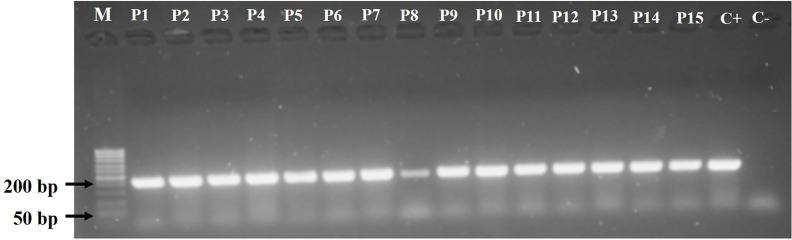
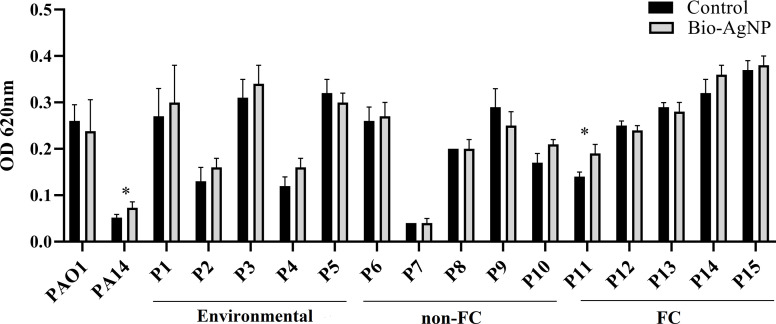
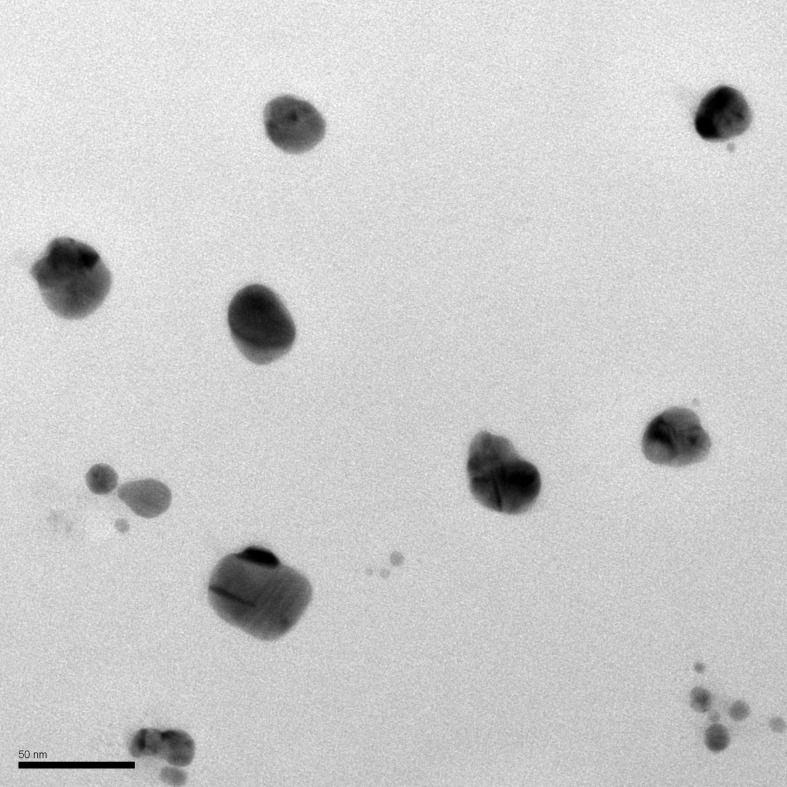
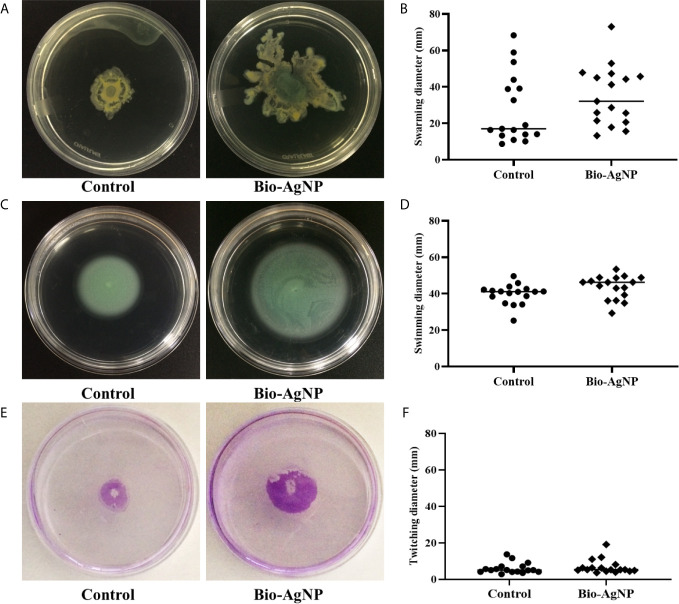
Biogenic silver nanoparticles (bio-AgNPs) are increasingly recognized as an antibiofilm and antivirulence strategy against , a bacterium that causes chronic infections in immunocompromised and cystic fibrosis patients. This study aimed to investigate the effects of subinhibitory concentrations of bio-AgNPs on motility and biofilm formation in . Bio-AgNPs were synthesized reduction of ionic silver catalyzed by cell-free culture filtrate from . A total of 17 isolates and strains were evaluated for swarming, swimming, and twitching motility in the presence and absence (control) of bio-AgNPs, including 10 clinical isolates from patients with and without cystic fibrosis, 5 environmental isolates obtained from the public water supply system, and 2 reference strains (PAO1 and PA14). Isolates were identified by biochemical and molecular methods. Minimum inhibitory concentrations (MICs) were determined by the broth microdilution method. Swarming, swimming, and twitching motility assays were performed in Petri dishes. Biofilm formation capacity was assessed quantitatively by the crystal violet method. MIC values ranged from 15.62 to 62.50 µM. The results showed that subinhibitory concentrations of bio-AgNPs (½ MIC, 7.81-31.25 µM) significantly increased (p < 0.05) swarming, swimming, and twitching motility in 40.0, 40.0, and 46.7% of isolates, respectively. Subinhibitory bio-AgNP treatment enhanced (p < 0.05) biofilm formation capacity in PA14 and a cystic fibrosis isolate (P11). It is concluded that subinhibitory concentrations of bio-AgNPs increased biofilm formation and swarming, swimming, and twitching motility in PA14 and some isolates. These virulence factors are directly involved with quorum-sensing systems. Further research should investigate the effects of AgNPs on quorum sensing to help elucidate their mechanism of action at subinhibitory concentrations.
生物成因银纳米粒子(bio-AgNPs)越来越被认为是一种针对 的抗生物膜和抗病毒策略, 是一种在免疫功能低下和囊性纤维化患者中引起慢性感染的细菌。本研究旨在研究亚抑制浓度的 bio-AgNPs 对 的运动性和生物膜形成的影响。bio-AgNPs 是通过无细胞培养滤液中离子银的还原合成的。共有 17 株分离株和菌株在存在和不存在(对照)bio-AgNPs 的情况下评估了它们的群集、游泳和抽搐运动性,包括来自囊性纤维化患者和无囊性纤维化患者的 10 株临床分离株、从公共供水系统获得的 5 株环境分离株和 2 株参考菌株(PAO1 和 PA14)。分离株通过生化和分子方法鉴定。最小抑菌浓度(MIC)通过肉汤微量稀释法确定。群集、游泳和抽搐运动性测定在培养皿中进行。生物膜形成能力通过结晶紫法进行定量评估。MIC 值范围为 15.62 至 62.50 µM。结果表明,亚抑制浓度的 bio-AgNPs(½ MIC,7.81-31.25 µM)分别显著增加了 40.0、40.0 和 46.7%的分离株的群集、游泳和抽搐运动性(p < 0.05)。亚抑制浓度的 bio-AgNP 处理增强了 PA14 和囊性纤维化分离株(P11)的生物膜形成能力(p < 0.05)。因此,亚抑制浓度的 bio-AgNPs 增加了 PA14 和一些 分离株的生物膜形成和群集、游泳和抽搐运动性。这些毒力因子直接参与群体感应系统。进一步的研究应该调查 AgNPs 对 的群体感应的影响,以帮助阐明它们在亚抑制浓度下的作用机制。