Infinity, Université Toulouse, CNRS, INSERM, UPS, Toulouse, France.
Viral Pathogenesis Unit, Department of Virology, INSERM U1108, Institut Pasteur, Paris, France.
PLoS Pathog. 2021 Apr 19;17(4):e1009526. doi: 10.1371/journal.ppat.1009526. eCollection 2021 Apr.
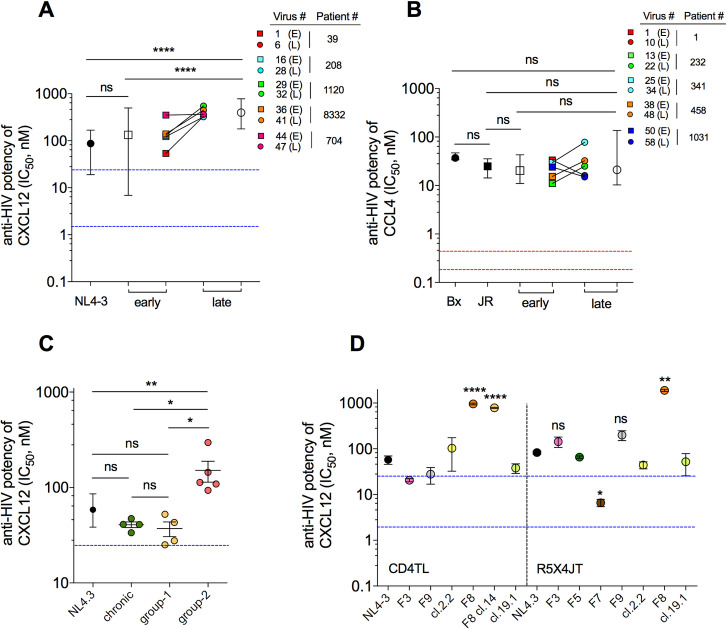
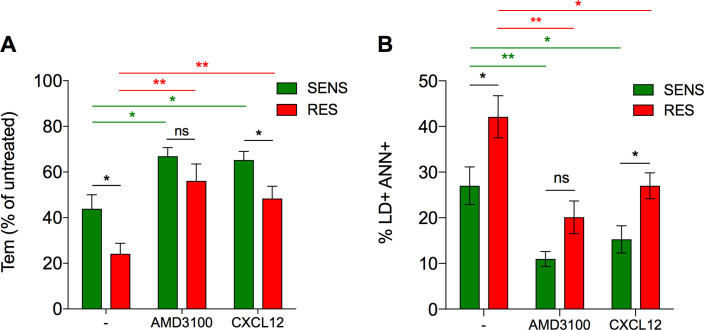
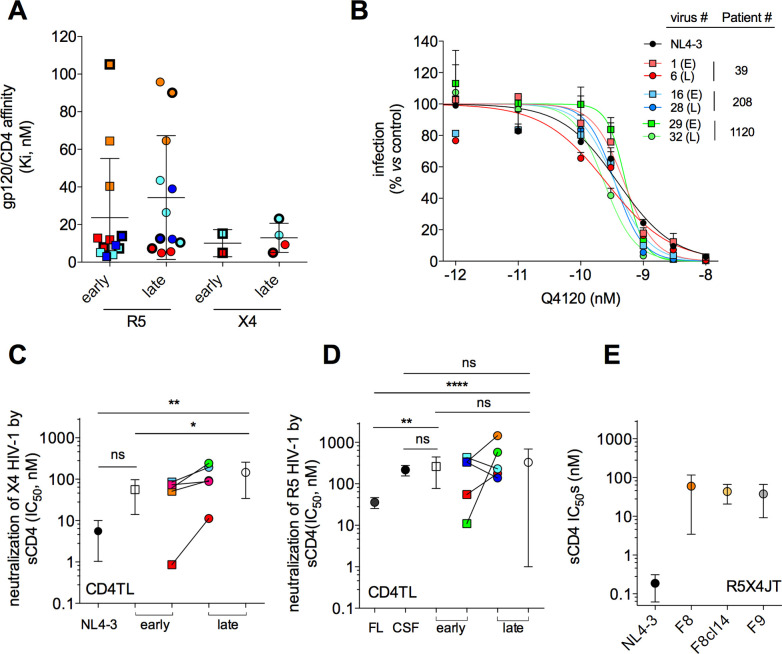
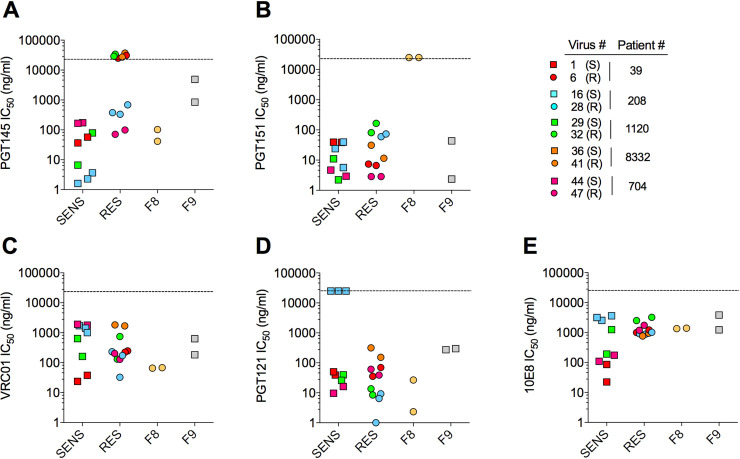
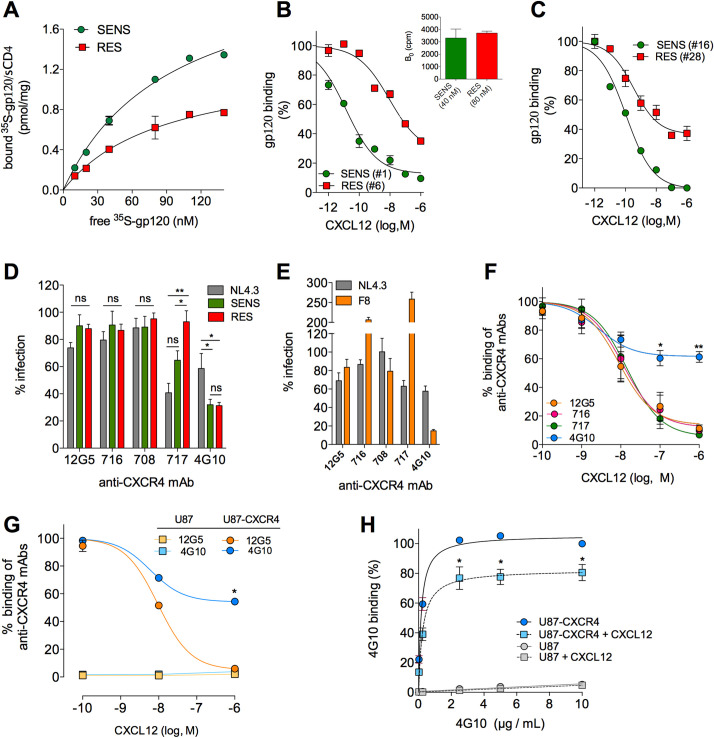
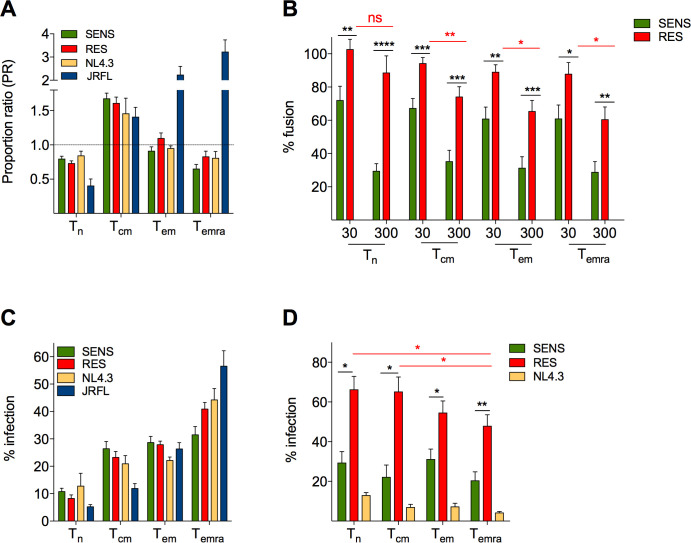
HIV-1 infects CD4 T lymphocytes (CD4TL) through binding the chemokine receptors CCR5 or CXCR4. CXCR4-using viruses are considered more pathogenic, linked to accelerated depletion of CD4TL and progression to AIDS. However, counterexamples to this paradigm are common, suggesting heterogeneity in the virulence of CXCR4-using viruses. Here, we investigated the role of the CXCR4 chemokine CXCL12 as a driving force behind virus virulence. In vitro, CXCL12 prevents HIV-1 from binding CXCR4 and entering CD4TL, but its role in HIV-1 transmission and propagation remains speculative. Through analysis of thirty envelope glycoproteins (Envs) from patients at different stages of infection, mostly treatment-naïve, we first interrogated whether sensitivity of viruses to inhibition by CXCL12 varies over time in infection. Results show that Envs resistant (RES) to CXCL12 are frequent in patients experiencing low CD4TL levels, most often late in infection, only rarely at the time of primary infection. Sensitivity assays to soluble CD4 or broadly neutralizing antibodies further showed that RES Envs adopt a more closed conformation with distinct antigenicity, compared to CXCL12-sensitive (SENS) Envs. At the level of the host cell, our results suggest that resistance is not due to improved fusion or binding to CD4, but owes to viruses using particular CXCR4 molecules weakly accessible to CXCL12. We finally asked whether the low CD4TL levels in patients are related to increased pathogenicity of RES viruses. Resistance actually provides viruses with an enhanced capacity to enter naive CD4TL when surrounded by CXCL12, which mirrors their situation in lymphoid organs, and to deplete bystander activated effector memory cells. Therefore, RES viruses seem more likely to deregulate CD4TL homeostasis. This work improves our understanding of the pathophysiology and the transmission of HIV-1 and suggests that RES viruses' receptors could represent new therapeutic targets to help prevent CD4TL depletion in HIV+ patients on cART.
HIV-1 通过结合趋化因子受体 CCR5 或 CXCR4 感染 CD4 T 淋巴细胞(CD4TL)。使用 CXCR4 的病毒被认为更具致病性,与 CD4TL 的快速消耗和艾滋病的进展有关。然而,这种模式的反例很常见,表明使用 CXCR4 的病毒的毒力存在异质性。在这里,我们研究了趋化因子 CXCL12 作为病毒毒力的驱动力在其中的作用。在体外,CXCL12 可防止 HIV-1 结合 CXCR4 并进入 CD4TL,但它在 HIV-1 传播和繁殖中的作用仍在推测之中。通过分析 30 名处于不同感染阶段的患者(主要是未经治疗)的包膜糖蛋白(Env),我们首先探讨了病毒对 CXCL12 抑制的敏感性是否在感染过程中随时间而变化。结果表明,对 CXCL12 有抗性(RES)的 Env 在 CD4TL 水平较低的患者中很常见,通常是在感染后期,而在初次感染时很少见。对可溶性 CD4 或广谱中和抗体的敏感性检测进一步表明,与 CXCL12 敏感(SENS)的 Env 相比,RES Env 采用了更封闭的构象,具有不同的抗原性。在宿主细胞水平上,我们的结果表明,这种抗性不是由于融合或与 CD4 的结合改善所致,而是由于病毒使用特定的 CXCR4 分子,这些分子对 CXCL12 的可及性较弱。最后,我们询问患者中 CD4TL 水平较低是否与 RES 病毒的致病性增加有关。实际上,当周围存在 CXCL12 时,RES 病毒的抗性为其提供了进入未感染的 CD4TL 的能力增强,这与它们在淋巴器官中的情况相似,并且可以耗尽旁观者激活的效应记忆细胞。因此,RES 病毒似乎更容易扰乱 CD4TL 的动态平衡。这项工作提高了我们对 HIV-1 的发病机制和传播的理解,并表明 RES 病毒的受体可能代表新的治疗靶点,有助于防止接受 cART 的 HIV+患者的 CD4TL 消耗。