Department of Cardiology, Cardiovascular Research Institute Maastricht, Faculty of Health, Medicine, and Life Sciences, Maastricht University, PO Box 616, 6200 MD Maastricht, The Netherlands.
Department of Medicine, Montreal Heart Institute and Université de Montréal, Montreal, Canada.
Cardiovasc Res. 2021 Jun 16;117(7):1682-1699. doi: 10.1093/cvr/cvab138.
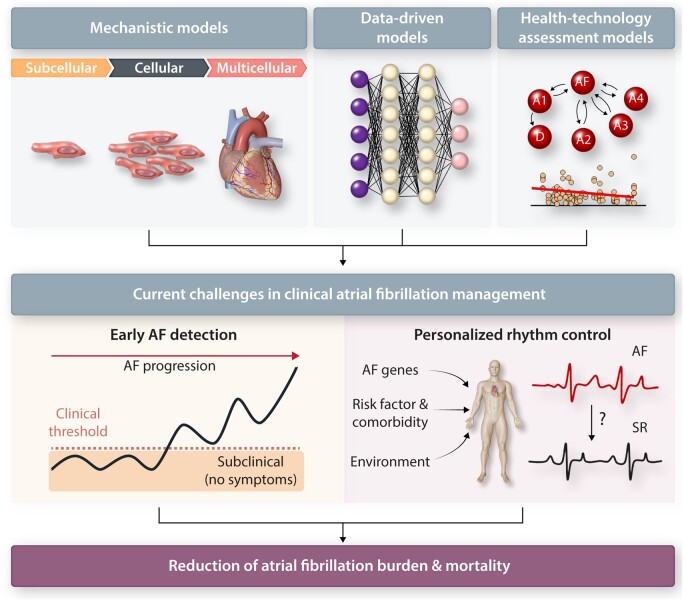
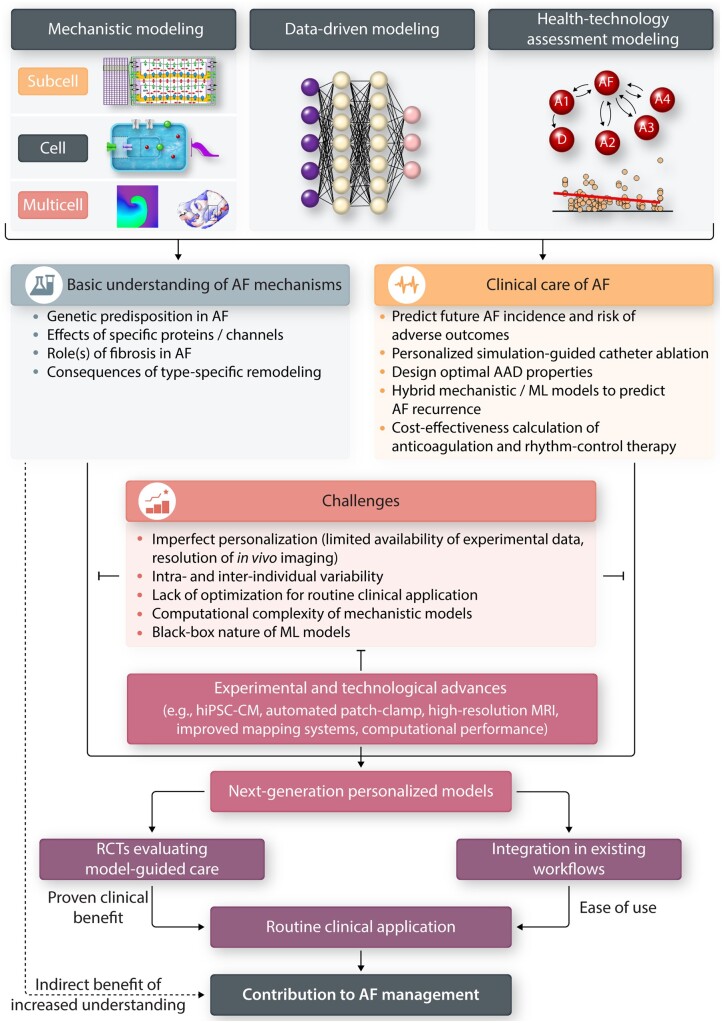
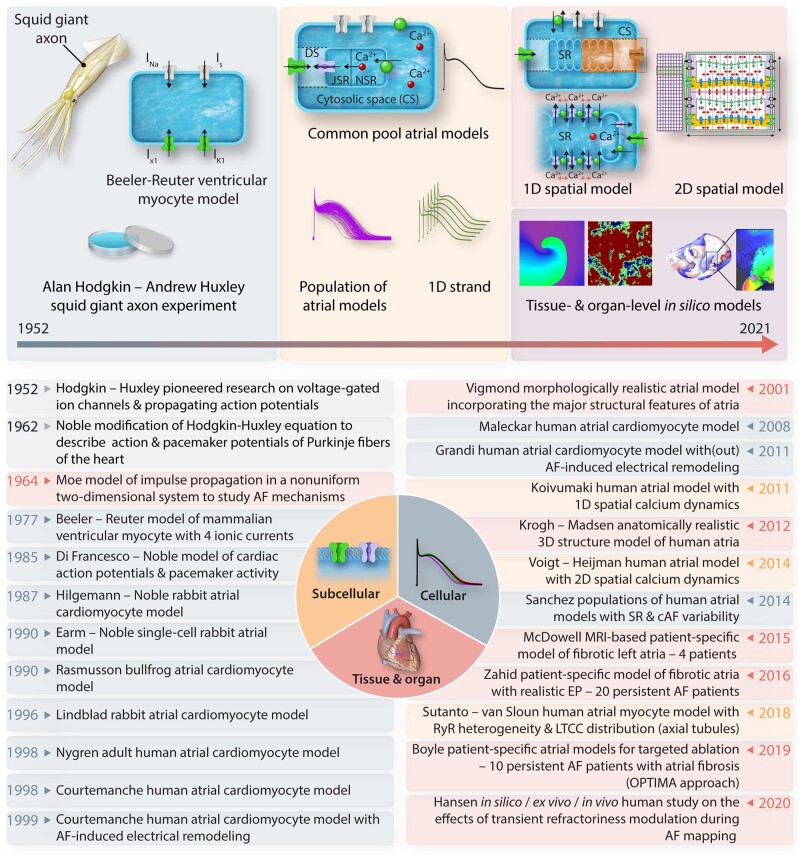
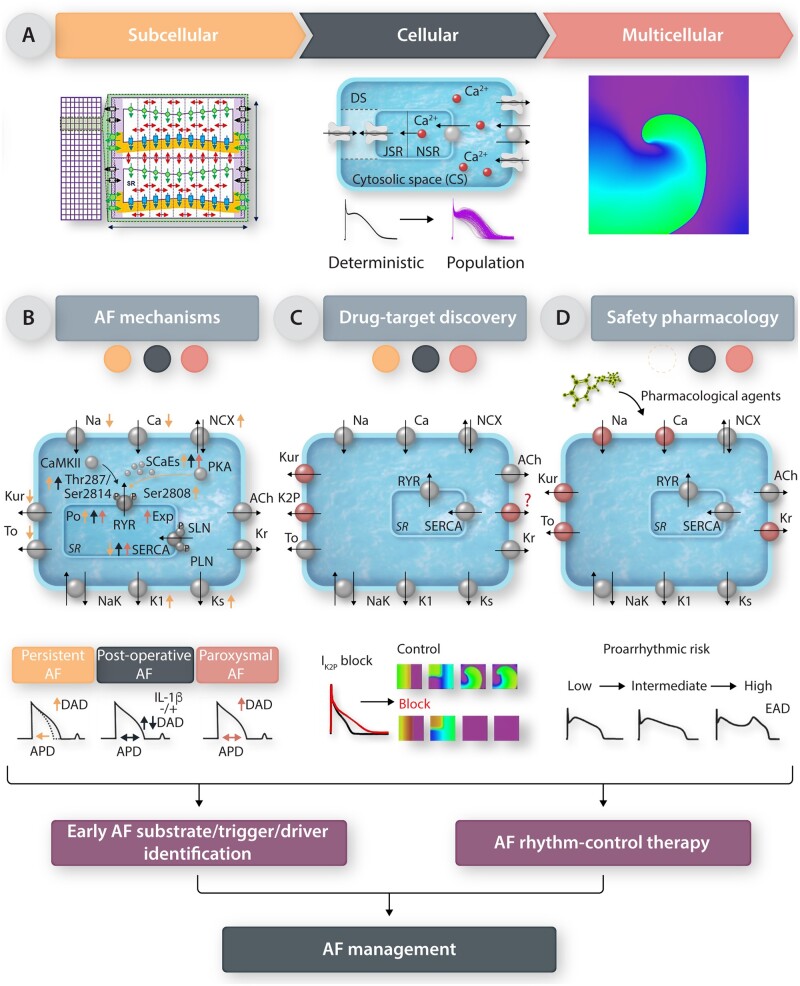
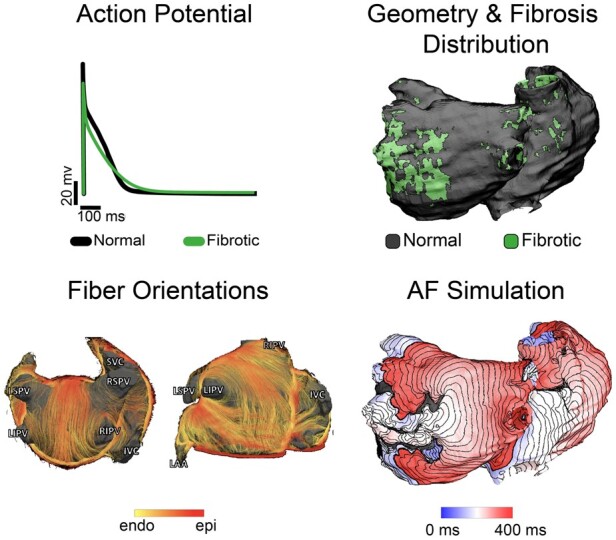
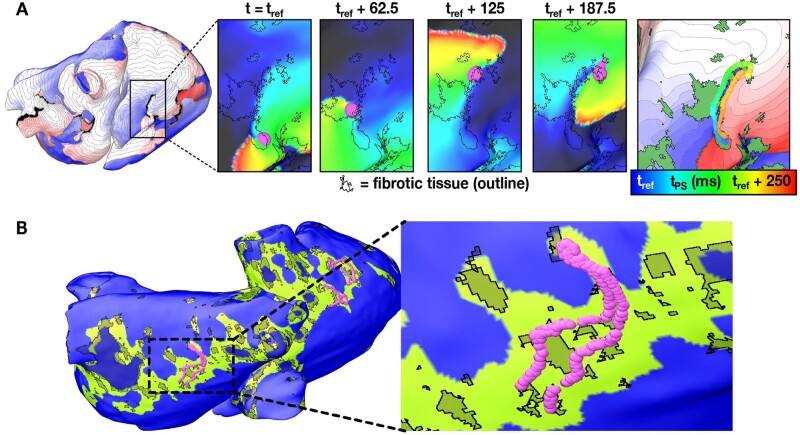
Despite significant advances in its detection, understanding and management, atrial fibrillation (AF) remains a highly prevalent cardiac arrhythmia with a major impact on morbidity and mortality of millions of patients. AF results from complex, dynamic interactions between risk factors and comorbidities that induce diverse atrial remodelling processes. Atrial remodelling increases AF vulnerability and persistence, while promoting disease progression. The variability in presentation and wide range of mechanisms involved in initiation, maintenance and progression of AF, as well as its associated adverse outcomes, make the early identification of causal factors modifiable with therapeutic interventions challenging, likely contributing to suboptimal efficacy of current AF management. Computational modelling facilitates the multilevel integration of multiple datasets and offers new opportunities for mechanistic understanding, risk prediction and personalized therapy. Mathematical simulations of cardiac electrophysiology have been around for 60 years and are being increasingly used to improve our understanding of AF mechanisms and guide AF therapy. This narrative review focuses on the emerging and future applications of computational modelling in AF management. We summarize clinical challenges that may benefit from computational modelling, provide an overview of the different in silico approaches that are available together with their notable achievements, and discuss the major limitations that hinder the routine clinical application of these approaches. Finally, future perspectives are addressed. With the rapid progress in electronic technologies including computing, clinical applications of computational modelling are advancing rapidly. We expect that their application will progressively increase in prominence, especially if their added value can be demonstrated in clinical trials.
尽管在检测、理解和管理方面取得了重大进展,但心房颤动 (AF) 仍然是一种高发的心律失常,对数百万患者的发病率和死亡率有重大影响。AF 是由风险因素和合并症之间复杂的、动态的相互作用引起的,这些因素会导致不同的心房重构过程。心房重构增加了 AF 的脆弱性和持续性,同时促进了疾病的进展。AF 的表现变异性很大,涉及的机制也很广泛,包括其起始、维持和进展,以及与之相关的不良后果,这使得早期确定可通过治疗干预改变的因果因素具有挑战性,可能导致 AF 管理的效果不理想。计算建模促进了多个数据集的多层次整合,并为机制理解、风险预测和个性化治疗提供了新的机会。心脏电生理学的数学模拟已经存在了 60 年,并且越来越多地被用于提高我们对 AF 机制的理解并指导 AF 治疗。本叙述性综述重点介绍了计算建模在 AF 管理中的新兴和未来应用。我们总结了可能受益于计算建模的临床挑战,概述了可用的不同计算方法及其显著成就,并讨论了阻碍这些方法常规临床应用的主要限制。最后,讨论了未来的展望。随着电子技术(包括计算)的快速进步,计算建模的临床应用正在迅速发展。我们预计,如果在临床试验中能够证明其附加值,它们的应用将越来越受到重视。