• 文献检索
  • 文档翻译
  • 深度研究
  • 学术资讯
  • Suppr Zotero 插件Zotero 插件
  • 邀请有礼
  • 套餐&价格
  • 历史记录
应用&插件
Suppr Zotero 插件Zotero 插件浏览器插件Mac 客户端Windows 客户端微信小程序
定价
高级版会员购买积分包购买API积分包
服务
文献检索文档翻译深度研究API 文档MCP 服务
关于我们
关于 Suppr公司介绍联系我们用户协议隐私条款
关注我们

Suppr 超能文献

核心技术专利:CN118964589B侵权必究
粤ICP备2023148730 号-1Suppr @ 2026

文献检索

告别复杂PubMed语法,用中文像聊天一样搜索,搜遍4000万医学文献。AI智能推荐,让科研检索更轻松。

立即免费搜索

文件翻译

保留排版,准确专业,支持PDF/Word/PPT等文件格式,支持 12+语言互译。

免费翻译文档

深度研究

AI帮你快速写综述,25分钟生成高质量综述,智能提取关键信息,辅助科研写作。

立即免费体验

使用机器学习预测心力衰竭患者的死亡率和住院率:一项系统文献综述。

Predicting mortality and hospitalization in heart failure using machine learning: A systematic literature review.

作者信息

Mpanya Dineo, Celik Turgay, Klug Eric, Ntsinjana Hopewell

机构信息

Division of Cardiology, Department of Internal Medicine, School of Clinical Medicine, Faculty of Health Sciences, University of the Witwatersrand, Johannesburg, South Africa.

Wits Institute of Data Science, University of the Witwatersrand, Johannesburg, South Africa.

出版信息

Int J Cardiol Heart Vasc. 2021 Apr 12;34:100773. doi: 10.1016/j.ijcha.2021.100773. eCollection 2021 Jun.

DOI:10.1016/j.ijcha.2021.100773
PMID:33912652
原文链接:https://pmc.ncbi.nlm.nih.gov/articles/PMC8065274/
Abstract

OBJECTIVE

The partnership between humans and machines can enhance clinical decisions accuracy, leading to improved patient outcomes. Despite this, the application of machine learning techniques in the healthcare sector, particularly in guiding heart failure patient management, remains unpopular. This systematic review aims to identify factors restricting the integration of machine learning derived risk scores into clinical practice when treating adults with acute and chronic heart failure.

METHODS

Four academic research databases and Google Scholar were searched to identify original research studies where heart failure patient data was used to build models predicting all-cause mortality, cardiac death, all-cause and heart failure-related hospitalization.

RESULTS

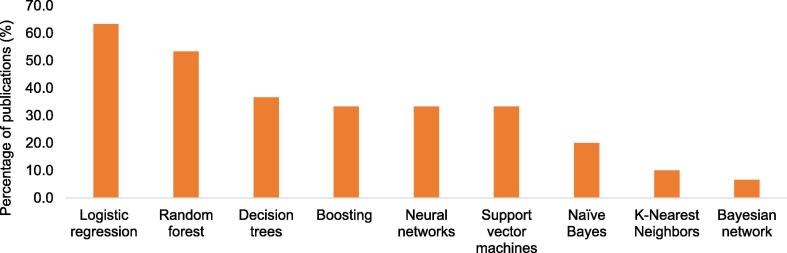
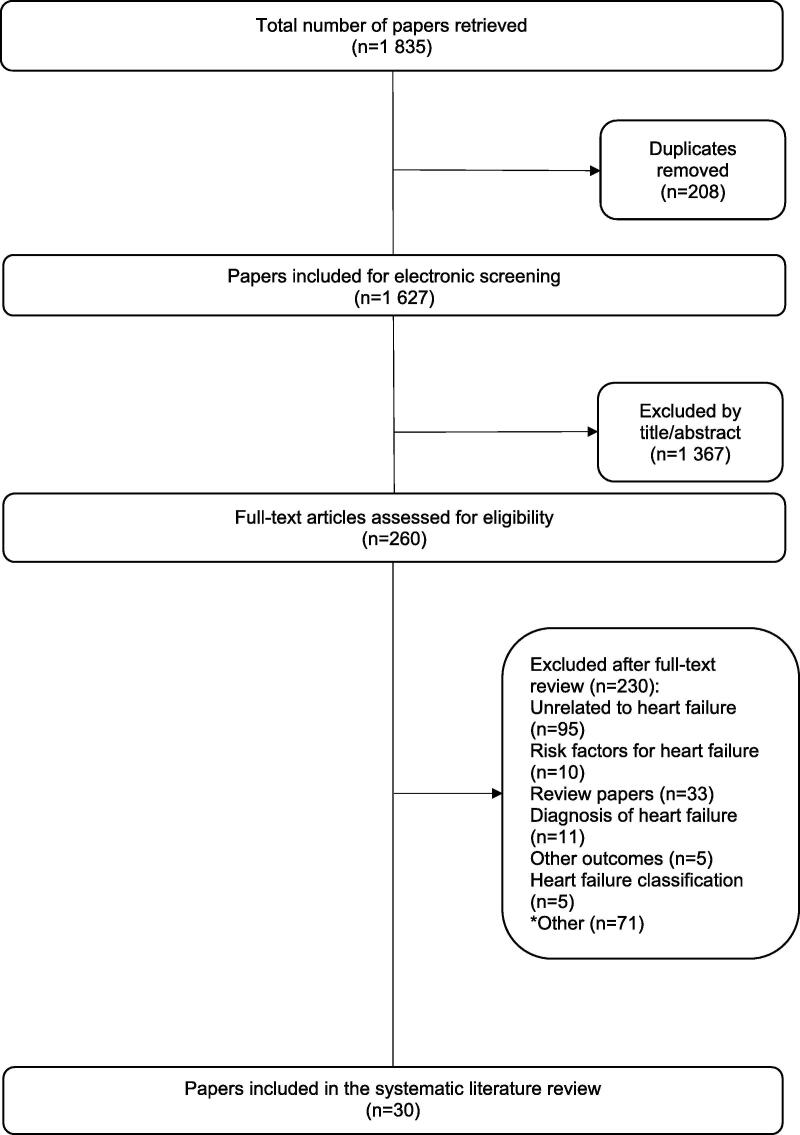
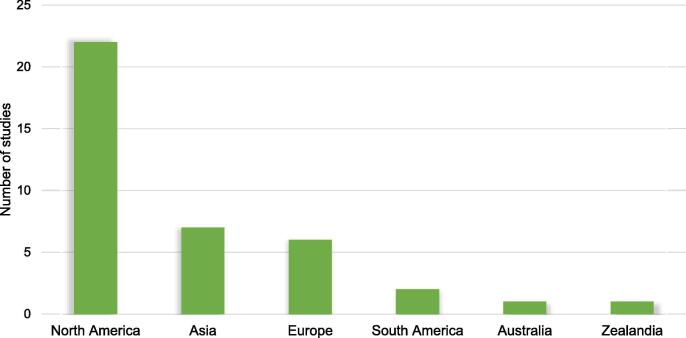
Thirty studies met the inclusion criteria. The selected studies' sample size ranged between 71 and 716 790 patients, and the median age was 72.1 (interquartile range: 61.1-76.8) years. The minimum and maximum area under the receiver operating characteristic curve (AUC) for models predicting mortality were 0.48 and 0.92, respectively. Models predicting hospitalization had an AUC of 0.47 to 0.84. Nineteen studies (63%) used logistic regression, 53% random forests, and 37% of studies used decision trees to build predictive models. None of the models were built or externally validated using data originating from Africa or the Middle-East.

CONCLUSIONS

The variation in the aetiologies of heart failure, limited access to structured health data, distrust in machine learning techniques among clinicians and the modest accuracy of existing predictive models are some of the factors precluding the widespread use of machine learning derived risk calculators.

摘要

目的

人机合作能够提高临床决策的准确性,从而改善患者的治疗效果。尽管如此,机器学习技术在医疗保健领域的应用,尤其是在指导心力衰竭患者管理方面,仍然不受欢迎。本系统评价旨在确定在治疗急慢性心力衰竭成人患者时,限制将机器学习得出的风险评分整合到临床实践中的因素。

方法

检索了四个学术研究数据库和谷歌学术,以确定使用心力衰竭患者数据建立预测全因死亡率、心源性死亡、全因及心力衰竭相关住院率模型的原始研究。

结果

30项研究符合纳入标准。所选研究的样本量在71至716790名患者之间,中位年龄为72.1岁(四分位间距:61.1 - 76.8岁)。预测死亡率模型的受试者工作特征曲线(AUC)下面积最小值和最大值分别为0.48和0.92。预测住院率的模型AUC为0.47至0.84。19项研究(63%)使用逻辑回归,53%使用随机森林,37%的研究使用决策树构建预测模型。没有一个模型是使用来自非洲或中东的数据构建或外部验证的。

结论

心力衰竭病因的差异、结构化健康数据获取有限、临床医生对机器学习技术的不信任以及现有预测模型的适度准确性是阻碍机器学习得出的风险计算器广泛应用的一些因素。
https://cdn.ncbi.nlm.nih.gov/pmc/blobs/0858/8065274/133a44c7bf2b/gr3.jpg
https://cdn.ncbi.nlm.nih.gov/pmc/blobs/0858/8065274/e2aec339424b/ga1.jpg
https://cdn.ncbi.nlm.nih.gov/pmc/blobs/0858/8065274/9a7d6c2f2dec/gr1.jpg
https://cdn.ncbi.nlm.nih.gov/pmc/blobs/0858/8065274/c1956e24171a/gr2.jpg
https://cdn.ncbi.nlm.nih.gov/pmc/blobs/0858/8065274/133a44c7bf2b/gr3.jpg
https://cdn.ncbi.nlm.nih.gov/pmc/blobs/0858/8065274/e2aec339424b/ga1.jpg
https://cdn.ncbi.nlm.nih.gov/pmc/blobs/0858/8065274/9a7d6c2f2dec/gr1.jpg
https://cdn.ncbi.nlm.nih.gov/pmc/blobs/0858/8065274/c1956e24171a/gr2.jpg
https://cdn.ncbi.nlm.nih.gov/pmc/blobs/0858/8065274/133a44c7bf2b/gr3.jpg

相似文献

1
Predicting mortality and hospitalization in heart failure using machine learning: A systematic literature review.使用机器学习预测心力衰竭患者的死亡率和住院率:一项系统文献综述。
Int J Cardiol Heart Vasc. 2021 Apr 12;34:100773. doi: 10.1016/j.ijcha.2021.100773. eCollection 2021 Jun.
2
Predicting in-hospital all-cause mortality in heart failure using machine learning.使用机器学习预测心力衰竭患者的院内全因死亡率。
Front Cardiovasc Med. 2023 Jan 11;9:1032524. doi: 10.3389/fcvm.2022.1032524. eCollection 2022.
3
An Artificial Intelligence Approach to Guiding the Management of Heart Failure Patients Using Predictive Models: A Systematic Review.一种使用预测模型指导心力衰竭患者管理的人工智能方法:系统评价
Biomedicines. 2022 Sep 5;10(9):2188. doi: 10.3390/biomedicines10092188.
4
Analysis of Machine Learning Techniques for Heart Failure Readmissions.心力衰竭再入院的机器学习技术分析
Circ Cardiovasc Qual Outcomes. 2016 Nov;9(6):629-640. doi: 10.1161/CIRCOUTCOMES.116.003039. Epub 2016 Nov 8.
5
A Machine Learning Approach to Predicting Need for Hospitalization for Pediatric Asthma Exacerbation at the Time of Emergency Department Triage.一种机器学习方法,用于预测儿科哮喘急诊分诊时需要住院治疗的情况。
Acad Emerg Med. 2018 Dec;25(12):1463-1470. doi: 10.1111/acem.13655. Epub 2018 Nov 29.
6
Use of machine learning to analyse routinely collected intensive care unit data: a systematic review.运用机器学习分析常规收集的重症监护病房数据:系统评价。
Crit Care. 2019 Aug 22;23(1):284. doi: 10.1186/s13054-019-2564-9.
7
Comparison of Machine Learning Methods With Traditional Models for Use of Administrative Claims With Electronic Medical Records to Predict Heart Failure Outcomes.利用电子病历中的行政索赔数据进行机器学习方法与传统模型预测心力衰竭结局的比较。
JAMA Netw Open. 2020 Jan 3;3(1):e1918962. doi: 10.1001/jamanetworkopen.2019.18962.
8
Prediction of long-term hospitalisation and all-cause mortality in patients with chronic heart failure on Dutch claims data: a machine learning approach.荷兰理赔数据中慢性心力衰竭患者长期住院和全因死亡率的预测:一种机器学习方法。
BMC Med Inform Decis Mak. 2021 Nov 1;21(1):303. doi: 10.1186/s12911-021-01657-w.
9
Leveraging Machine Learning Techniques to Forecast Patient Prognosis After Percutaneous Coronary Intervention.利用机器学习技术预测经皮冠状动脉介入治疗后的患者预后。
JACC Cardiovasc Interv. 2019 Jul 22;12(14):1304-1311. doi: 10.1016/j.jcin.2019.02.035. Epub 2019 Jun 26.
10
Prediction of In-hospital Mortality in Emergency Department Patients With Sepsis: A Local Big Data-Driven, Machine Learning Approach.急诊科脓毒症患者院内死亡率的预测:一种基于本地大数据驱动的机器学习方法。
Acad Emerg Med. 2016 Mar;23(3):269-78. doi: 10.1111/acem.12876. Epub 2016 Feb 13.

引用本文的文献

1
Feature elimination and stacking framework for accurate heart disease detection in IoT healthcare systems using clinical data.基于临床数据的物联网医疗系统中用于精确心脏病检测的特征消除与堆叠框架。
Front Med (Lausanne). 2024 May 22;11:1362397. doi: 10.3389/fmed.2024.1362397. eCollection 2024.
2
Predicting in-hospital mortality among patients admitted with a diagnosis of heart failure: a machine learning approach.预测因心力衰竭住院患者的院内死亡率:一种机器学习方法。
ESC Heart Fail. 2024 Oct;11(5):2490-2498. doi: 10.1002/ehf2.14796. Epub 2024 Apr 18.
3
Machine learning methods, applications and economic analysis to predict heart failure hospitalisation risk: a scoping review protocol.

本文引用的文献

1
Chest x-ray analysis with deep learning-based software as a triage test for pulmonary tuberculosis: a prospective study of diagnostic accuracy for culture-confirmed disease.基于深度学习的软件进行胸部 X 射线分析作为肺结核分诊试验:对培养确诊疾病的诊断准确性的前瞻性研究。
Lancet Digit Health. 2020 Nov;2(11):e573-e581. doi: 10.1016/S2589-7500(20)30221-1. Epub 2020 Oct 19.
2
Machine learning and statistical methods for predicting mortality in heart failure.用于预测心力衰竭死亡率的机器学习和统计方法。
Heart Fail Rev. 2021 May;26(3):545-552. doi: 10.1007/s10741-020-10052-y. Epub 2020 Nov 9.
3
Machine learning-based risk model using I-metaiodobenzylguanidine to differentially predict modes of cardiac death in heart failure.
机器学习方法、应用和经济分析在预测心力衰竭住院风险中的应用:范围综述方案。
BMJ Open. 2024 Apr 5;14(4):e083188. doi: 10.1136/bmjopen-2023-083188.
4
Machine Learning Models for Prediction of Sex Based on Lumbar Vertebral Morphometry.基于腰椎形态测量学的性别预测机器学习模型
Diagnostics (Basel). 2023 Dec 8;13(24):3630. doi: 10.3390/diagnostics13243630.
5
Scoping Meta-Review of Methods Used to Assess Artificial Intelligence-Based Medical Devices for Heart Failure.用于评估基于人工智能的心力衰竭医疗设备的方法的范围性元综述。
Bioengineering (Basel). 2023 Sep 22;10(10):1109. doi: 10.3390/bioengineering10101109.
6
Developing Clinical Risk Prediction Models for Worsening Heart Failure Events and Death by Left Ventricular Ejection Fraction.基于左心室射血分数开发心力衰竭恶化事件和死亡的临床风险预测模型。
J Am Heart Assoc. 2023 Oct 3;12(19):e029736. doi: 10.1161/JAHA.122.029736. Epub 2023 Sep 30.
7
Preoperative clinical diagnostic accuracy of heart failure among patients undergoing major noncardiac surgery: a single-centre prospective observational analysis.接受非心脏大手术患者术前心力衰竭的临床诊断准确性:一项单中心前瞻性观察分析
BJA Open. 2022 Dec;4. doi: 10.1016/j.bjao.2022.100113. Epub 2022 Dec 5.
8
Machine learning applied to electronic health record data in home healthcare: A scoping review.机器学习在家庭医疗保健中的电子健康记录数据中的应用:范围综述。
Int J Med Inform. 2023 Feb;170:104978. doi: 10.1016/j.ijmedinf.2022.104978. Epub 2022 Dec 30.
9
Nuclear Cardiology Data Analyzed Using Machine Learning.使用机器学习分析的核心脏病学数据
Ann Nucl Cardiol. 2022;8(1):80-85. doi: 10.17996/anc.22-00164. Epub 2022 Aug 31.
10
A review of risk concepts and models for predicting the risk of primary stroke.预测原发性中风风险的风险概念与模型综述
Front Neuroinform. 2022 Nov 15;16:883762. doi: 10.3389/fninf.2022.883762. eCollection 2022.
基于机器学习的 I-间碘苄胍风险模型,用于预测心力衰竭中心脏性死亡的模式。
J Nucl Cardiol. 2022 Feb;29(1):190-201. doi: 10.1007/s12350-020-02173-6. Epub 2020 May 14.
4
Predicting 30-day hospital readmissions using artificial neural networks with medical code embedding.利用医学编码嵌入的人工神经网络预测 30 天内的医院再入院率。
PLoS One. 2020 Apr 15;15(4):e0221606. doi: 10.1371/journal.pone.0221606. eCollection 2020.
5
Multiple Plasma Biomarkers for Risk Stratification in Patients With Heart Failure and Preserved Ejection Fraction.心力衰竭伴射血分数保留患者的多种血浆生物标志物用于风险分层。
J Am Coll Cardiol. 2020 Mar 24;75(11):1281-1295. doi: 10.1016/j.jacc.2019.12.069.
6
Machine learning can predict survival of patients with heart failure from serum creatinine and ejection fraction alone.机器学习仅通过血清肌酐和射血分数即可预测心力衰竭患者的生存情况。
BMC Med Inform Decis Mak. 2020 Feb 3;20(1):16. doi: 10.1186/s12911-020-1023-5.
7
Comparison of Machine Learning Methods With Traditional Models for Use of Administrative Claims With Electronic Medical Records to Predict Heart Failure Outcomes.利用电子病历中的行政索赔数据进行机器学习方法与传统模型预测心力衰竭结局的比较。
JAMA Netw Open. 2020 Jan 3;3(1):e1918962. doi: 10.1001/jamanetworkopen.2019.18962.
8
Comparing different supervised machine learning algorithms for disease prediction.比较不同的监督机器学习算法在疾病预测中的应用。
BMC Med Inform Decis Mak. 2019 Dec 21;19(1):281. doi: 10.1186/s12911-019-1004-8.
9
Improving risk prediction in heart failure using machine learning.利用机器学习改善心力衰竭的风险预测。
Eur J Heart Fail. 2020 Jan;22(1):139-147. doi: 10.1002/ejhf.1628. Epub 2019 Nov 12.
10
Machine Learning Prediction of Mortality and Hospitalization in Heart Failure With Preserved Ejection Fraction.机器学习预测射血分数保留的心力衰竭患者的死亡率和住院率。
JACC Heart Fail. 2020 Jan;8(1):12-21. doi: 10.1016/j.jchf.2019.06.013. Epub 2019 Oct 9.