Department of Sport, Exercise and Nutrition, School of Science and Computing, Galway-Mayo Institute of Technology, Galway Campus, Dublin Road, H91 T8NW Galway, Ireland.
Nutrients. 2021 Apr 8;13(4):1229. doi: 10.3390/nu13041229.
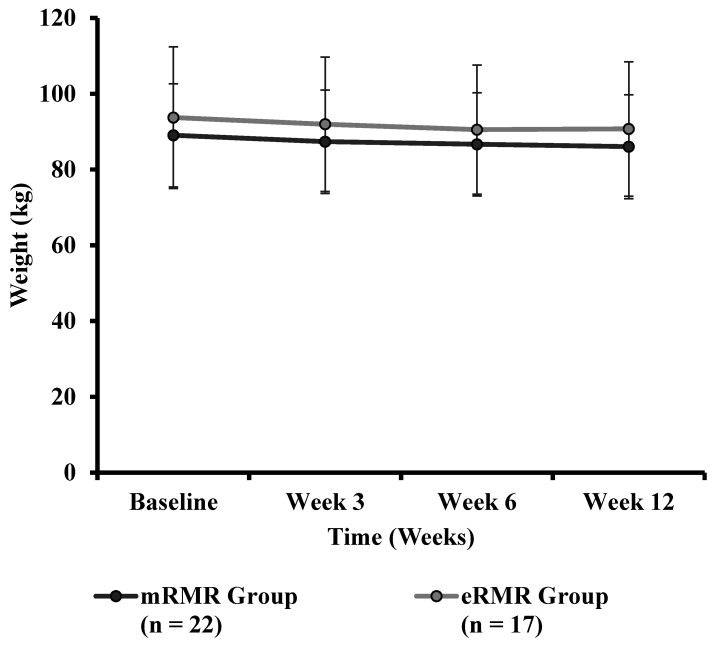
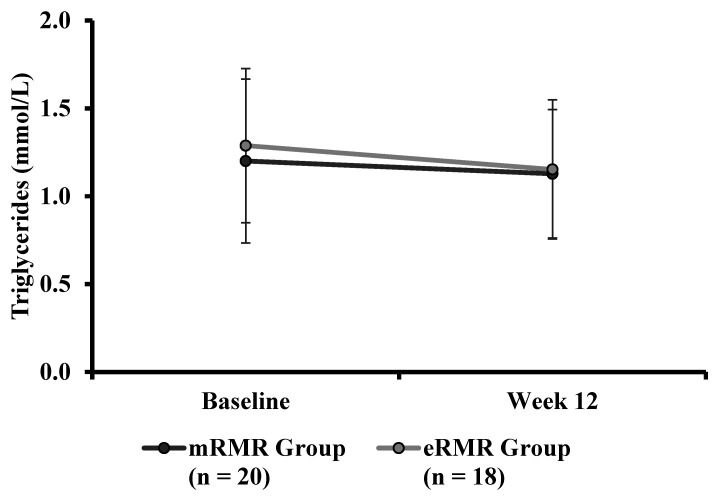
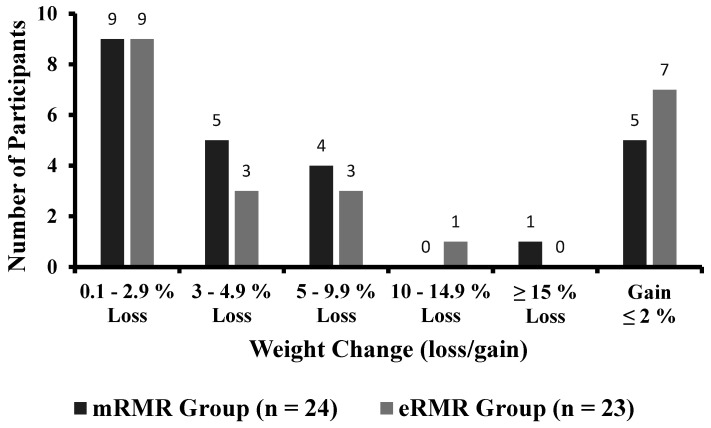
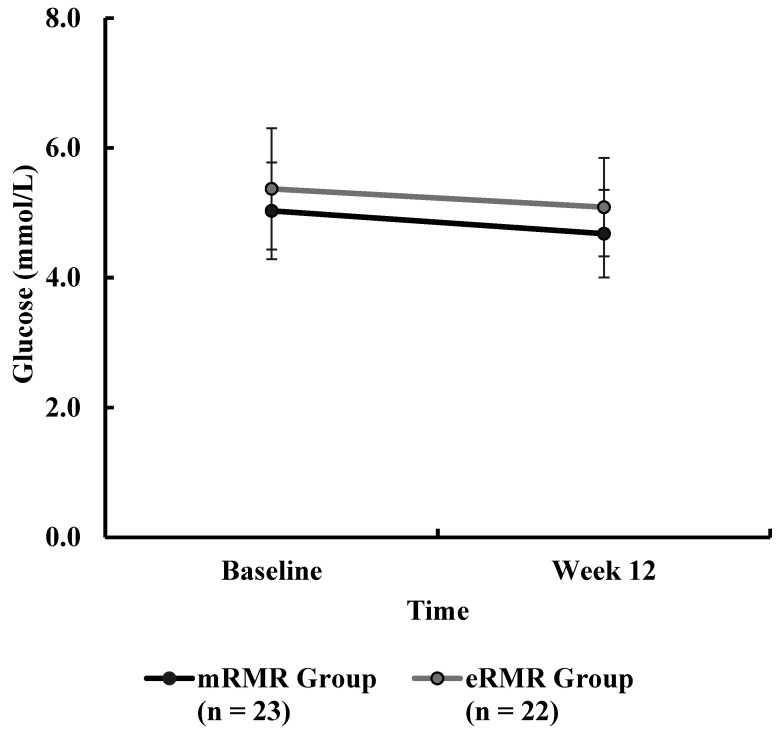
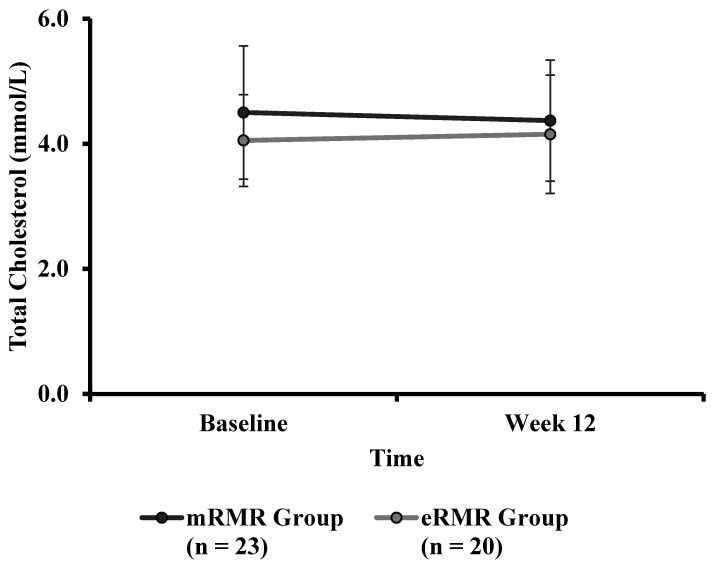
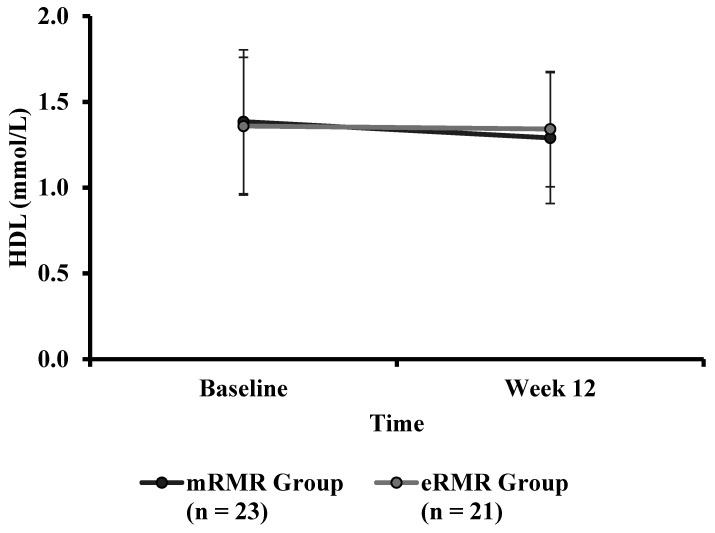
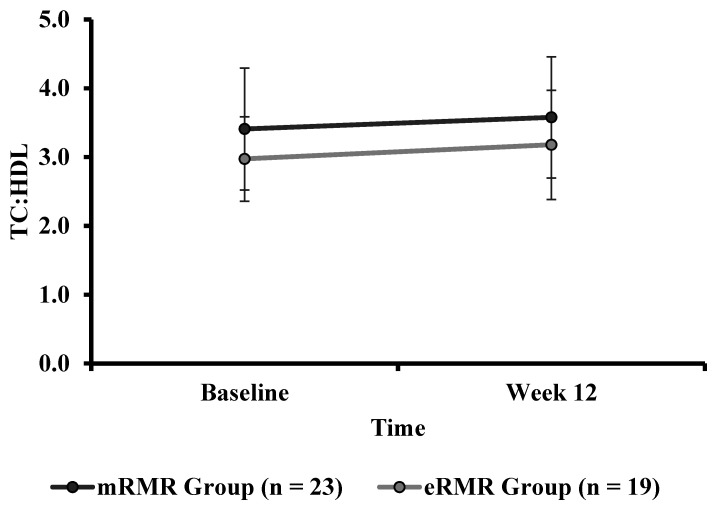
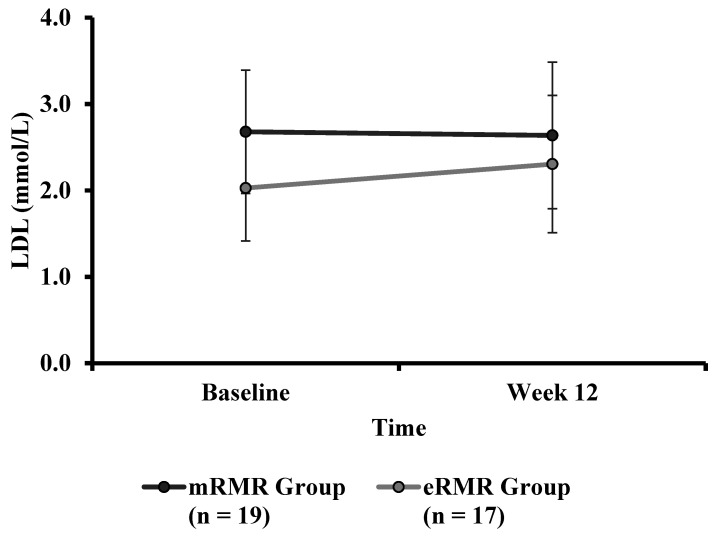
The primary objective of this study was to compare weight changes in two groups of ageing Irish adults with overweight and adiposity-based chronic disease: participants who had dietary energy requirements prescribed on the base of measured RMR and participants whose RMR was estimated by a prediction equation. Fifty-four Caucasian adults (male = 25; female = 29, age 57.5 ± 6.3 years, weight 90.3 ± 15.1 kg, height 171.5 ± 9.5 cm, BMI 30.7 ± 4.6 kg/m) were randomly assigned to a dietary intervention with energy prescription based on either measured RMR or estimated RMR. RMR was measured by indirect calorimetry after an overnight fast and predicted values were determined by the Mifflin et al. (1990) prediction equation. All participants received individual nutritional counselling, motivational interviewing and educational material. Anthropometric variables, blood pressure, blood glucose and blood lipid profile were assessed over 12 weeks. Body weight at week 12 was significantly lower ( < 0.05) for both groups following dietary interventions, mRMR: -4.2%; eRMR: -3.2% of initial body weight. There was no significant difference in weight loss between groups. Overall, 20.8% mRMR and 17.4% of eRMR participants experienced clinically meaningful (i.e., ≥5% of initial weight) weight reduction. Weight reduction in adults aged ≥50 years over the short term (12 weeks) favoured a reduction in blood pressure, triglycerides and glucose, thus reducing cardiovascular disease risk factors. This research indicates that employing a reduced-calorie diet using indirect calorimetry to determine energy needs when improving weight outcomes in adults (>50 years) with overweight and adiposity-based chronic disease is equal to employing a reduced-calorie diet based on the Mifflin et al. (1990) prediction equation. A reduced-energy diet based on mRMR or eRMR facilitates clinically meaningful weight reduction in adults (≥50 years) over the short term (12 weeks) and favours a reduction in blood pressure, triglycerides and glucose, thus reducing cardiovascular disease risk factors. Moreover, the addition of motivational interviewing and behaviour change techniques that support and encourage small behaviour changes is effective in short-term weight management.
一组根据测量的静息代谢率(RMR)规定能量需求,另一组则根据 Mifflin 等人(1990 年)的预测方程估算 RMR。54 名白种成年人(男性 25 名,女性 29 名,年龄 57.5±6.3 岁,体重 90.3±15.1kg,身高 171.5±9.5cm,BMI 30.7±4.6kg/m2)被随机分配到基于测量的 RMR 或估算的 RMR 的饮食干预组。RMR 通过隔夜禁食后的间接测热法测量,预测值由 Mifflin 等人(1990 年)的预测方程确定。所有参与者都接受了个体营养咨询、动机访谈和教育材料。12 周内评估了人体测量学变量、血压、血糖和血脂谱。饮食干预后两组的体重在第 12 周均显著下降(<0.05),mRMR:-4.2%;eRMR:-3.2%的初始体重。两组之间的体重减轻没有显著差异。总的来说,20.8%的 mRMR 和 17.4%的 eRMR 参与者经历了临床意义上的(即初始体重的≥5%)体重减轻。50 岁以上成年人在短期(12 周)内减轻体重有利于降低血压、甘油三酯和血糖,从而降低心血管疾病的危险因素。这项研究表明,在超重和肥胖相关慢性病的成年人(>50 岁)中,使用间接测热法确定能量需求的低热量饮食来改善体重结果与使用 Mifflin 等人(1990 年)的预测方程为基础的低热量饮食一样有效。基于 mRMR 或 eRMR 的低能量饮食可促进成年人(>50 岁)在短期(12 周)内实现临床意义上的体重减轻,并有利于降低血压、甘油三酯和血糖,从而降低心血管疾病的危险因素。此外,添加支持和鼓励小行为改变的动机访谈和行为改变技术在短期体重管理中是有效的。