Heuts Jeroen, Jiskoot Wim, Ossendorp Ferry, van der Maaden Koen
Department of Immunology, Leiden University Medical Centre, 2300 RC Leiden, The Netherlands.
Division of BioTherapeutics, Leiden Academic Centre for Drug Research (LACDR), Leiden University, 2300 RA Leiden, The Netherlands.
Pharmaceutics. 2021 Apr 21;13(5):596. doi: 10.3390/pharmaceutics13050596.
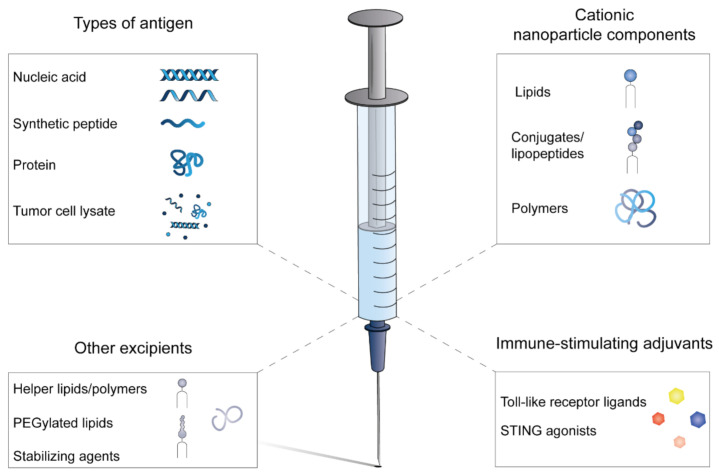
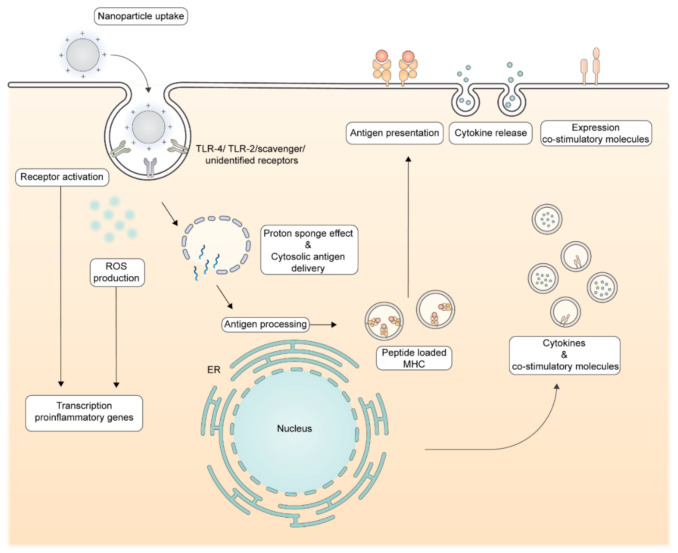
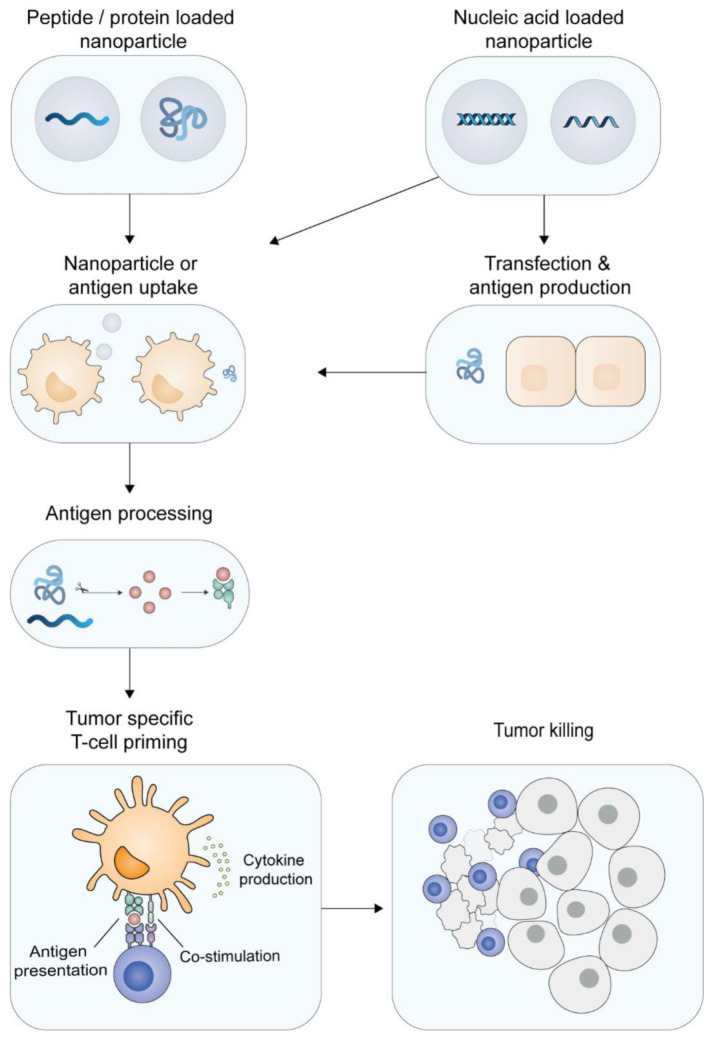
Cationic nanoparticles have been shown to be surprisingly effective as cancer vaccine vehicles in preclinical and clinical studies. Cationic nanoparticles deliver tumor-associated antigens to dendritic cells and induce immune activation, resulting in strong antigen-specific cellular immune responses, as shown for a wide variety of vaccine candidates. In this review, we discuss the relation between the cationic nature of nanoparticles and the efficacy of cancer immunotherapy. Multiple types of lipid- and polymer-based cationic nanoparticulate cancer vaccines with various antigen types (e.g., mRNA, DNA, peptides and proteins) and adjuvants are described. Furthermore, we focus on the types of cationic nanoparticles used for T-cell induction, especially in the context of therapeutic cancer vaccination. We discuss different cationic nanoparticulate vaccines, molecular mechanisms of adjuvanticity and biodistribution profiles upon administration via different routes. Finally, we discuss the perspectives of cationic nanoparticulate vaccines for improving immunotherapy of cancer.
在临床前和临床研究中,阳离子纳米颗粒已被证明作为癌症疫苗载体具有惊人的效果。阳离子纳米颗粒将肿瘤相关抗原递送至树突状细胞并诱导免疫激活,从而产生强烈的抗原特异性细胞免疫反应,多种候选疫苗均已证明这一点。在本综述中,我们讨论了纳米颗粒的阳离子性质与癌症免疫治疗疗效之间的关系。描述了多种基于脂质和聚合物的阳离子纳米颗粒癌症疫苗,它们具有各种抗原类型(如mRNA、DNA、肽和蛋白质)以及佐剂。此外,我们重点关注用于诱导T细胞的阳离子纳米颗粒类型,特别是在治疗性癌症疫苗接种的背景下。我们讨论了不同的阳离子纳米颗粒疫苗、佐剂作用的分子机制以及通过不同途径给药后的生物分布情况。最后,我们讨论了阳离子纳米颗粒疫苗在改善癌症免疫治疗方面的前景。