Milia Egle, Bullitta Simonetta Maria, Mastandrea Giorgio, Szotáková Barbora, Schoubben Aurélie, Langhansová Lenka, Quartu Marina, Bortone Antonella, Eick Sigrun
Department of Medicine, Surgery and Experimental Sciences, University of Sassari, Viale San Pietro 43, 07100 Sassari, Italy.
C.N.R., Institute for Animal Production System in Mediterranean Environment (ISPAAM), Traversa La Crucca 3, Località Baldinca, 07100 Sassari, Italy.
Antibiotics (Basel). 2021 Apr 12;10(4):425. doi: 10.3390/antibiotics10040425.
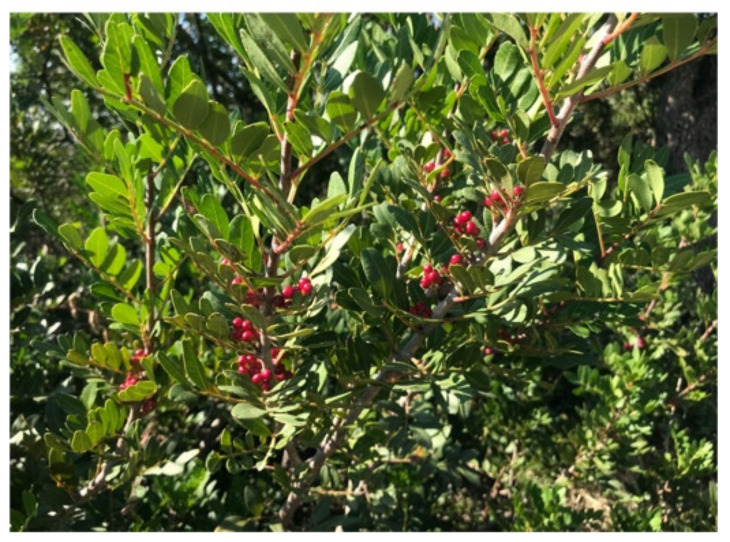
There is an increasing interest in revisiting plants for drug discovery, proving scientifically their role as remedies. The aim of this review was to give an overview of the ethnopharmacological uses of L. (PlL) leaves and fruits, expanding the search for the scientific discovery of their chemistry, anti-inflammatory, antioxidative and antimicrobial activities. PlL is a wild-growing shrub rich in terpenoids and polyphenols, the oil and extracts of which have been widely used against inflammation and infections, and as wound healing agents. The more recurrent components in PlL essential oil (EO) are represented by α-pinene, terpinene, caryophyllene, limonene and myrcene, with high variability in concentration depending on the Mediterranean country. The anti-inflammatory activity of the oil mainly occurs due to the inhibition of pro-inflammatory cytokines and the arachidonic acid cascade. Interestingly, the capacity against COX-2 and LOX indicates PlL EO as a dual inhibitory compound. The high content of polyphenols enriching the extracts provide explanations for the known biological properties of the plant. The protective effect against reactive oxygen species is of wide interest. In particular, their anthocyanins content greatly clarifies their antioxidative capacity. Further, the antimicrobial activity of PlL oil and extracts includes the inhibition of , , periodontal bacteria and spp. In conclusion, the relevant scientific properties indicate PlL as a nutraceutical and also as a therapeutic agent against a wide range of diseases based on inflammation and infections.
人们对重新研究植物以发现药物的兴趣与日俱增,从科学角度证明它们作为药物的作用。本综述的目的是概述羽叶薰衣草(PlL)叶和果实的民族药理学用途,扩大对其化学、抗炎、抗氧化和抗菌活性的科学发现探索。羽叶薰衣草是一种野生灌木,富含萜类化合物和多酚,其油和提取物已被广泛用于抗炎、抗感染以及作为伤口愈合剂。羽叶薰衣草精油(EO)中较常见的成分有α-蒎烯、萜品烯、石竹烯、柠檬烯和月桂烯,其浓度因地中海国家的不同而有很大差异。该油的抗炎活性主要是由于抑制促炎细胞因子和花生四烯酸级联反应。有趣的是,其对COX-2和LOX的抑制能力表明羽叶薰衣草精油是一种双重抑制化合物。提取物中丰富的多酚含量为该植物已知的生物学特性提供了解释。其对活性氧的保护作用备受关注。特别是,它们的花青素含量极大地阐明了其抗氧化能力。此外,羽叶薰衣草油和提取物的抗菌活性包括对[具体细菌名称1]、[具体细菌名称2]、牙周细菌和[具体细菌名称3]菌属的抑制。总之,相关的科学特性表明羽叶薰衣草既是一种营养保健品,也是一种针对多种基于炎症和感染的疾病的治疗剂。