Vinti Giovanni, Bauza Valerie, Clasen Thomas, Medlicott Kate, Tudor Terry, Zurbrügg Christian, Vaccari Mentore
Department of Civil Environmental, Architectural Engineering and Mathematics, University of Brescia, 25123 Brescia, Italy.
Gangarosa Department of Environmental Health, Rollins School of Public Health, Emory University, Atlanta, GA 30322, USA.
Int J Environ Res Public Health. 2021 Apr 19;18(8):4331. doi: 10.3390/ijerph18084331.
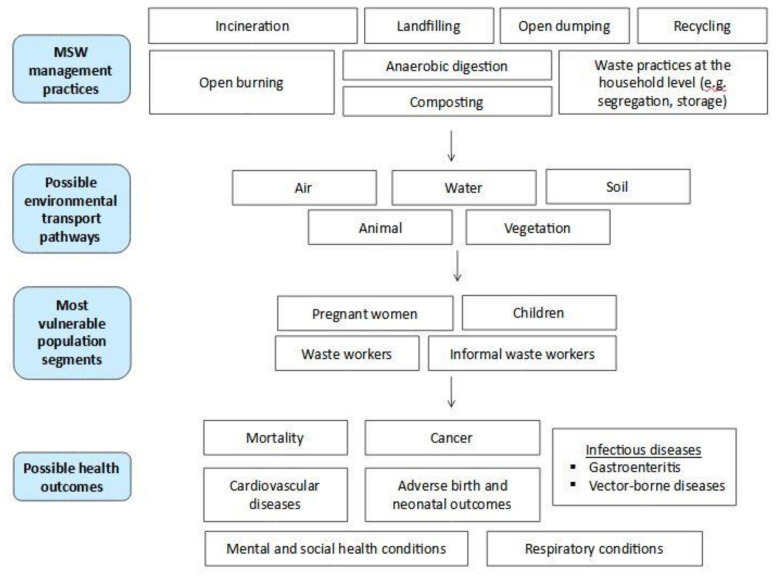
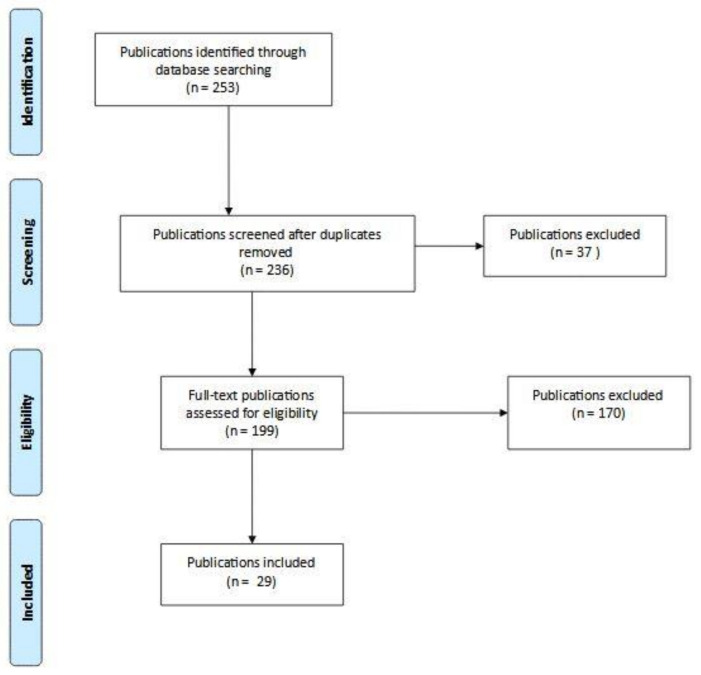
Municipal solid waste (MSW) can pose a threat to public health if it is not safely managed. Despite prior research, uncertainties remain and refurbished evidence is needed along with new approaches. We conducted a systematic review of recently published literature to update and expand the epidemiological evidence on the association between MSW management practices and resident populations' health risks. Studies published from January 2005 to January 2020 were searched and reviewed following PRISMA guidelines. Eligible MSW treatment or disposal sites were defined as landfills, dumpsites, incinerators, waste open burning, transfer stations, recycling sites, composting plants, and anaerobic digesters. Occupational risks were not assessed. Health effects investigated included mortality, adverse birth and neonatal outcomes, cancer, respiratory conditions, gastroenteritis, vector-borne diseases, mental health conditions, and cardiovascular diseases. Studies reporting on human biomonitoring for exposure were eligible as well. Twenty-nine studies were identified that met the inclusion criteria of our protocol, assessing health effects only associated with proximity to landfills, incinerators, and dumpsites/open burning sites. There was some evidence of an increased risk of adverse birth and neonatal outcomes for residents near each type of MSW site. There was also some evidence of an increased risk of mortality, respiratory diseases, and negative mental health effects associated with residing near landfills. Additionally, there was some evidence of increased risk of mortality associated with residing near incinerators. However, in many cases, the evidence was inadequate to establish a strong relationship between a specific exposure and outcomes, and the studies rarely assessed new generation technologies. Evidence gaps remain, and recommendations for future research are discussed.
城市固体废物(MSW)如果管理不当,可能会对公众健康构成威胁。尽管之前已有研究,但不确定性依然存在,需要新的方法以及更新后的证据。我们对近期发表的文献进行了系统综述,以更新和扩展关于城市固体废物管理实践与居民健康风险之间关联的流行病学证据。按照PRISMA指南,对2005年1月至2020年1月发表的研究进行了检索和综述。符合条件的城市固体废物处理或处置场所定义为垃圾填埋场、垃圾场、焚烧炉、露天焚烧垃圾、转运站、回收站点、堆肥厂和厌氧消化池。未评估职业风险。所调查的健康影响包括死亡率、不良出生和新生儿结局、癌症、呼吸道疾病、肠胃炎、媒介传播疾病、心理健康状况和心血管疾病。报告人体生物监测暴露情况的研究也符合条件。共确定了29项符合我们方案纳入标准的研究,这些研究仅评估了与靠近垃圾填埋场、焚烧炉和垃圾场/露天焚烧场相关的健康影响。有一些证据表明,在各类城市固体废物处理场所附近居住的居民出现不良出生和新生儿结局的风险增加。也有一些证据表明,居住在垃圾填埋场附近与死亡率、呼吸道疾病增加以及负面心理健康影响有关。此外,有一些证据表明,居住在焚烧炉附近与死亡率增加有关。然而,在许多情况下,证据不足以确立特定暴露与结局之间的紧密关系,而且这些研究很少评估新一代技术。证据空白依然存在,并讨论了对未来研究的建议。