Di Giallonardo Francesca, Puglia Ilaria, Curini Valentina, Cammà Cesare, Mangone Iolanda, Calistri Paolo, Cobbin Joanna C A, Holmes Edward C, Lorusso Alessio
The Kirby Institute, UNSW Sydney, Sydney, NSW 2052, Australia.
Istituto Zooprofilattico Sperimentale dell'Abruzzo e del Molise G. Caporale, 641000 Teramo, Italy.
Viruses. 2021 Apr 29;13(5):794. doi: 10.3390/v13050794.
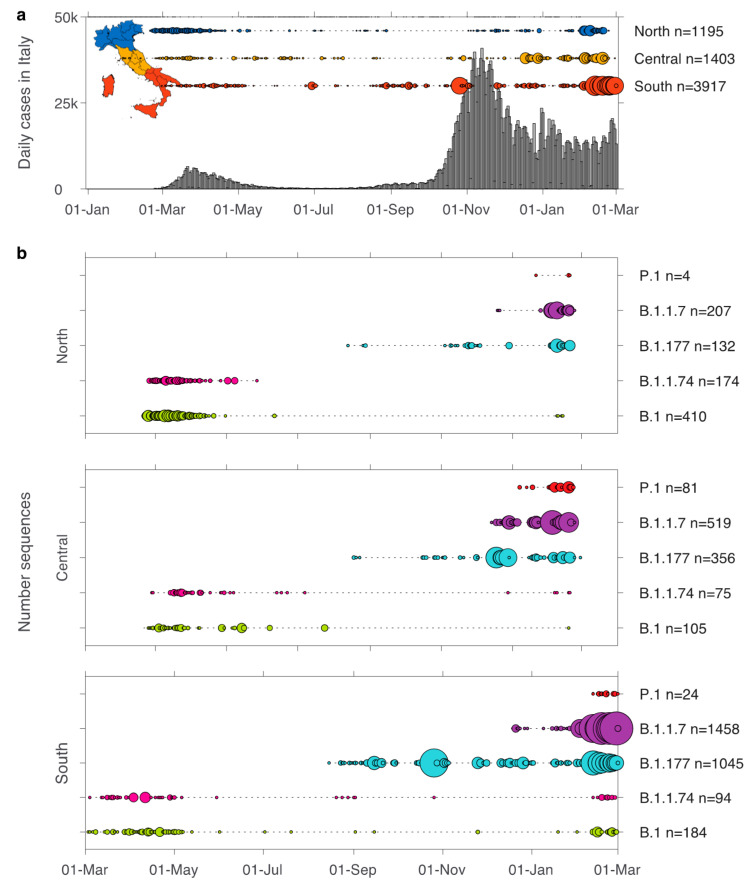
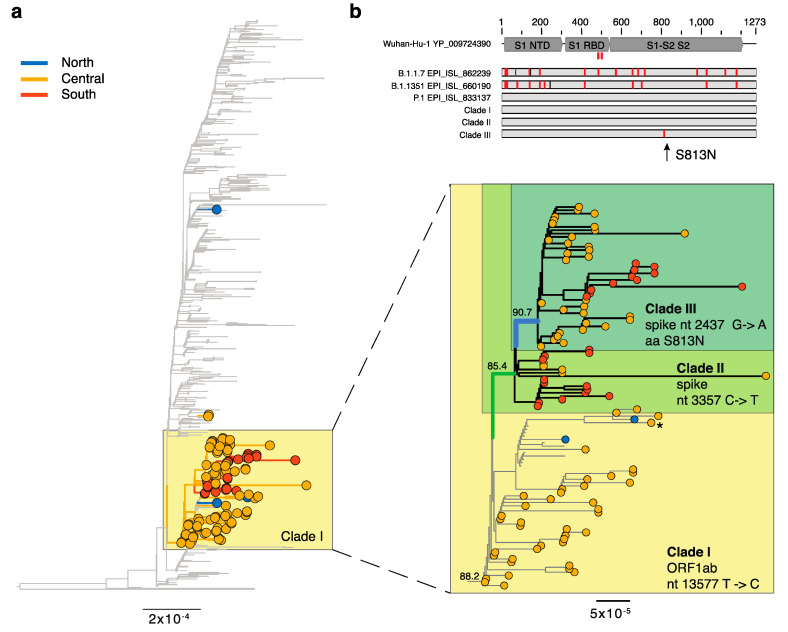
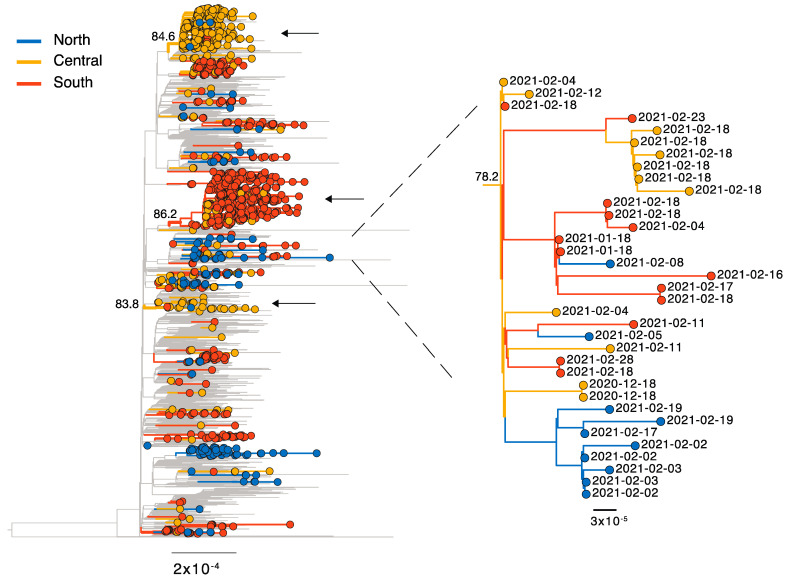
Italy's second wave of SARS-CoV-2 has hit hard, with more than three million cases and over 100,000 deaths, representing an almost ten-fold increase in the numbers reported by August 2020. Herein, we present an analysis of 6515 SARS-CoV-2 sequences sampled in Italy between 29 January 2020 and 1 March 2021 and show how different lineages emerged multiple times independently despite lockdown restrictions. Virus lineage B.1.177 became the dominant variant in November 2020, when cases peaked at 40,000 a day, but since January 2021 this is being replaced by the B.1.1.7 'variant of concern'. In addition, we report a sudden increase in another documented variant of concern-lineage P.1-from December 2020 onwards, most likely caused by a single introduction into Italy. We again highlight how international importations drive the emergence of new lineages and that genome sequencing should remain a top priority for ongoing surveillance in Italy.
意大利的第二波新冠疫情冲击严重,病例超过300万,死亡人数超过10万,几乎是2020年8月报告数字的十倍。在此,我们对2020年1月29日至2021年3月1日期间在意大利采集的6515个新冠病毒序列进行了分析,展示了尽管有封锁限制,不同谱系如何多次独立出现。病毒谱系B.1.177在2020年11月成为主要变种,当时每日病例数峰值达到4万例,但自2021年1月起,它正被“受关注变种”B.1.1.7取代。此外,我们报告称,自2020年12月起,另一个有记录的受关注变种——谱系P.1——突然增加,很可能是由单次引入意大利所致。我们再次强调国际输入如何推动新谱系的出现,以及基因组测序应始终是意大利正在进行的监测的首要任务。