Perlmutter Austin
Independent Researcher, Portland, OR, United States.
Front Neurol. 2021 Apr 23;12:657004. doi: 10.3389/fneur.2021.657004. eCollection 2021.
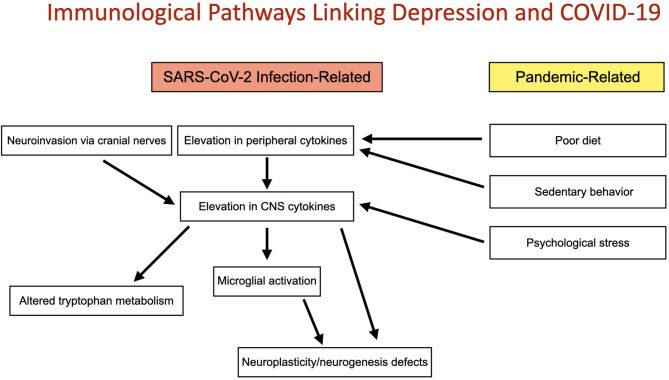
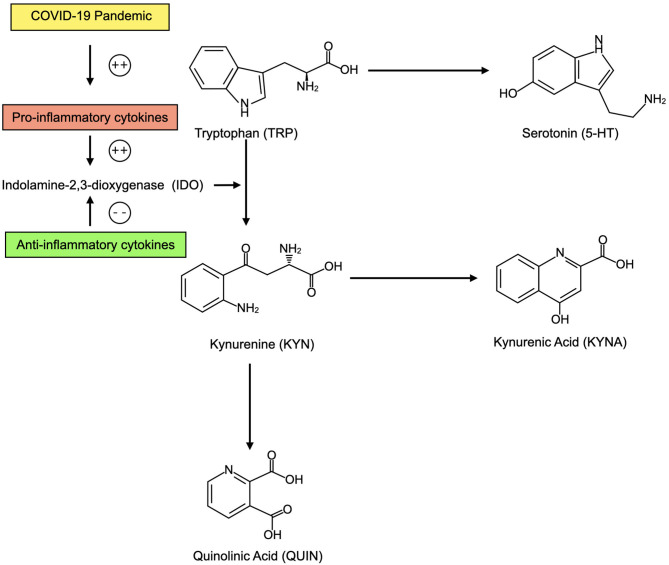
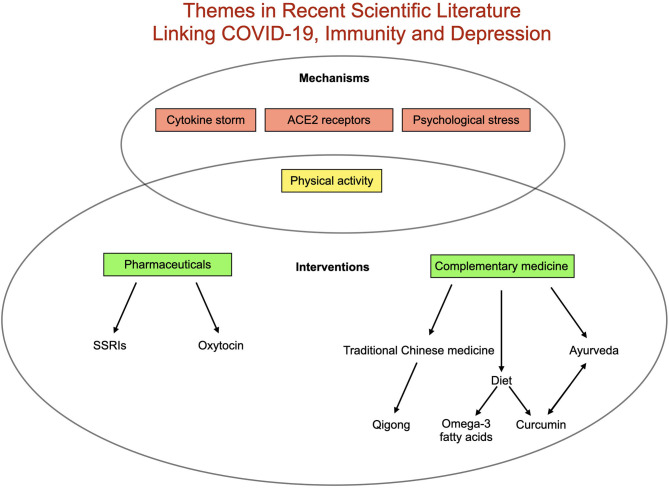
Since the start of the spread of the coronavirus disease 2019 (COVID-19) pandemic, an international effort has sought to better characterize associated extra-pulmonary health sequelae. The acute and or chronic detrimental impact of SARS-CoV-2 infection on mental health, especially depression, is increasingly described. Simultaneously the pandemic has influenced depressive symptomatology by modifying economic, social and political structures, in addition to affecting daily routines. In both cases, associated immunological perturbations favoring a pro-inflammatory state could underlie an increased risk for depressive symptomatology. A resultant elevation in global depressive burden could further tax mental health care infrastructure and contribute to a range of worse health outcomes including diminished quality of life. This suggests a critical and time-sensitive need to better understand immune interfaces between depression and COVID-19.
自2019年冠状病毒病(COVID-19)大流行开始传播以来,国际社会一直在努力更好地描述相关的肺外健康后遗症。越来越多的描述表明,严重急性呼吸综合征冠状病毒2(SARS-CoV-2)感染对心理健康,尤其是抑郁症,具有急性和/或慢性有害影响。与此同时,除了影响日常生活外,大流行还通过改变经济、社会和政治结构影响了抑郁症状。在这两种情况下,有利于促炎状态的相关免疫扰动可能是抑郁症状风险增加的基础。全球抑郁负担的增加可能会进一步加重心理健康护理基础设施的负担,并导致一系列更差的健康结果,包括生活质量下降。这表明迫切需要在时间敏感的情况下更好地了解抑郁症与COVID-19之间的免疫关联。