Bielajew Benjamin J, Hu Jerry C, Athanasiou Kyriacos A
Department of Biomedical Engineering, University of California, Irvine, Irvine, CA 92617, USA.
Nat Rev Mater. 2020 Oct;5(10):730-747. doi: 10.1038/s41578-020-0213-1. Epub 2020 Jul 20.
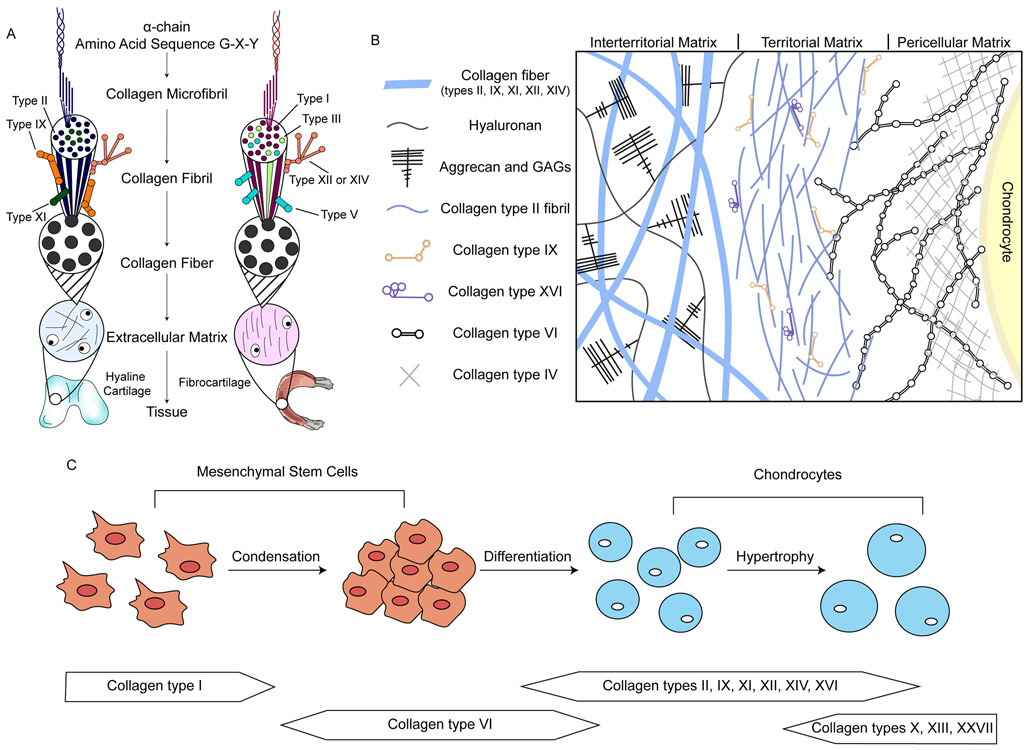
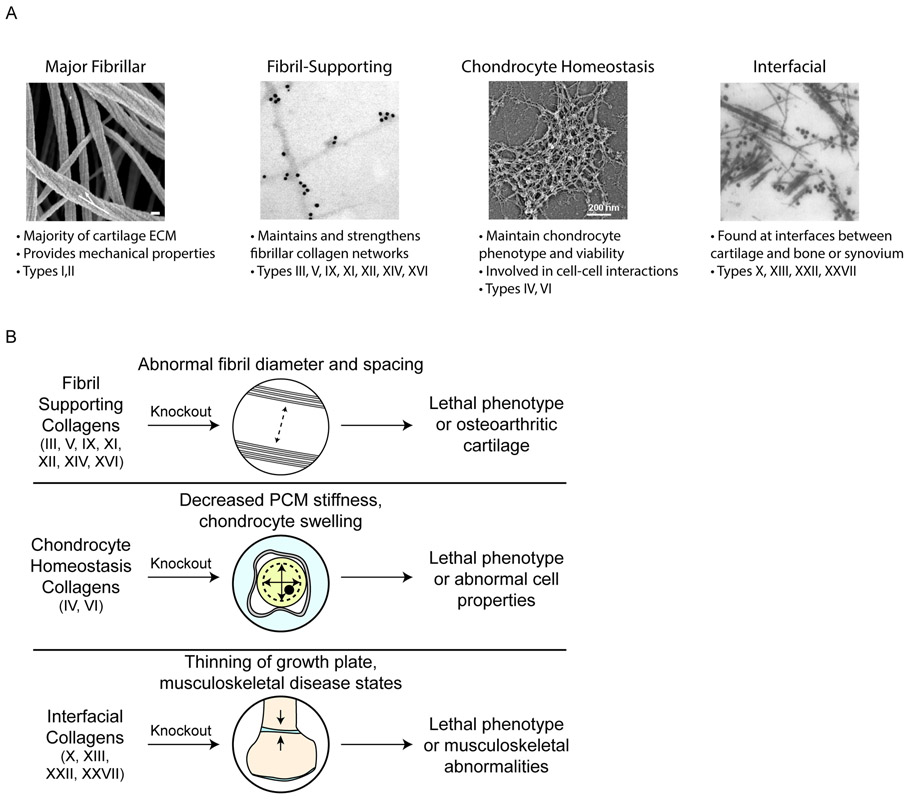
Collagen is a ubiquitous biomaterial in vertebrate animals. Although each of its 28 subtypes contributes to the functions of many different tissues in the body, most studies on collagen or collagenous tissues have focussed on only one or two subtypes. With recent developments in analytical chemistry, especially mass spectrometry, significant advances have been made toward quantifying the different collagen subtypes in various tissues; however, high-throughput and low-cost methods for collagen subtype quantification do not yet exist. In this Review, we introduce the roles of collagen subtypes and crosslinks, and describe modern assays that enable a deep understanding of tissue physiology and disease states. Using cartilage as a model tissue, we describe the roles of major and minor collagen subtypes in detail; discuss known and unknown structure-function relationships; and show how tissue engineers may harness the functional characteristics of collagen to engineer robust neotissues.
胶原蛋白是脊椎动物中普遍存在的生物材料。尽管其28种亚型中的每一种都对身体许多不同组织的功能有贡献,但大多数关于胶原蛋白或胶原组织的研究仅集中在一两种亚型上。随着分析化学,尤其是质谱技术的最新发展,在定量各种组织中不同胶原蛋白亚型方面已经取得了重大进展;然而,目前尚不存在用于胶原蛋白亚型定量的高通量、低成本方法。在本综述中,我们介绍了胶原蛋白亚型和交联的作用,并描述了能够深入了解组织生理学和疾病状态的现代检测方法。以软骨作为模型组织,我们详细描述了主要和次要胶原蛋白亚型的作用;讨论了已知和未知的结构-功能关系;并展示了组织工程师如何利用胶原蛋白的功能特性来构建坚固的新组织。