Sun Kai-Heng, Chien Wen-Ching, Hsu Hsun-Feng
Department of Materials Science and Engineering, National Chung Hsing Univiersity, 145 Xingda Rd., Taichung, 40227, Taiwan.
Nanoscale Res Lett. 2021 May 19;16(1):86. doi: 10.1186/s11671-021-03539-6.
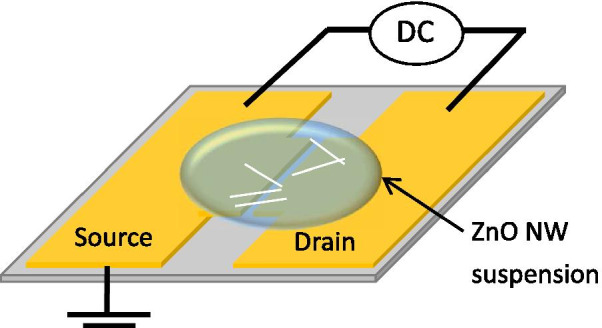
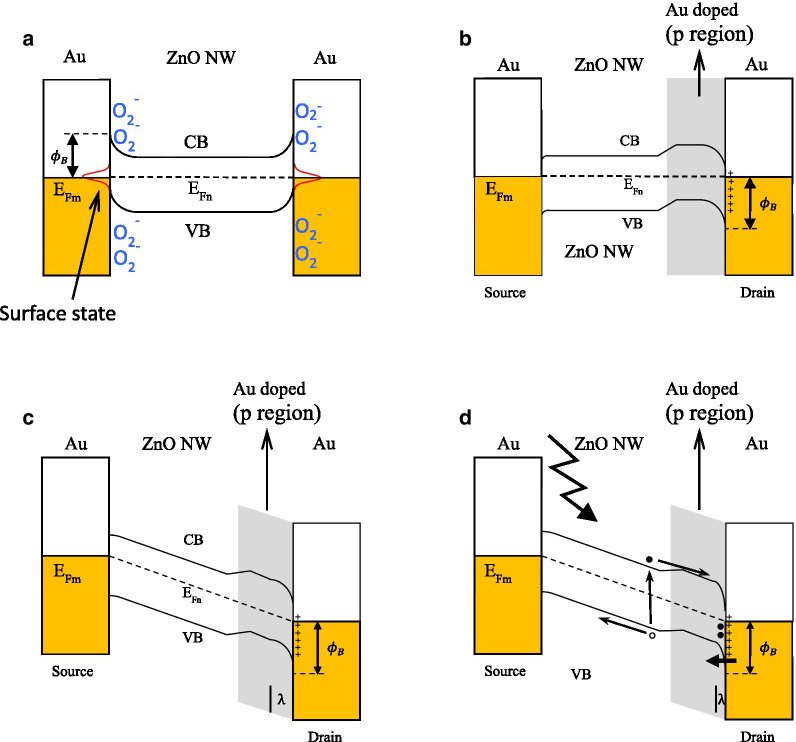
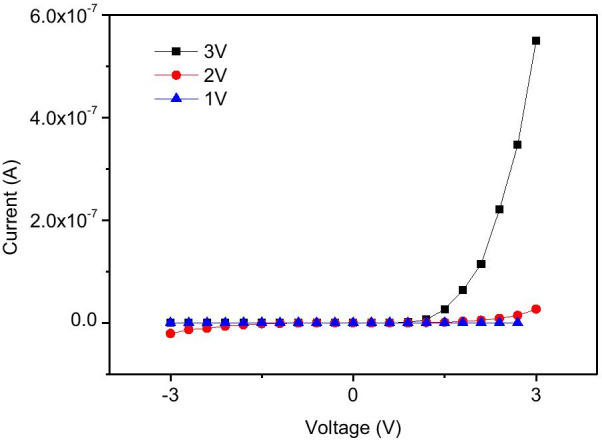
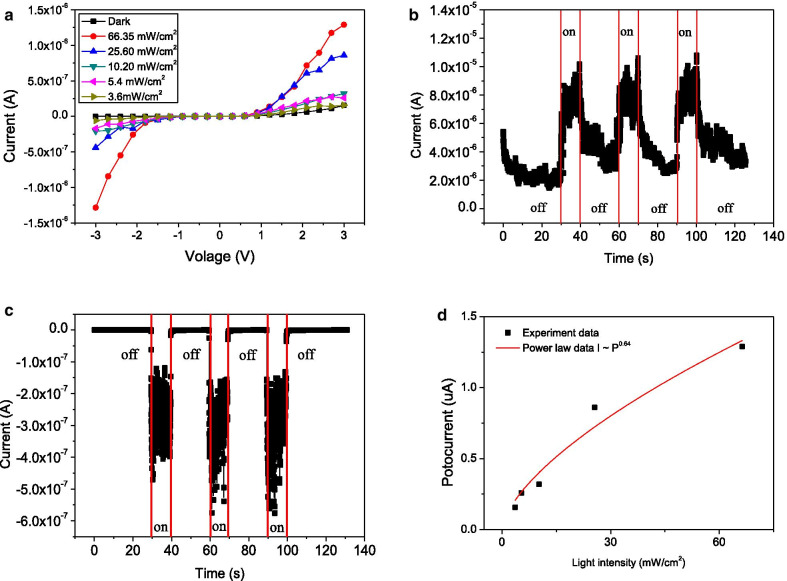
This work demonstrates the fabrication and characterization of ZnO nanowire-based devices in a metal-nanowire-metal configuration using the direct current dielectrophoresis alignment across Au electrodes. The current-voltage characteristics of the devices revealed that they were rectifying, and the direction of rectification was determined by the direction of current due to the asymmetric Joule heating in the dielectrophoresis alignment process. Joule heating caused the Au atoms to diffuse from the Au electrodes to the inner ZnO NWs and the formation of Schottky contact at the Au/ZnO interface. A fast and sensitive photoresponse was achieved for the rectifying devices in reverse-biased mode due to the carrier injection and photocurrent gain under UV illumination. Such direct current dielectrophoresis alignment of ZnO nanowires is a facile method for fabricating rectification devices with application in sensitive and fast UV detecting sensors.
这项工作展示了基于氧化锌纳米线的器件在金属-纳米线-金属结构中的制造与特性,该结构利用了在金电极间的直流介电泳排列。器件的电流-电压特性表明它们具有整流作用,并且由于介电泳排列过程中不对称的焦耳热,整流方向由电流方向决定。焦耳热导致金原子从金电极扩散到内部的氧化锌纳米线,并在金/氧化锌界面形成肖特基接触。由于在紫外光照射下的载流子注入和光电流增益,整流器件在反向偏置模式下实现了快速且灵敏的光响应。这种氧化锌纳米线的直流介电泳排列是一种制造整流器件的简便方法,可应用于灵敏且快速的紫外检测传感器。