• 文献检索
  • 文档翻译
  • 深度研究
  • 学术资讯
  • Suppr Zotero 插件Zotero 插件
  • 邀请有礼
  • 套餐&价格
  • 历史记录
应用&插件
Suppr Zotero 插件Zotero 插件浏览器插件Mac 客户端Windows 客户端微信小程序
定价
高级版会员购买积分包购买API积分包
服务
文献检索文档翻译深度研究API 文档MCP 服务
关于我们
关于 Suppr公司介绍联系我们用户协议隐私条款
关注我们

Suppr 超能文献

核心技术专利:CN118964589B侵权必究
粤ICP备2023148730 号-1Suppr @ 2026

文献检索

告别复杂PubMed语法,用中文像聊天一样搜索,搜遍4000万医学文献。AI智能推荐,让科研检索更轻松。

立即免费搜索

文件翻译

保留排版,准确专业,支持PDF/Word/PPT等文件格式,支持 12+语言互译。

免费翻译文档

深度研究

AI帮你快速写综述,25分钟生成高质量综述,智能提取关键信息,辅助科研写作。

立即免费体验

巴西里约热内卢大都市区气候因素与登革热发病率分析。

Analysis of climate factors and dengue incidence in the metropolitan region of Rio de Janeiro, Brazil.

机构信息

Parasitic Diseases Laboratory, Tropical Medicine Program, Oswaldo Cruz Institute, Oswaldo Cruz Foundation, Rio de Janeiro, Brazil.

Hematozoan Transmitting Mosquito, Tropical Medicine Program, Oswaldo Cruz Institute, Oswaldo Cruz Foundation, Rio de Janeiro, Brazil.

出版信息

PLoS One. 2021 May 20;16(5):e0251403. doi: 10.1371/journal.pone.0251403. eCollection 2021.

DOI:10.1371/journal.pone.0251403
PMID:34014989
原文链接:https://pmc.ncbi.nlm.nih.gov/articles/PMC8136695/
Abstract

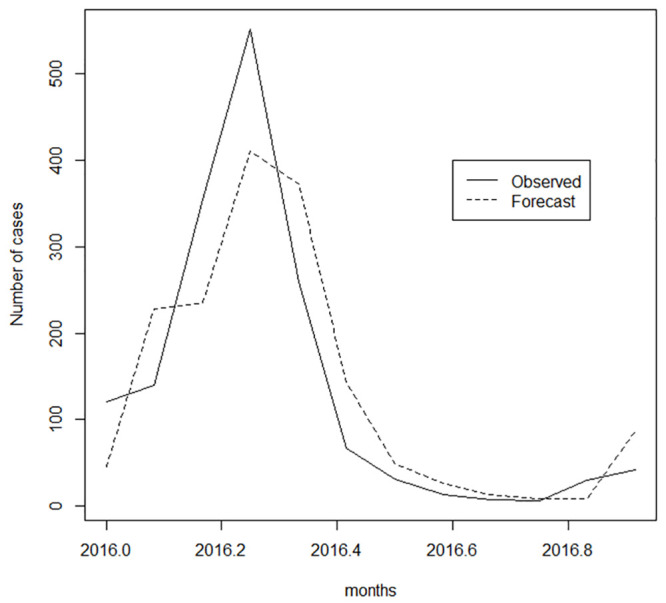
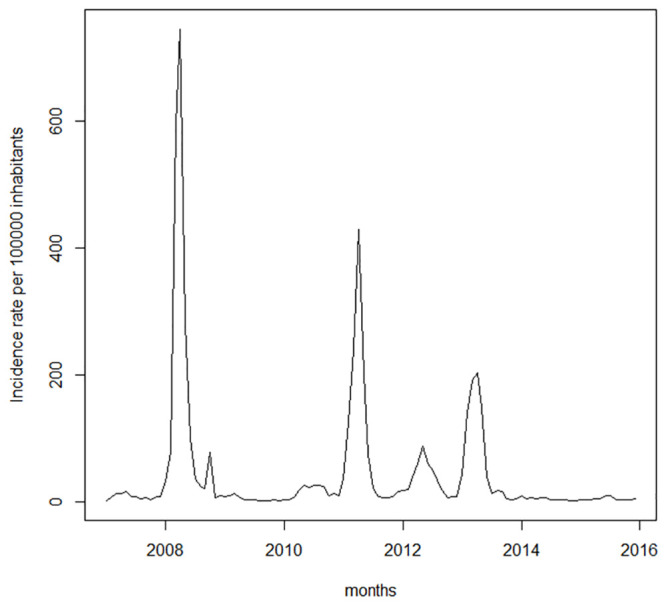
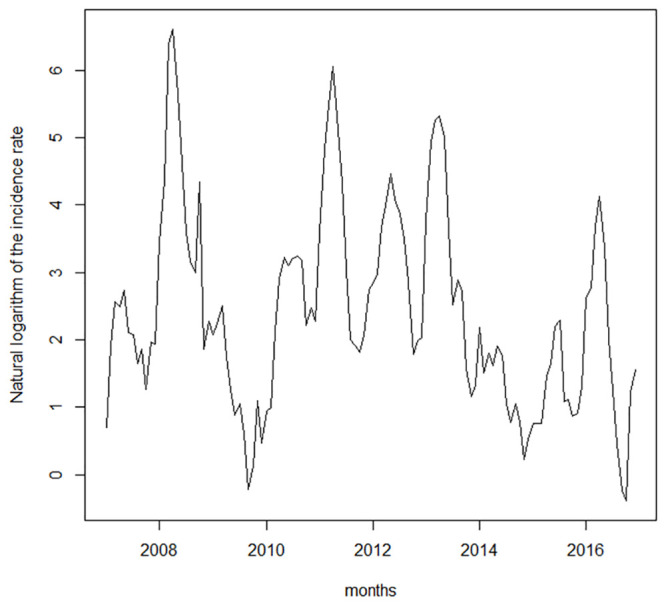
Dengue is a re-emerging disease, currently considered the most important mosquito-borne arbovirus infection affecting humankind, taking into account both its morbidity and mortality. Brazil is considered an endemic country for dengue, such that more than 1,544,987 confirmed cases were notified in 2019, which means an incidence rate of 735 for every 100 thousand inhabitants. Climate is an important factor in the temporal and spatial distribution of vector-borne diseases, such as dengue. Thus, rainfall and temperature are considered macro-factors determinants for dengue, since they directly influence the population density of Aedes aegypti, which is subject to seasonal fluctuations, mainly due to these variables. This study examined the incidence of dengue fever related to the climate influence by using temperature and rainfall variables data obtained from remote sensing via artificial satellites in the metropolitan region of Rio de Janeiro, Brazil. The mathematical model that best fits the data is based on an auto-regressive moving average with exogenous inputs (ARMAX). It reproduced the values of incidence rates in the study period and managed to predict with good precision in a one-year horizon. The approach described in present work may be replicated in cities around the world by the public health managers, to build auxiliary operational tools for control and prevention tasks of dengue, as well of other arbovirus diseases.

摘要

登革热是一种重新出现的疾病,目前被认为是对人类影响最大的蚊媒病毒感染,考虑到其发病率和死亡率。巴西被认为是登革热的流行国家,2019 年报告了超过 1,544,987 例确诊病例,这意味着每 10 万人中有 735 人发病。气候是蚊媒疾病时间和空间分布的重要因素。因此,降雨和温度被认为是登革热的宏观因素决定因素,因为它们直接影响埃及伊蚊的种群密度,而埃及伊蚊的种群密度受季节性波动的影响,主要受这些变量的影响。本研究使用从巴西里约热内卢大都市区的人造卫星获得的遥感温度和降雨变量数据,研究了与气候影响相关的登革热发病率。最佳拟合数据的数学模型基于具有外生输入的自回归移动平均(ARMAX)。它再现了研究期间发病率的值,并成功地在一年的预测期内进行了高精度预测。本研究中描述的方法可以由公共卫生管理者在世界各地的城市中复制,以建立辅助的操作工具,用于控制和预防登革热和其他虫媒病毒病。
https://cdn.ncbi.nlm.nih.gov/pmc/blobs/47b3/8136695/43061ff7d568/pone.0251403.g006.jpg
https://cdn.ncbi.nlm.nih.gov/pmc/blobs/47b3/8136695/06124990b552/pone.0251403.g001.jpg
https://cdn.ncbi.nlm.nih.gov/pmc/blobs/47b3/8136695/738041b28590/pone.0251403.g002.jpg
https://cdn.ncbi.nlm.nih.gov/pmc/blobs/47b3/8136695/8f25b82458cd/pone.0251403.g003.jpg
https://cdn.ncbi.nlm.nih.gov/pmc/blobs/47b3/8136695/bc4e8415b39c/pone.0251403.g004.jpg
https://cdn.ncbi.nlm.nih.gov/pmc/blobs/47b3/8136695/2fdf01fb6b25/pone.0251403.g005.jpg
https://cdn.ncbi.nlm.nih.gov/pmc/blobs/47b3/8136695/43061ff7d568/pone.0251403.g006.jpg
https://cdn.ncbi.nlm.nih.gov/pmc/blobs/47b3/8136695/06124990b552/pone.0251403.g001.jpg
https://cdn.ncbi.nlm.nih.gov/pmc/blobs/47b3/8136695/738041b28590/pone.0251403.g002.jpg
https://cdn.ncbi.nlm.nih.gov/pmc/blobs/47b3/8136695/8f25b82458cd/pone.0251403.g003.jpg
https://cdn.ncbi.nlm.nih.gov/pmc/blobs/47b3/8136695/bc4e8415b39c/pone.0251403.g004.jpg
https://cdn.ncbi.nlm.nih.gov/pmc/blobs/47b3/8136695/2fdf01fb6b25/pone.0251403.g005.jpg
https://cdn.ncbi.nlm.nih.gov/pmc/blobs/47b3/8136695/43061ff7d568/pone.0251403.g006.jpg

相似文献

1
Analysis of climate factors and dengue incidence in the metropolitan region of Rio de Janeiro, Brazil.巴西里约热内卢大都市区气候因素与登革热发病率分析。
PLoS One. 2021 May 20;16(5):e0251403. doi: 10.1371/journal.pone.0251403. eCollection 2021.
2
The impact of large-scale deployment of mosquitoes on dengue and other -borne diseases in Rio de Janeiro and Niterói, Brazil: study protocol for a controlled interrupted time series analysis using routine disease surveillance data.大规模部署蚊子对巴西里约热内卢和尼泰罗伊登革热和其他虫媒疾病的影响:使用常规疾病监测数据进行对照中断时间序列分析的研究方案。
F1000Res. 2019 Aug 1;8:1328. doi: 10.12688/f1000research.19859.2. eCollection 2019.
3
Spatial modeling of dengue and socio-environmental indicators in the city of Rio de Janeiro, Brazil.巴西里约热内卢市登革热与社会环境指标的空间建模。
Cad Saude Publica. 2011 Mar;27(3):591-602. doi: 10.1590/s0102-311x2011000300019.
4
Time series analysis of dengue incidence in Rio de Janeiro, Brazil.巴西里约热内卢登革热发病率的时间序列分析。
Am J Trop Med Hyg. 2008 Dec;79(6):933-9.
5
Temporal relationship between rainfall, temperature and occurrence of dengue cases in São Luís, Maranhão, Brazil.巴西马拉尼昂州圣路易斯市降雨、温度与登革热病例发生之间的时间关系。
Cien Saude Colet. 2016 Feb;21(2):641-6. doi: 10.1590/1413-81232015212.09592015.
6
Impact of recent climate extremes on mosquito-borne disease transmission in Kenya.近期极端气候对肯尼亚蚊媒传染病传播的影响。
PLoS Negl Trop Dis. 2021 Mar 18;15(3):e0009182. doi: 10.1371/journal.pntd.0009182. eCollection 2021 Mar.
7
Behavioral, climatic, and environmental risk factors for Zika and Chikungunya virus infections in Rio de Janeiro, Brazil, 2015-16.2015 - 2016年巴西里约热内卢寨卡病毒和基孔肯雅病毒感染的行为、气候及环境风险因素
PLoS One. 2017 Nov 16;12(11):e0188002. doi: 10.1371/journal.pone.0188002. eCollection 2017.
8
Temporal analysis of the relationship between dengue and meteorological variables in the city of Rio de Janeiro, Brazil, 2001-2009.2001-2009 年巴西里约热内卢市登革热与气象变量之间关系的时间分析。
Cad Saude Publica. 2012 Nov;28(11):2189-97. doi: 10.1590/s0102-311x2012001100018.
9
Forecasting dengue fever in Brazil: An assessment of climate conditions.预测巴西登革热:气候条件评估。
PLoS One. 2019 Aug 8;14(8):e0220106. doi: 10.1371/journal.pone.0220106. eCollection 2019.
10
Long-term projections of the impacts of warming temperatures on Zika and dengue risk in four Brazilian cities using a temperature-dependent basic reproduction number.使用依赖温度的基本繁殖数对巴西四个城市变暖温度对寨卡和登革热风险的长期影响进行预测。
PLoS Negl Trop Dis. 2023 Apr 27;17(4):e0010839. doi: 10.1371/journal.pntd.0010839. eCollection 2023 Apr.

引用本文的文献

1
Assessing dengue forecasting methods: a comparative study of statistical models and machine learning techniques in Rio de Janeiro, Brazil.评估登革热预测方法:巴西里约热内卢统计模型与机器学习技术的比较研究
Trop Med Health. 2025 Apr 10;53(1):52. doi: 10.1186/s41182-025-00723-7.
2
The Ecological, Biological, and Social Determinants of Dengue Epidemiology in Latin America and the Caribbean: A Scoping Review of the Literature.拉丁美洲和加勒比地区登革热流行病学的生态、生物和社会决定因素:文献综述
Ecohealth. 2025 Mar 27. doi: 10.1007/s10393-025-01706-0.
3
Detecting Arboviruses Through Screening Asymptomatic Blood Donors in Rio de Janeiro/Brazil During a Dengue Outbreak.

本文引用的文献

1
A model comparison algorithm for increased forecast accuracy of dengue fever incidence in Singapore and the auxiliary role of total precipitation information.提高新加坡登革热发病率预测准确性的模型比较算法及总降水量信息的辅助作用。
Int J Environ Health Res. 2018 Oct;28(5):535-552. doi: 10.1080/09603123.2018.1496234. Epub 2018 Jul 17.
2
Developing a dengue forecast model using machine learning: A case study in China.利用机器学习开发登革热预测模型:以中国为例的案例研究。
PLoS Negl Trop Dis. 2017 Oct 16;11(10):e0005973. doi: 10.1371/journal.pntd.0005973. eCollection 2017 Oct.
3
Effects of local and regional climatic fluctuations on dengue outbreaks in southern Taiwan.
在巴西里约热内卢登革热疫情期间,通过筛查无症状献血者来检测虫媒病毒
Viruses. 2025 Feb 5;17(2):224. doi: 10.3390/v17020224.
4
Disentangling climate's dual role in dengue dynamics: A multiregion causal analysis study.厘清气候在登革热动态中的双重作用:一项多区域因果分析研究。
Sci Adv. 2025 Feb 14;11(7):eadq1901. doi: 10.1126/sciadv.adq1901. Epub 2025 Feb 12.
5
Climate change impacts on dengue transmission areas in Espírito Santo state, Brazil.气候变化对巴西圣埃斯皮里图州登革热传播地区的影响。
Oxf Open Immunol. 2024 Sep 6;5(1):iqae011. doi: 10.1093/oxfimm/iqae011. eCollection 2024.
6
Serotype-specific clinical features and spatial distribution of dengue in northern Kerala, India.印度喀拉拉邦北部登革热的血清型特异性临床特征及空间分布
J Family Med Prim Care. 2024 Aug;13(8):3049-3058. doi: 10.4103/jfmpc.jfmpc_1937_23. Epub 2024 Jul 26.
7
Societal knowledge, attitude, and practices towards dengue and associated factors in epidemic-hit areas: Geoinformation assisted empirical evidence.疫情受灾地区社会对登革热的认知、态度和行为及相关因素:地理信息辅助的实证证据
Heliyon. 2023 Dec 13;10(1):e23151. doi: 10.1016/j.heliyon.2023.e23151. eCollection 2024 Jan 15.
8
Dengue as a Disease Threatening Global Health: A Narrative Review Focusing on Latin America and Brazil.登革热——一种威胁全球健康的疾病:聚焦拉丁美洲和巴西的叙述性综述
Trop Med Infect Dis. 2023 Apr 23;8(5):241. doi: 10.3390/tropicalmed8050241.
9
Association of climate factors with dengue incidence in Bangladesh, Dhaka City: A count regression approach.孟加拉国达卡市气候因素与登革热发病率的关联:一种计数回归方法。
Heliyon. 2023 May 5;9(5):e16053. doi: 10.1016/j.heliyon.2023.e16053. eCollection 2023 May.
10
Potential risk sites and their relationship with dengue cases, Campinas municipality, Southeast Brazil.巴西东南部坎皮纳斯市潜在风险地点及其与登革热病例的关系。
PLoS Negl Trop Dis. 2023 Apr 27;17(4):e0011237. doi: 10.1371/journal.pntd.0011237. eCollection 2023 Apr.
台湾南部局部及区域气候波动对登革热疫情的影响。
PLoS One. 2017 Jun 2;12(6):e0178698. doi: 10.1371/journal.pone.0178698. eCollection 2017.
4
Arboviruses emerging in Brazil: challenges for clinic and implications for public health.巴西出现的虫媒病毒:临床面临的挑战及对公共卫生的影响。
Rev Saude Publica. 2017 Apr 10;51:30. doi: 10.1590/S1518-8787.2017051006889.
5
The global economic burden of dengue: a systematic analysis.登革热的全球经济负担:系统分析。
Lancet Infect Dis. 2016 Aug;16(8):935-41. doi: 10.1016/S1473-3099(16)00146-8. Epub 2016 Apr 16.
6
Finding Aedes aegypti in a natural breeding site in an urban zone, Sao Paulo, Southeastern Brazil.在巴西东南部圣保罗市城区的一个自然滋生地发现埃及伊蚊。
Rev Saude Publica. 2016;50:3. doi: 10.1590/S1518-8787.2016050006245. Epub 2016 Mar 15.
7
Climate and the Timing of Imported Cases as Determinants of the Dengue Outbreak in Guangzhou, 2014: Evidence from a Mathematical Model.气候与输入病例时间作为2014年广州登革热疫情的决定因素:来自数学模型的证据
PLoS Negl Trop Dis. 2016 Feb 10;10(2):e0004417. doi: 10.1371/journal.pntd.0004417. eCollection 2016 Feb.
8
Increasing Dengue Incidence in Singapore over the Past 40 Years: Population Growth, Climate and Mobility.过去40年新加坡登革热发病率上升:人口增长、气候与流动性
PLoS One. 2015 Aug 31;10(8):e0136286. doi: 10.1371/journal.pone.0136286. eCollection 2015.
9
Interaction of Mean Temperature and Daily Fluctuation Influences Dengue Incidence in Dhaka, Bangladesh.平均温度与日波动的相互作用对孟加拉国达卡登革热发病率的影响
PLoS Negl Trop Dis. 2015 Jul 10;9(7):e0003901. doi: 10.1371/journal.pntd.0003901. eCollection 2015.
10
Influence of breeding site availability on the oviposition behaviour of Aedes aegypti.繁殖场所可利用性对埃及伊蚊产卵行为的影响。
Mem Inst Oswaldo Cruz. 2015 Aug;110(5):669-76. doi: 10.1590/0074-02760140490. Epub 2015 Jul 7.