Babotă Mihai, Voştinaru Oliviu, Păltinean Ramona, Mihali Cosmin, Dias Maria Inês, Barros Lillian, Ferreira Isabel C F R, Mocan Andrei, Crişan Ovidiu, Nicula Cristina, Crişan Gianina
Department of Pharmaceutical Botany, "Iuliu Haţieganu" University of Medicine and Pharmacy, Cluj-Napoca, Romania.
Department of Pharmacology, Physiology and Physiopathology, "Iuliu Haţieganu" University of Medicine and Pharmacy, Cluj-Napoca, Romania.
Front Pharmacol. 2021 May 11;12:647947. doi: 10.3389/fphar.2021.647947. eCollection 2021.
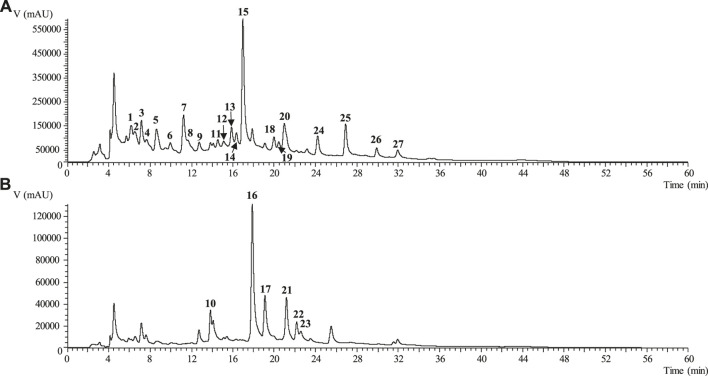
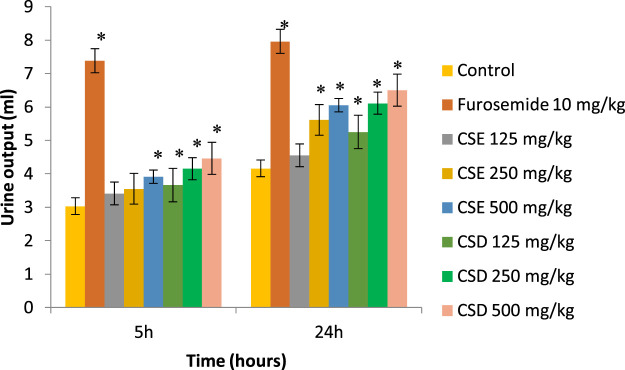
Cherry stems (CS) represent a by-product intensively used in Eastern European countries as a traditional remedy for urinary tract disorders. Ethnopharmacological evidences sustain the use of CS as aqueous preparations (infusion and decoction), but few data were previously reported about phytochemical profile and pharmacological potential of CS hydroalcoholic extracts. In this regard, we aimed to evaluate the phenolic profile, antioxidant and tyrosinase inhibitory potential, and diuretic activity of 70% hydroethanolic cherry stems extract and cherry stems decoction (CSD). LC-DAD-ESI/MS analysis revealed the presence of flavonoid-type compounds as main constituents for both preparations, especially flavanones (naringenin glycosides). Antioxidant activity evaluated through DPPH, ABTS, and FRAP methods was superior for cherry stems extract, probably due to the presence of phenolic-derived compounds in higher amounts than CSD. On the other hand, tyrosinase inhibitory potential and diuretic effect exerted by CSD were stronger, highlighting that other types of hydrophilic secondary metabolites are responsible for this bioactivity. Overall, our findings indicate that CS preparations could be used as promising mild diuretic agents and encourage further investigations regarding the correlation between their chemical composition and bioactive potential.
樱桃茎(CS)是东欧国家广泛使用的一种副产品,作为治疗尿路疾病的传统药物。民族药理学证据支持将CS用作水剂(浸剂和煎剂),但此前关于CS水醇提取物的植物化学特征和药理潜力的报道较少。在这方面,我们旨在评估70%水乙醇樱桃茎提取物和樱桃茎煎剂(CSD)的酚类特征、抗氧化和酪氨酸酶抑制潜力以及利尿活性。LC-DAD-ESI/MS分析表明,两种制剂的主要成分均为黄酮类化合物,尤其是黄烷酮(柚皮苷糖苷)。通过DPPH、ABTS和FRAP方法评估的抗氧化活性,樱桃茎提取物更高,这可能是由于其酚类衍生化合物的含量高于CSD。另一方面,CSD的酪氨酸酶抑制潜力和利尿作用更强,这表明其他类型的亲水性次生代谢产物是这种生物活性的原因。总体而言,我们的研究结果表明,CS制剂有望用作温和的利尿剂,并鼓励进一步研究其化学成分与生物活性潜力之间的相关性。