Siddiqui Zain, Sarkar Biplab, Kim Ka Kyung, Kumar Arjun, Paul Reshma, Mahajan Aryan, Grasman Jonathan M, Yang Jian, Kumar Vivek A
Department of Biomedical Engineering, New Jersey Institute of Technology, Newark, NJ, USA.
Department of Biomedical Engineering, Huck Institutes of The Life Sciences, Materials Research Institute, Pennsylvania State University, University Park, PA, USA.
Chem Eng J. 2021 Oct;422. doi: 10.1016/j.cej.2021.130145. Epub 2021 May 4.
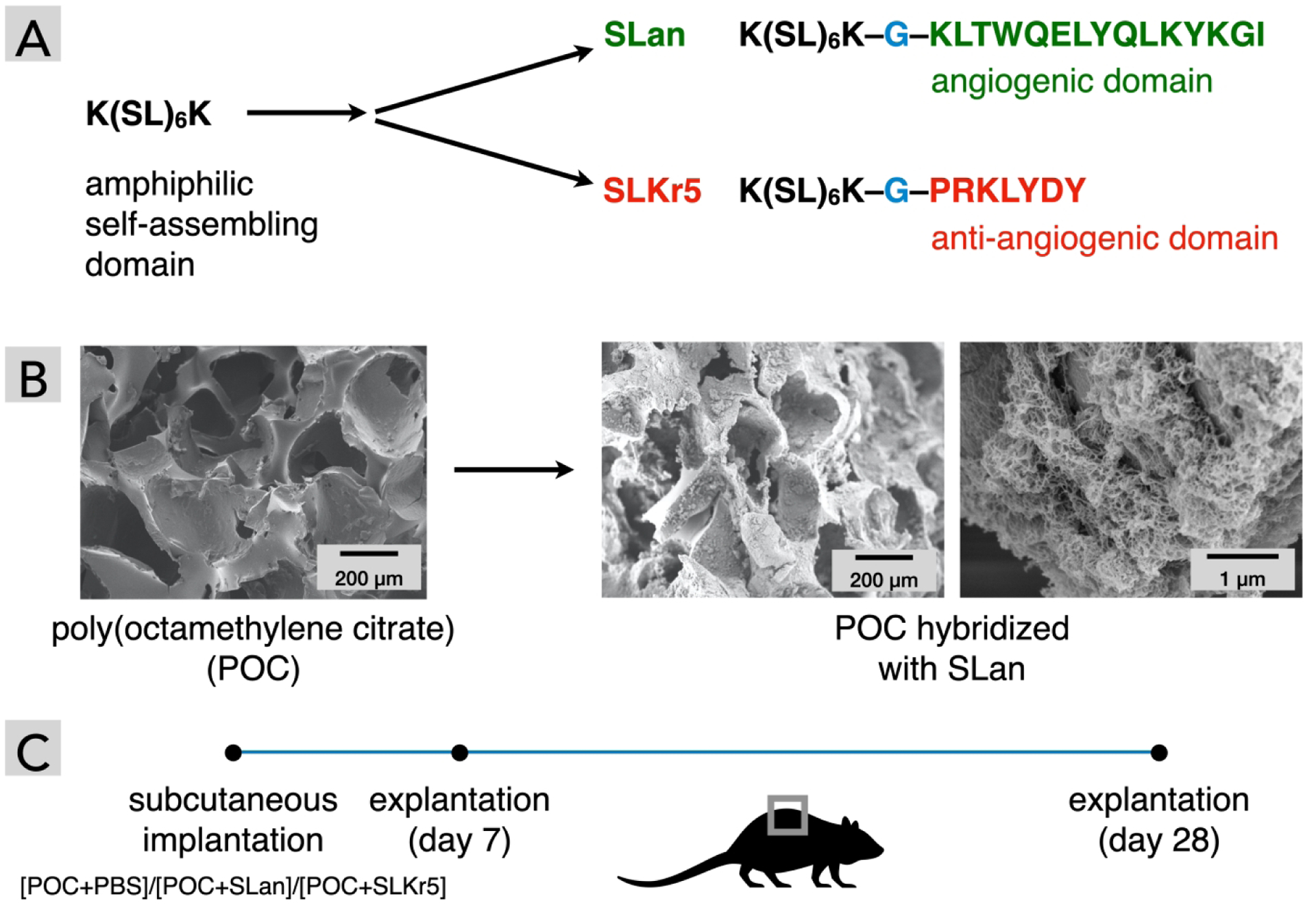
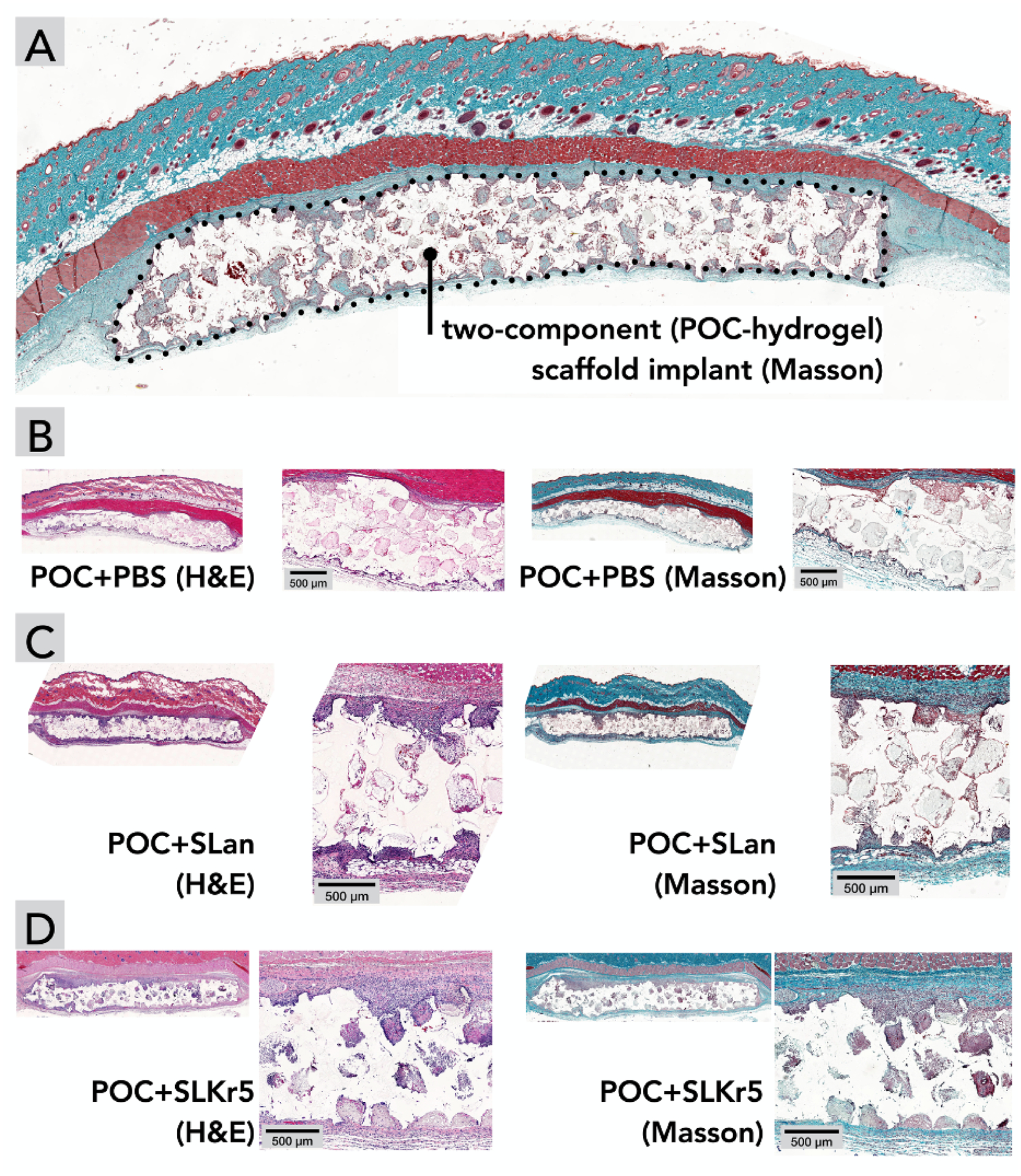
One of the major constraints against using polymeric scaffolds as tissue-regenerative matrices is a lack of adequate implant vascularization. Self-assembling peptide hydrogels can sequester small molecules and biological macromolecules, and they can support infiltrating cells . Here we demonstrate the ability of self-assembling peptide hydrogels to facilitate angiogenic sprouting into polymeric scaffolds after subcutaneous implantation. We constructed two-component scaffolds that incorporated microporous polymeric scaffolds and viscoelastic nanoporous peptide hydrogels. Nanofibrous hydrogels modified the biocompatibility and vascular integration of polymeric scaffolds with microscopic pores (pore diameters: 100-250 μm). In spite of similar amphiphilic sequences, charges, secondary structures, and supramolecular nanostructures, two soft hydrogels studied herein had different abilities to aid implant vascularization, but had similar levels of cellular infiltration. The functional difference of the peptide hydrogels was predicted by the difference in the bioactive moieties inserted into the primary sequences of the peptide monomers. Our study highlights the utility of soft supramolecular hydrogels to facilitate host-implant integration and control implant vascularization in biodegradable polyester scaffolds . Our study provides useful tools in designing multi-component regenerative scaffolds that recapitulate vascularized architectures of native tissues.
使用聚合物支架作为组织再生基质的主要限制之一是缺乏足够的植入物血管化。自组装肽水凝胶可以隔离小分子和生物大分子,并且能够支持浸润细胞。在此,我们展示了自组装肽水凝胶在皮下植入后促进血管生成芽长入聚合物支架的能力。我们构建了包含微孔聚合物支架和粘弹性纳米多孔肽水凝胶的双组分支架。纳米纤维水凝胶改变了具有微观孔隙(孔径:100 - 250μm)的聚合物支架的生物相容性和血管整合。尽管本文研究的两种软水凝胶具有相似的两亲序列、电荷、二级结构和超分子纳米结构,但它们在辅助植入物血管化方面具有不同的能力,而细胞浸润水平相似。肽水凝胶的功能差异是由插入肽单体一级序列中的生物活性部分的差异所预测的。我们的研究突出了软超分子水凝胶在促进宿主 - 植入物整合以及控制可生物降解聚酯支架中植入物血管化方面的效用。我们的研究为设计模仿天然组织血管化结构的多组分再生支架提供了有用的工具。