
磨牙症治疗中两种咬合板设计的压力觉测量评估——随机对照临床试验
Pressure Algometry Evaluation of Two Occlusal Splint Designs in Bruxism Management-Randomized, Controlled Clinical Trial.
作者信息
Dalewski Bartosz, Kamińska Agata, Kiczmer Paweł, Węgrzyn Krzysztof, Pałka Łukasz, Janda Katarzyna, Sobolewska Ewa
机构信息
Department of Dental Prosthetics, Pomeranian Medical University, 70-204 Szczecin, Poland.
Outpatient Dental Clinic, Pomeranian Medical University, 70-204 Szczecin, Poland.
出版信息
J Clin Med. 2021 May 27;10(11):2342. doi: 10.3390/jcm10112342.
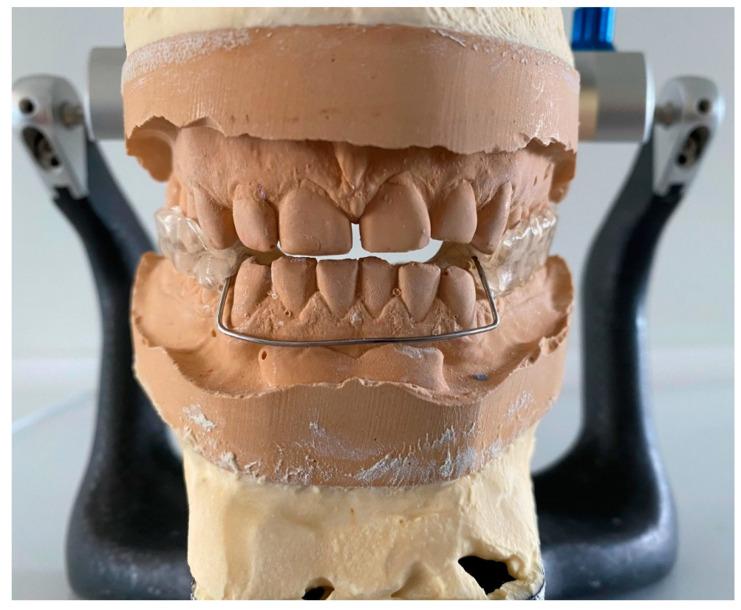
The aim of this pilot study was to evaluate the short-term effectiveness of two different occlusal devices and their impact on the pressure pain threshold (PPT) values among patients who reported to the Dental Prosthetics Outpatient Clinic of Pomeranian Medical University (Szczecin, Poland) and who were diagnosed with probable bruxism. Two groups were formed (A and B) to which patients were assigned randomly. Each group used a different occlusal splint for bruxism management. The occlusal appliance by Okeson, or the bimaxillary splint, was used overnight by each patient for 30 days of the study. The PPT was measured twice, at the first visit and after 30 days of using each occlusal device, with Wagner Paintest FPX 25 algometer. Bruxism was diagnosed based on data from the patient's medical history and from the physical examination. Nocturnal Bruxism Criteria according to the International Classification of Sleep Disorders (Third Edition) was used for the patient's evaluation. Results: similar pain factor (PF) reduction was observed in both the examined groups, regardless of the device used; canine guidance and no guidance were similarly effective in terms of increasing pain resilience.
本试点研究的目的是评估两种不同咬合装置的短期效果,以及它们对向波兰什切青波美拉尼亚医科大学义齿门诊就诊且被诊断为可能患有磨牙症的患者压力疼痛阈值(PPT)值的影响。研究随机分为两组(A组和B组),每组患者使用不同的咬合夹板来治疗磨牙症。在为期30天的研究中,每位患者每晚使用奥克森咬合器或双颌夹板。在首次就诊时以及使用每种咬合装置30天后,使用瓦格纳Paintest FPX 25痛觉计测量PPT两次。根据患者病史和体格检查数据诊断磨牙症。采用《国际睡眠障碍分类(第三版)》中的夜间磨牙症标准对患者进行评估。结果:无论使用何种装置,两个研究组的疼痛因子(PF)均有类似程度的降低;在提高疼痛耐受性方面,尖牙引导和无引导同样有效。




 Zotero 插件