De Paoli Benedetta, D'Antoni Federico, Merone Mario, Pieralice Silvia, Piemonte Vincenzo, Pozzilli Paolo
Unit of Computer Systems and Bioinformatics, Department of Engineering, Università Campus Bio-Medico di Roma, 00128 Rome, Italy.
Unit of Diabetology and Endocrinology, Department of Medicine, Università Campus Bio-Medico di Roma, 00128 Rome, Italy.
Bioengineering (Basel). 2021 May 26;8(6):72. doi: 10.3390/bioengineering8060072.
Type 1 Diabetes Mellitus (T1DM) is a widespread chronic disease in industrialized countries. Preventing blood glucose levels from exceeding the euglycaemic range would reduce the incidence of diabetes-related complications and improve the quality of life of subjects with T1DM. As a consequence, in the last decade, many Machine Learning algorithms aiming to forecast future blood glucose levels have been proposed. Despite the excellent performance they obtained, the prediction of abrupt changes in blood glucose values produced during physical activity (PA) is still one of the main challenges.
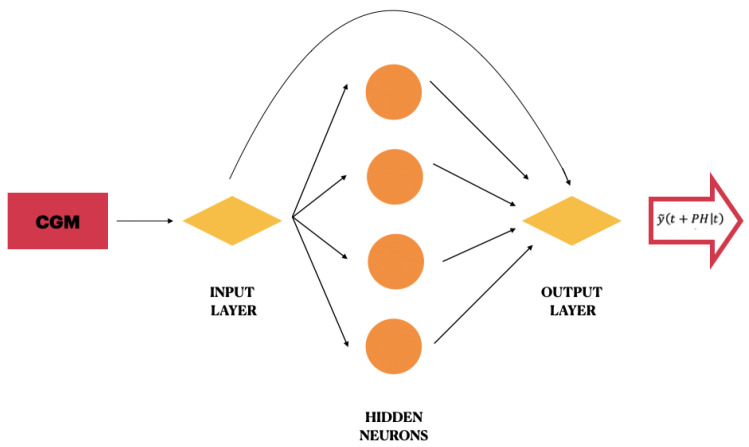
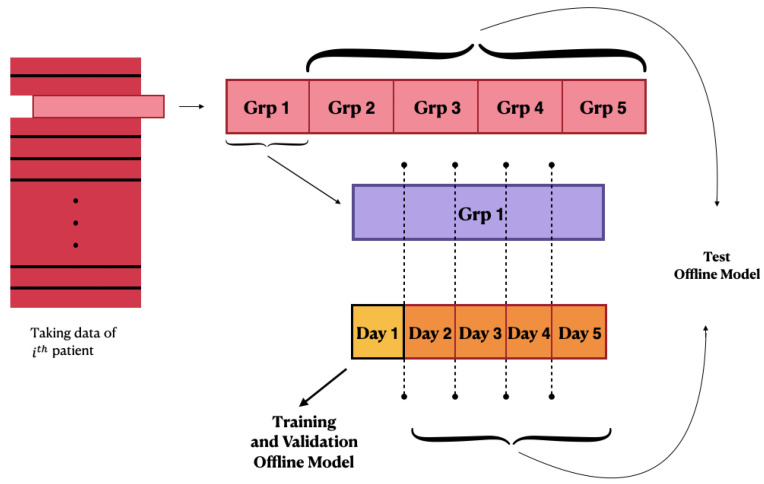
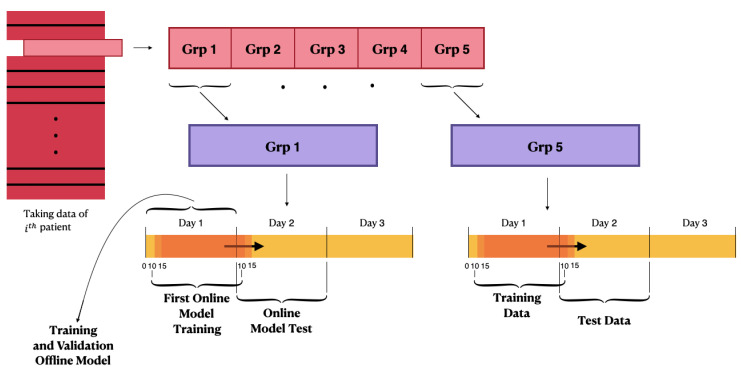
A Jump Neural Network was developed in order to overcome the issue of predicting blood glucose values during PA. Three learning configurations were developed and tested: offline training, online training, and online training with reinforcement. All configurations were tested on six subjects suffering from T1DM that held regular PA (three aerobic and three anaerobic) and exploited Continuous Glucose Monitoring (CGM).
The forecasting performance was evaluated in terms of the Root-Mean-Squared-Error (RMSE), according to a paradigm of Precision Medicine.
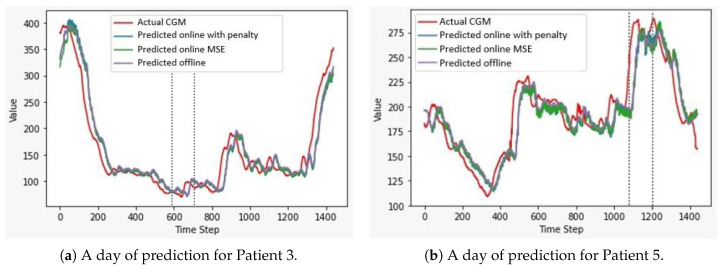
The online learning configurations performed better than the offline configuration in total days but not on the only CGM associated with the PA; thus, the results do not justify the increased computational burden because the improvement was not significant.
1型糖尿病(T1DM)在工业化国家是一种广泛存在的慢性疾病。防止血糖水平超出正常血糖范围将降低糖尿病相关并发症的发生率,并改善T1DM患者的生活质量。因此,在过去十年中,人们提出了许多旨在预测未来血糖水平的机器学习算法。尽管它们取得了优异的性能,但预测体育活动(PA)期间产生的血糖值的突然变化仍然是主要挑战之一。
为了克服预测PA期间血糖值的问题,开发了一种跳跃神经网络。开发并测试了三种学习配置:离线训练、在线训练和强化在线训练。所有配置都在六名患有T1DM且定期进行PA(三名有氧运动和三名无氧运动)并采用持续葡萄糖监测(CGM)的受试者身上进行了测试。
根据精准医学范式,通过均方根误差(RMSE)评估预测性能。
在线学习配置在总天数上的表现优于离线配置,但在与PA相关的唯一CGM上则不然;因此,结果并不足以证明增加的计算负担是合理的,因为改进并不显著。