Lins Maísa, Puppin Zandonadi Renata, Raposo António, Ginani Veronica Cortez
Post-Graduate Program in Human Nutrition, University of Brasília, Brasília 70910-900, Brazil.
Department of Nutrition, University of Brasília, Brasília 70910-900, Brazil.
Foods. 2021 May 24;10(6):1175. doi: 10.3390/foods10061175.
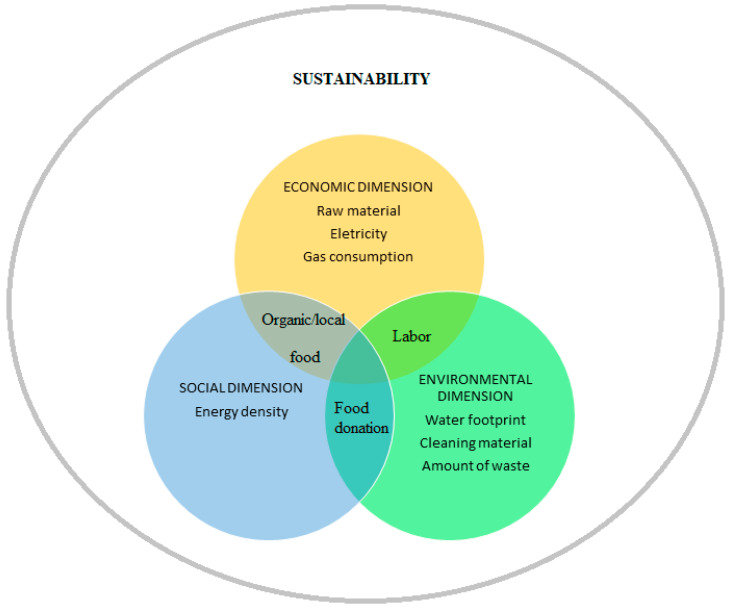
Food waste (FW) is a current, complex, and widely debated issue in various spheres of society. Globally, about 2.6 trillion dollars per year is lost because of wasted food. Part of FW is preventable, and it is necessary to identify where it occurs. In most cases, FW occurs at the end of the production chain (meal preparation and distribution). Identifying the main food service failures on FW is important for developing efficient strategies for reducing them. Therefore, this study aimed to perform a narrative review of the impacts caused by FW in food services considering the three dimensions of sustainability (social, economic, or environmental). Multiple reasons were identified in this review that impacts those three dimensions, such as the cost of wasted raw material, use of cleaning material, the energy consumption, salary of food handlers, the water footprint, the amounts of rest-intake, production waste, energy density wasted, use of organic food, and food donation. Identifying these aspects can contribute to reduce FW impacts for better sustainable development, develop tools to measure FW, and assist food service managers in minimizing FW.
食物浪费(FW)是当前社会各个领域中一个复杂且备受广泛争议的问题。在全球范围内,每年因食物浪费而损失约2.6万亿美元。部分食物浪费是可以预防的,有必要确定其发生的地点。在大多数情况下,食物浪费发生在生产链末端(膳食准备和配送环节)。识别导致食物浪费的主要食品服务故障对于制定减少食物浪费的有效策略至关重要。因此,本研究旨在对食物浪费在食品服务中造成的影响进行叙述性综述,同时考虑可持续性的三个维度(社会、经济或环境)。本综述确定了影响这三个维度的多个原因,例如浪费的原材料成本、清洁材料的使用、能源消耗、食品处理人员的工资、水足迹、剩余摄入量、生产废弃物、浪费的能量密度、有机食品的使用以及食品捐赠。识别这些方面有助于减少食物浪费对可持续发展的影响,开发衡量食物浪费的工具,并协助食品服务经理将食物浪费降至最低。