Ni Kaiyuan, Lan Guangxu, Song Yang, Hao Ziyang, Lin Wenbin
Department of Chemistry, The University of Chicago Chicago IL 60637 USA
Department of Radiation and Cellular Oncology, Ludwig Center for Metastasis Research, The University of Chicago Chicago IL 60637 USA.
Chem Sci. 2020 Apr 20;11(29):7641-7653. doi: 10.1039/d0sc01949f.
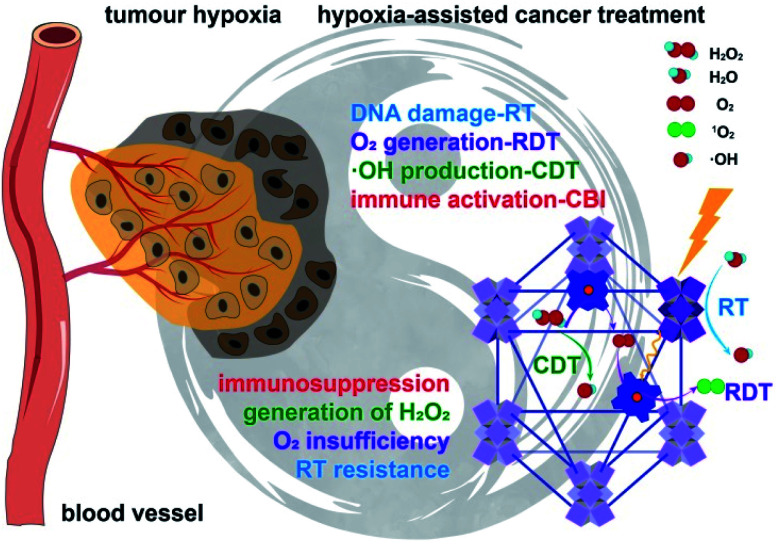
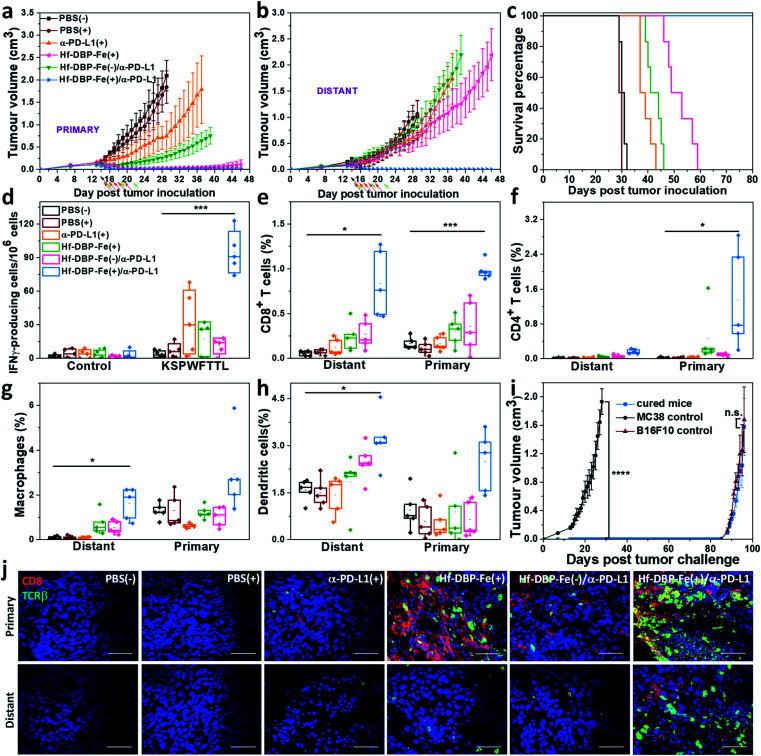
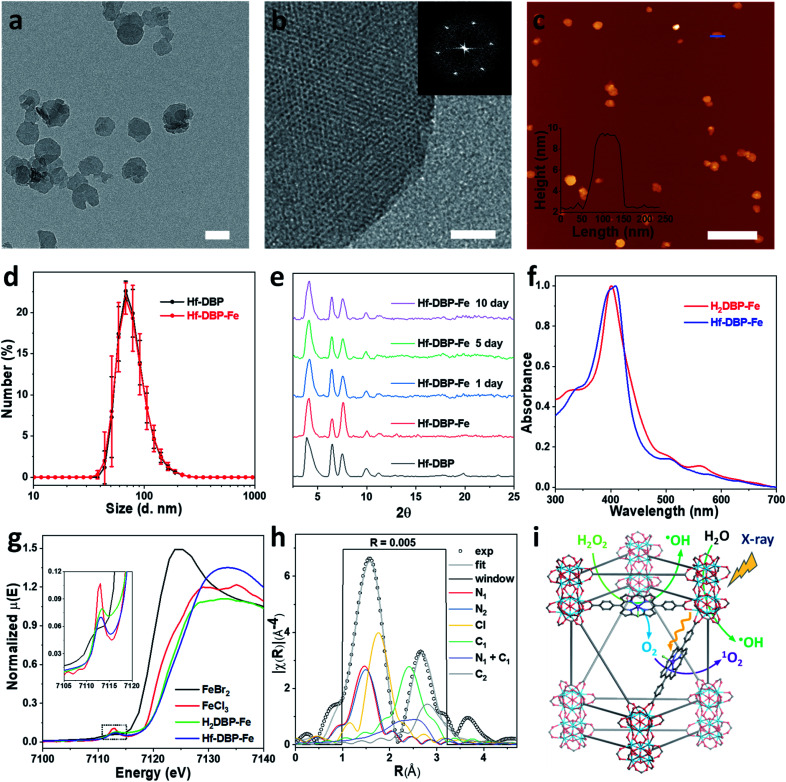
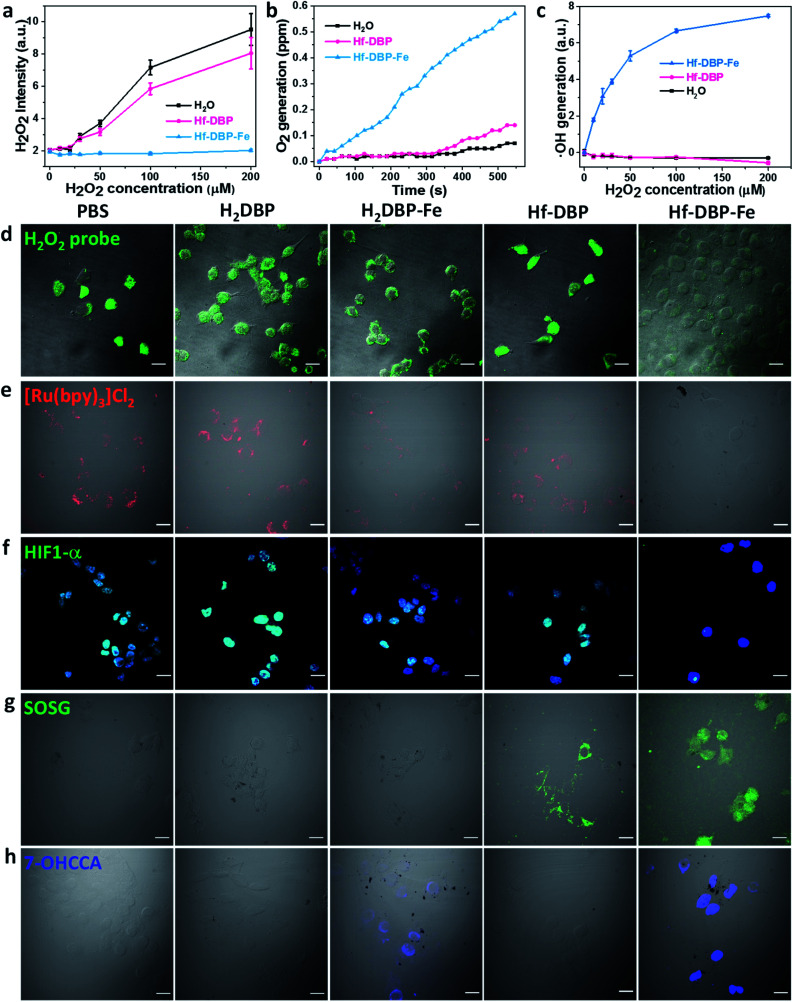
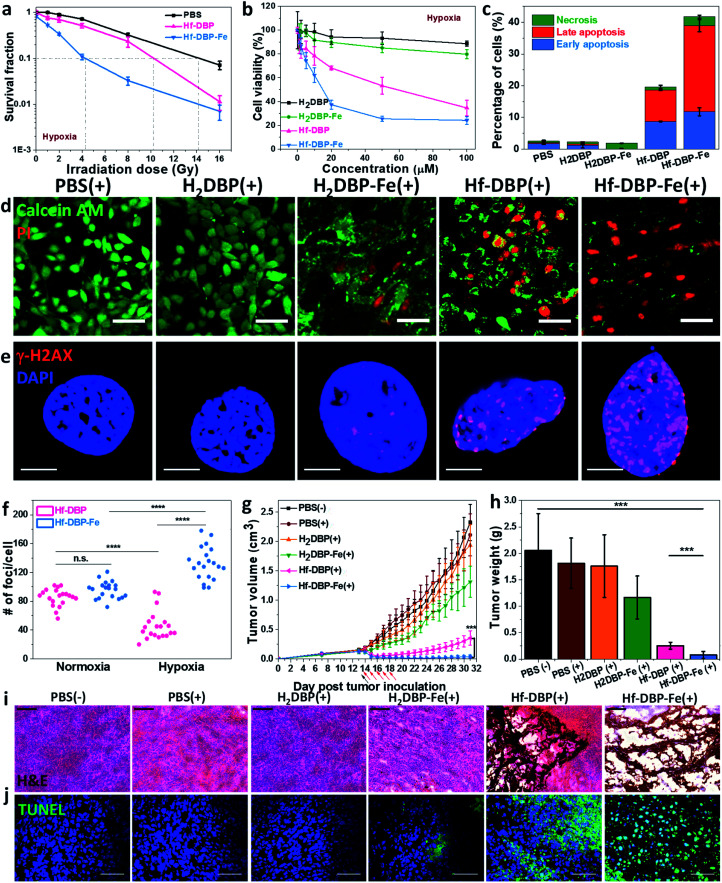
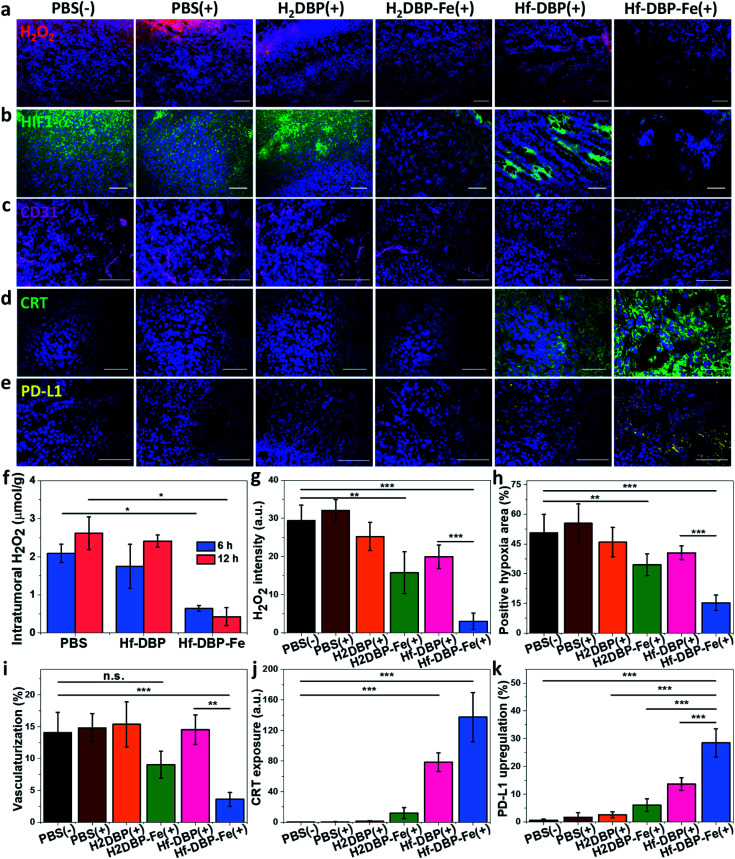
Tumor hypoxia presents a major impediment to effective cancer therapy with ionizing radiation and immune checkpoint inhibitors. Here we report the design of a biomimetic nanoscale metal-organic-framework (nMOF), Hf-DBP-Fe, with catalase-like activity to decompose elevated levels of HO in hypoxic tumors to generate oxygen and hydroxyl radical. The generated oxygen attenuates hypoxia to enable radiodynamic therapy upon X-ray irradiation and fixes DNA damage while hydroxyl radical inflicts direct damage to tumor cells to afford chemodynamic therapy. Hf-DBP-Fe thus mediates effective local therapy of hypoxic cancer with low-dose X-ray irradiation, leading to highly immunogenic tumor microenvironments for synergistic combination with anti-PD-L1 immune checkpoint blockade. This combination treatment not only eradicates primary tumors but also rejects distant tumors through systemic anti-tumor immunity. We have thus advanced an nMOF-based strategy to harness hypoxic tumor microenvironments for highly effective cancer therapy using a synergistic combination of low dose radiation and immune checkpoint blockade.
肿瘤缺氧是电离辐射和免疫检查点抑制剂有效治疗癌症的主要障碍。在此,我们报告了一种具有过氧化氢酶样活性的仿生纳米级金属有机框架(nMOF),即Hf-DBP-Fe的设计,其可分解缺氧肿瘤中升高的HO水平,以产生氧气和羟基自由基。所产生的氧气减轻缺氧状态,从而在X射线照射时实现放射动力疗法,并修复DNA损伤,而羟基自由基对肿瘤细胞造成直接损伤,从而实现化学动力疗法。因此,Hf-DBP-Fe通过低剂量X射线照射介导对缺氧癌症的有效局部治疗,导致产生高度免疫原性的肿瘤微环境,以便与抗PD-L1免疫检查点阻断进行协同联合治疗。这种联合治疗不仅根除原发性肿瘤,还通过全身抗肿瘤免疫排斥远处肿瘤。因此,我们提出了一种基于nMOF的策略,利用缺氧肿瘤微环境,通过低剂量辐射和免疫检查点阻断的协同联合实现高效癌症治疗。