School of Computer Science, University College Dublin, Dublin 4, Ireland.
FutureNeuro, SFI Research Centre for Chronic and Rare Neurological Diseases, Royal College of Surgeons in Ireland, Dublin 2, Ireland.
Sci Rep. 2021 Jun 10;11(1):12237. doi: 10.1038/s41598-021-91632-2.
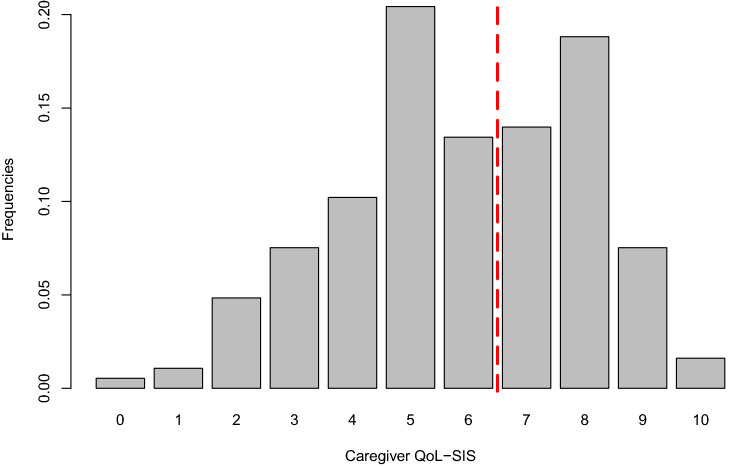
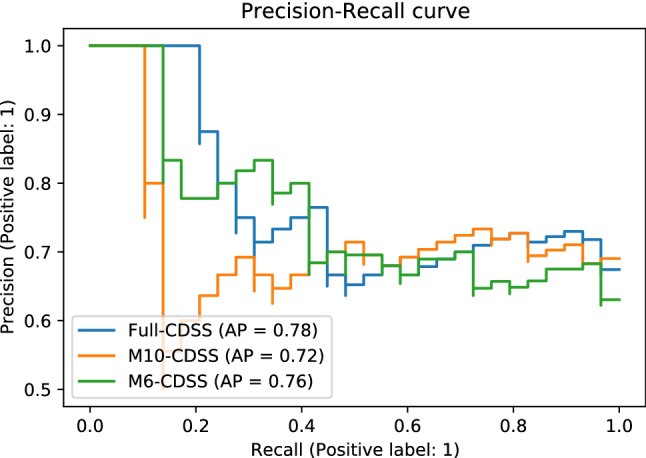
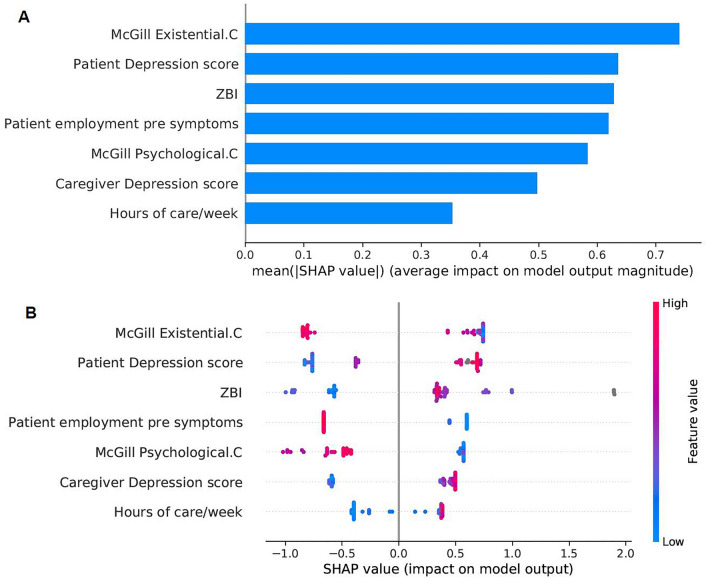
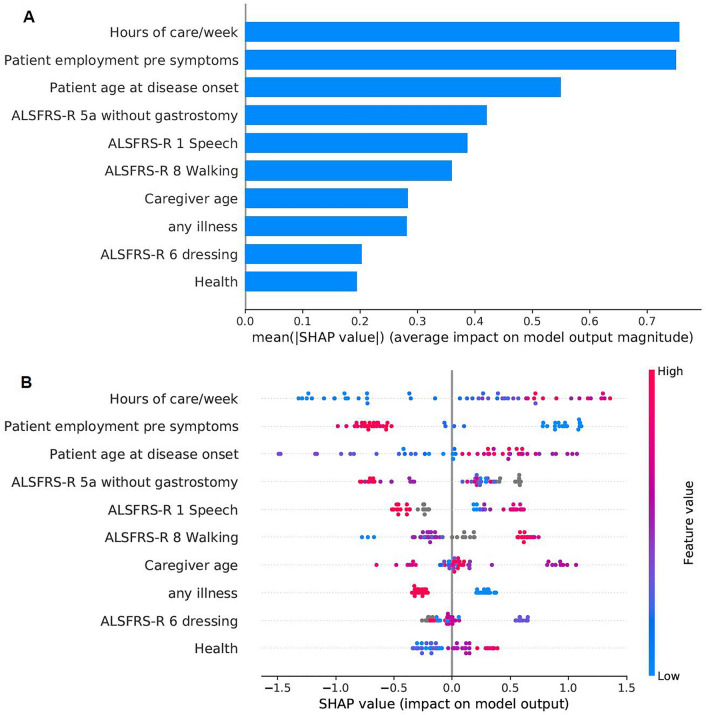
Amyotrophic Lateral Sclerosis (ALS) is a rare neurodegenerative, fatal and currently incurable disease. People with ALS need support from informal caregivers due to the motor and cognitive decline caused by the disease. This study aims to identify caregivers whose quality of life (QoL) may be impacted as a result of caring for a person with ALS. In this study, we worked towards the identification of the predictors of a caregiver's QoL in addition to the development of a model for clinical use to alert clinicians when a caregiver is at risk of experiencing low QoL. The data were collected through the Irish ALS Registry and via interviews on several topics with 90 patient and caregiver pairs at three time-points. The McGill QoL questionnaire was used to assess caregiver QoL-the MQoL Single Item Score measures the overall QoL and was selected as the outcome of interest in this work. The caregiver's existential QoL and burden, as well as the patient's depression and employment before the onset of symptoms were the features that had the highest impact in predicting caregiver quality of life. A small subset of features that could be easy to collect was used to develop a second model to use it in a clinical setting. The most predictive features for that model were the weekly caregiving duties, age and health of the caregiver, as well as the patient's physical functioning and age of onset.
肌萎缩侧索硬化症(ALS)是一种罕见的神经退行性疾病,致命且目前无法治愈。由于疾病导致的运动和认知能力下降,ALS 患者需要得到非正式照顾者的支持。本研究旨在确定那些照顾 ALS 患者的照顾者的生活质量(QoL)可能受到影响的人。在这项研究中,我们致力于确定照顾者 QoL 的预测因素,并开发一个临床使用的模型,以便在照顾者有低 QoL 风险时提醒临床医生。数据是通过爱尔兰 ALS 登记处和对 90 对患者和照顾者在三个时间点进行的几个主题的访谈收集的。使用 McGill QoL 问卷评估照顾者的 QoL-MQoL 单项评分衡量整体 QoL,是这项工作中感兴趣的结果。照顾者的存在主义 QoL 和负担,以及患者在出现症状前的抑郁和就业情况,是预测照顾者生活质量的最重要特征。使用一个易于收集的特征子集来开发第二个模型,用于临床环境。该模型最具预测性的特征是每周的护理工作量、照顾者的年龄和健康状况,以及患者的身体功能和发病年龄。