• 文献检索
  • 文档翻译
  • 深度研究
  • 学术资讯
  • Suppr Zotero 插件Zotero 插件
  • 邀请有礼
  • 套餐&价格
  • 历史记录
应用&插件
Suppr Zotero 插件Zotero 插件浏览器插件Mac 客户端Windows 客户端微信小程序
定价
高级版会员购买积分包购买API积分包
服务
文献检索文档翻译深度研究API 文档MCP 服务
关于我们
关于 Suppr公司介绍联系我们用户协议隐私条款
关注我们

Suppr 超能文献

核心技术专利:CN118964589B侵权必究
粤ICP备2023148730 号-1Suppr @ 2026

文献检索

告别复杂PubMed语法,用中文像聊天一样搜索,搜遍4000万医学文献。AI智能推荐,让科研检索更轻松。

立即免费搜索

文件翻译

保留排版,准确专业,支持PDF/Word/PPT等文件格式,支持 12+语言互译。

免费翻译文档

深度研究

AI帮你快速写综述,25分钟生成高质量综述,智能提取关键信息,辅助科研写作。

立即免费体验

患有和未患呼吸道合胞病毒细支气管炎的婴儿的鼻腔和粪便微生物群及免疫分析

Nasal and Fecal Microbiota and Immunoprofiling of Infants With and Without RSV Bronchiolitis.

作者信息

Alba Claudio, Aparicio Marina, González-Martínez Felipe, González-Sánchez María Isabel, Pérez-Moreno Jimena, Toledo Del Castillo Blanca, Rodríguez Juan Miguel, Rodríguez-Fernández Rosa, Fernández Leonides

机构信息

Department of Nutrition and Food Science, Complutense University of Madrid, Madrid, Spain.

Department of Pediatrics, Hospital Universitario Gregorio Marañón, Madrid, Spain.

出版信息

Front Microbiol. 2021 Jun 1;12:667832. doi: 10.3389/fmicb.2021.667832. eCollection 2021.

DOI:10.3389/fmicb.2021.667832
PMID:34140944
原文链接:https://pmc.ncbi.nlm.nih.gov/articles/PMC8203809/
Abstract

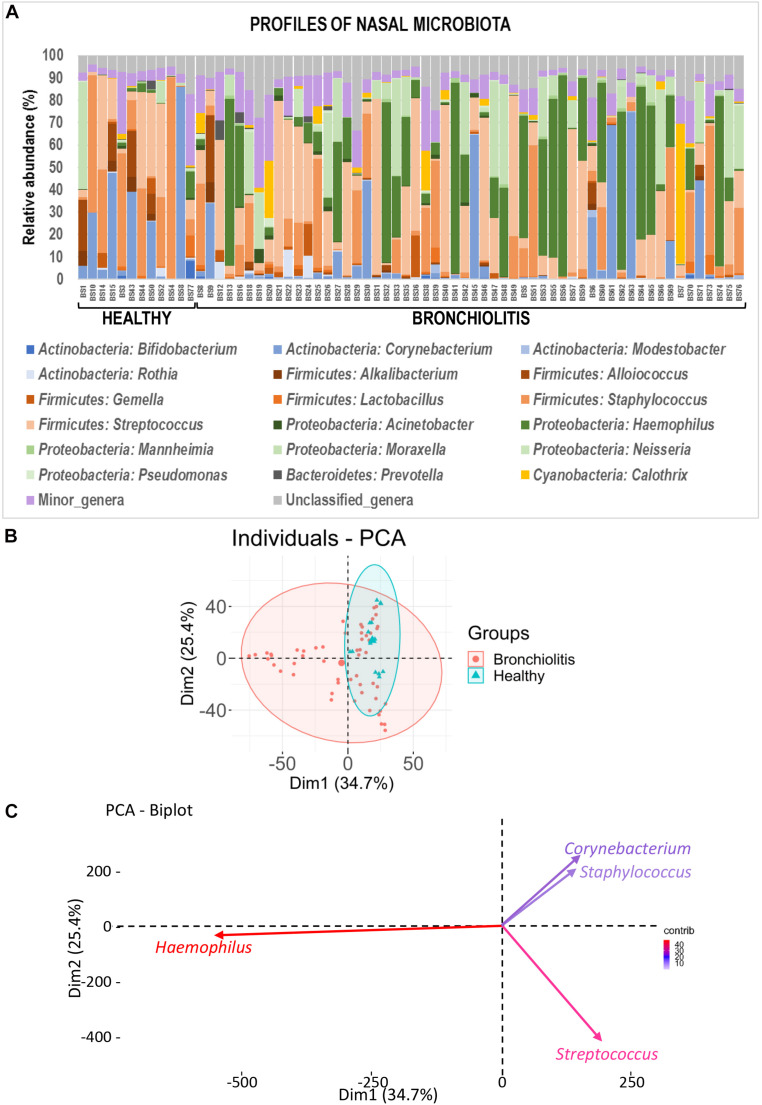
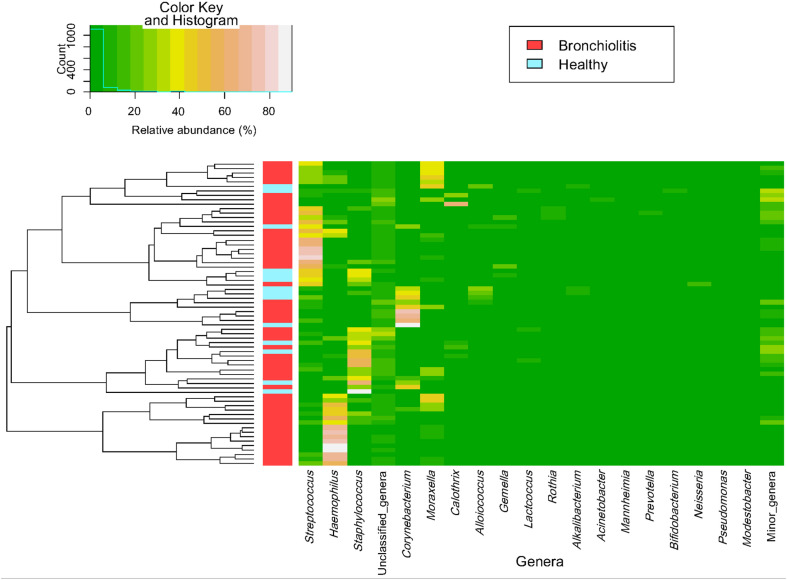
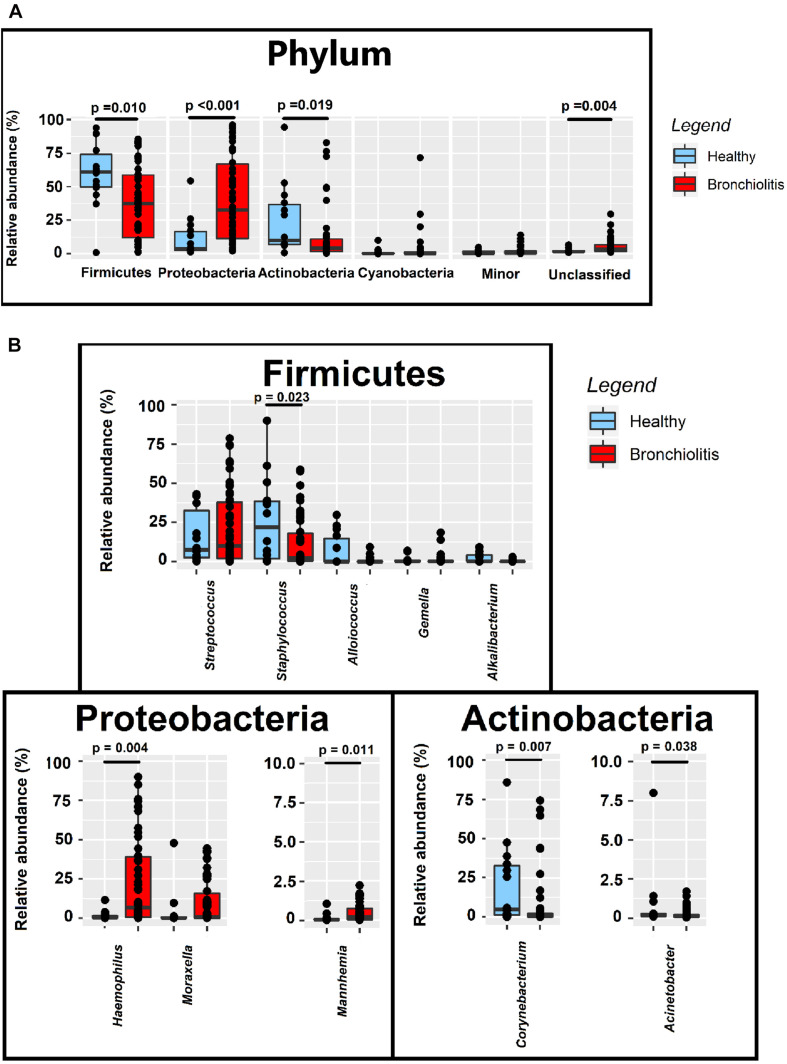
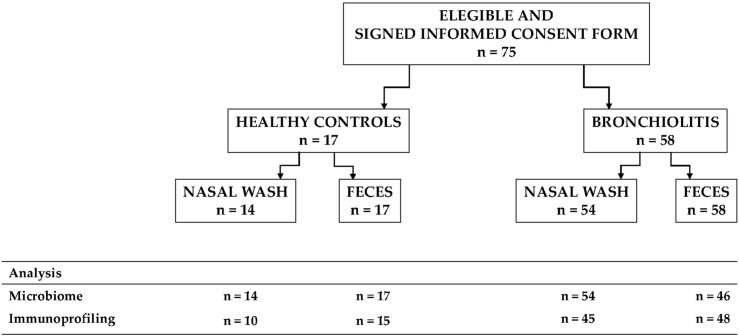
Bronchiolitis associated with the respiratory syncytial virus (RSV) is the leading cause of hospitalization among infants aged < 1 year. The main objective of this work was to assess the nasal and fecal microbiota and immune profiles in infants with RSV bronchiolitis, and to compare them with those of healthy infants. For this purpose, a total of 58 infants with RSV-positive bronchiolitis and 17 healthy infants (aged < 18 months) were recruited in this case-control study, which was approved by the Ethics Committee of the Hospital Gregorio Marañón. Nasal and fecal samples were obtained and submitted to bacterial microbiota analysis by 16S rDNA sequencing and to analysis of several immune factors related to inflammatory processes. Nasal samples in which and/or accounted for > 20% of the total sequences were exclusively detected among infants of the bronchiolitis group. In this group, the relative abundances of and were significantly lower than in nasal samples from the control group while the opposite was observed for those of and . Fecal bacterial microbiota of infants with bronchiolitis was similar to that of healthy infants. Significant differences were obtained between bronchiolitis and control groups for both the frequency of detection and concentration of BAFF/TNFSF13B and sTNF.R1 in nasal samples. The concentration of BAFF/TNFSF13B was also significantly higher in fecal samples from the bronchiolitis group. In conclusion, signatures of RSV-associated bronchiolitis have been found in this study, including dominance of and a high concentration of BAFF/TNFSF13B, IL-8 and sTNF.R1 in nasal samples, and a high fecal concentration of BAFF/TNFSF13B.

摘要

呼吸道合胞病毒(RSV)相关的细支气管炎是1岁以下婴儿住院的主要原因。这项工作的主要目的是评估RSV细支气管炎婴儿的鼻腔和粪便微生物群及免疫谱,并将其与健康婴儿的进行比较。为此,在这项病例对照研究中,共招募了58例RSV阳性细支气管炎婴儿和17例健康婴儿(年龄<18个月),该研究获得了格雷戈里奥·马拉尼翁医院伦理委员会的批准。采集鼻腔和粪便样本,通过16S rDNA测序进行细菌微生物群分析,并分析与炎症过程相关的几种免疫因子。仅在细支气管炎组婴儿中检测到鼻腔样本中 和/或 占总序列的>20%。在该组中, 和 的相对丰度显著低于对照组的鼻腔样本,而 和 的相对丰度则相反。细支气管炎婴儿的粪便细菌微生物群与健康婴儿相似。在鼻腔样本中,细支气管炎组和对照组在BAFF/TNFSF13B和sTNF.R1的检测频率和浓度方面均存在显著差异。细支气管炎组粪便样本中BAFF/TNFSF13B的浓度也显著更高。总之,本研究发现了RSV相关细支气管炎的特征,包括鼻腔样本中 占优势以及BAFF/TNFSF13B、IL-8和sTNF.R1浓度高,以及粪便中BAFF/TNFSF13B浓度高。
https://cdn.ncbi.nlm.nih.gov/pmc/blobs/b1ca/8203809/975cf8697aa1/fmicb-12-667832-g007.jpg
https://cdn.ncbi.nlm.nih.gov/pmc/blobs/b1ca/8203809/9bc4a0ec61b1/fmicb-12-667832-g001.jpg
https://cdn.ncbi.nlm.nih.gov/pmc/blobs/b1ca/8203809/c7c8ba7fc136/fmicb-12-667832-g002.jpg
https://cdn.ncbi.nlm.nih.gov/pmc/blobs/b1ca/8203809/908e1bc13cc1/fmicb-12-667832-g003.jpg
https://cdn.ncbi.nlm.nih.gov/pmc/blobs/b1ca/8203809/4ef6d97b0d6d/fmicb-12-667832-g004.jpg
https://cdn.ncbi.nlm.nih.gov/pmc/blobs/b1ca/8203809/0eb48ae090ac/fmicb-12-667832-g005.jpg
https://cdn.ncbi.nlm.nih.gov/pmc/blobs/b1ca/8203809/c0e22f059f67/fmicb-12-667832-g006.jpg
https://cdn.ncbi.nlm.nih.gov/pmc/blobs/b1ca/8203809/975cf8697aa1/fmicb-12-667832-g007.jpg
https://cdn.ncbi.nlm.nih.gov/pmc/blobs/b1ca/8203809/9bc4a0ec61b1/fmicb-12-667832-g001.jpg
https://cdn.ncbi.nlm.nih.gov/pmc/blobs/b1ca/8203809/c7c8ba7fc136/fmicb-12-667832-g002.jpg
https://cdn.ncbi.nlm.nih.gov/pmc/blobs/b1ca/8203809/908e1bc13cc1/fmicb-12-667832-g003.jpg
https://cdn.ncbi.nlm.nih.gov/pmc/blobs/b1ca/8203809/4ef6d97b0d6d/fmicb-12-667832-g004.jpg
https://cdn.ncbi.nlm.nih.gov/pmc/blobs/b1ca/8203809/0eb48ae090ac/fmicb-12-667832-g005.jpg
https://cdn.ncbi.nlm.nih.gov/pmc/blobs/b1ca/8203809/c0e22f059f67/fmicb-12-667832-g006.jpg
https://cdn.ncbi.nlm.nih.gov/pmc/blobs/b1ca/8203809/975cf8697aa1/fmicb-12-667832-g007.jpg

相似文献

1
Nasal and Fecal Microbiota and Immunoprofiling of Infants With and Without RSV Bronchiolitis.患有和未患呼吸道合胞病毒细支气管炎的婴儿的鼻腔和粪便微生物群及免疫分析
Front Microbiol. 2021 Jun 1;12:667832. doi: 10.3389/fmicb.2021.667832. eCollection 2021.
2
Comparative Fecal Microbiota Analysis of Infants With Acute Bronchiolitis Caused or Not Caused by Respiratory Syncytial Virus.比较毛细支气管炎患儿与呼吸道合胞病毒引起和非引起毛细支气管炎患儿的粪便微生物群分析。
Front Cell Infect Microbiol. 2022 Mar 7;12:815715. doi: 10.3389/fcimb.2022.815715. eCollection 2022.
3
Haemophilus-Dominant Nasopharyngeal Microbiota Is Associated With Delayed Clearance of Respiratory Syncytial Virus in Infants Hospitalized for Bronchiolitis.嗜血杆菌占优势的鼻咽微生物群与毛细支气管炎住院婴儿呼吸道合胞病毒清除延迟有关。
J Infect Dis. 2019 May 5;219(11):1804-1808. doi: 10.1093/infdis/jiy741.
4
Nasal Airway Microbiota Profile and Severe Bronchiolitis in Infants: A Case-control Study.婴儿鼻气道微生物群特征与重症细支气管炎:一项病例对照研究。
Pediatr Infect Dis J. 2017 Nov;36(11):1044-1051. doi: 10.1097/INF.0000000000001500.
5
Airway microbiome, host immune response and recurrent wheezing in infants with severe respiratory syncytial virus bronchiolitis.气道微生物组、宿主免疫反应与严重呼吸道合胞病毒毛细支气管炎婴幼儿反复喘息的关系。
Pediatr Allergy Immunol. 2020 Apr;31(3):281-289. doi: 10.1111/pai.13183. Epub 2020 Jan 22.
6
Nasopharyngeal Microbiota, Host Transcriptome, and Disease Severity in Children with Respiratory Syncytial Virus Infection.呼吸道合胞病毒感染儿童的鼻咽微生物群、宿主转录组与疾病严重程度
Am J Respir Crit Care Med. 2016 Nov 1;194(9):1104-1115. doi: 10.1164/rccm.201602-0220OC.
7
Nasal Microbiota in RSV Bronchiolitis.呼吸道合胞病毒细支气管炎中的鼻腔微生物群
Microorganisms. 2020 May 13;8(5):731. doi: 10.3390/microorganisms8050731.
8
Increased Moraxella and Streptococcus species abundance after severe bronchiolitis is associated with recurrent wheezing.严重细支气管炎后莫拉氏菌和链球菌属物种丰度增加与反复喘息有关。
J Allergy Clin Immunol. 2020 Feb;145(2):518-527.e8. doi: 10.1016/j.jaci.2019.10.034. Epub 2019 Nov 15.
9
RSV-induced bronchiolitis but not upper respiratory tract infection is accompanied by an increased nasal IL-18 response.呼吸道合胞病毒(RSV)引起的细支气管炎而非上呼吸道感染伴有鼻腔白细胞介素-18反应增强。
J Med Virol. 2003 Oct;71(2):290-7. doi: 10.1002/jmv.10482.
10
Gut, oral, and nasopharyngeal microbiota dynamics in the clinical course of hospitalized infants with respiratory syncytial virus bronchiolitis.住院呼吸道合胞病毒毛细支气管炎婴儿临床病程中肠道、口腔和鼻咽微生物群动态。
Front Cell Infect Microbiol. 2023 Aug 23;13:1193113. doi: 10.3389/fcimb.2023.1193113. eCollection 2023.

引用本文的文献

1
Effect of respiratory microflorae colonization on short and long-time outcomes of respiratory syncytial virus infection in children: A scoping review.呼吸道微生物群定植对儿童呼吸道合胞病毒感染短期和长期结局的影响:一项范围综述。
Pediatr Discov. 2024 Jul 16;2(4):e97. doi: 10.1002/pdi3.97. eCollection 2024 Dec.
2
Short-Chain Fatty Acids: Promising Therapeutic Targets for Respiratory Syncytial Virus Infection.短链脂肪酸:呼吸道合胞病毒感染的潜在治疗靶点
Clin Rev Allergy Immunol. 2025 Jan 28;68(1):8. doi: 10.1007/s12016-024-09018-x.
3
A clinical protocol for a German birth cohort study of the Maturation of Immunity Against respiratory viral Infections (MIAI).

本文引用的文献

1
Human Respiratory and Gut Microbiomes-Do They Really Contribute to Respiratory Health?人类呼吸道和肠道微生物群——它们真的对呼吸健康有影响吗?
Front Pediatr. 2020 Sep 3;8:528. doi: 10.3389/fped.2020.00528. eCollection 2020.
2
B cell-activating factor (BAFF) in children with inflammatory bowel disease.儿童炎症性肠病中的 B 细胞激活因子 (BAFF)。
Pediatr Res. 2021 May;89(7):1798-1803. doi: 10.1038/s41390-020-01155-1. Epub 2020 Sep 16.
3
Nasal Microbiota in RSV Bronchiolitis.呼吸道合胞病毒细支气管炎中的鼻腔微生物群
一项关于呼吸道病毒感染免疫成熟(MIAI)的德国出生队列研究的临床方案。
Front Immunol. 2024 Sep 17;15:1443665. doi: 10.3389/fimmu.2024.1443665. eCollection 2024.
4
Gut and respiratory tract microbiota in children younger than 12 months hospitalized for bronchiolitis compared with healthy children: can we predict the severity and medium-term respiratory outcome?12 个月以下因细支气管炎住院的儿童与健康儿童的肠道和呼吸道微生物群比较:我们能否预测严重程度和中期呼吸结局?
Microbiol Spectr. 2024 Jul 2;12(7):e0255623. doi: 10.1128/spectrum.02556-23. Epub 2024 May 24.
5
Respiratory and Gut Microbiome Modification during Respiratory Syncytial Virus Infection: A Systematic Review.呼吸道合胞病毒感染期间的呼吸和肠道微生物组修饰:系统评价。
Viruses. 2024 Jan 31;16(2):220. doi: 10.3390/v16020220.
6
Influence of SARS-CoV-2 Status and Aging on the Nasal and Fecal Immunological Profiles of Elderly Individuals Living in Nursing Homes.SARS-CoV-2 状态和衰老对居住在养老院的老年个体的鼻腔和粪便免疫谱的影响。
Viruses. 2023 Jun 20;15(6):1404. doi: 10.3390/v15061404.
7
A pilot study exploring the association of bronchial bacterial microbiota and recurrent wheezing in infants with atopy.一项探索特应性婴儿支气管细菌微生物群与反复喘息相关性的初步研究。
Front Cell Infect Microbiol. 2023 Feb 15;13:1013809. doi: 10.3389/fcimb.2023.1013809. eCollection 2023.
8
Administration of CECT 30632 to elderly during the COVID-19 pandemic: Nasal and fecal metataxonomic analysis and fatty acid profiling.在新冠疫情期间对老年人施用CECT 30632:鼻腔和粪便宏分类学分析及脂肪酸谱分析
Front Microbiol. 2022 Dec 16;13:1052675. doi: 10.3389/fmicb.2022.1052675. eCollection 2022.
9
The Relationship between Gut Microbiota and Respiratory Tract Infections in Childhood: A Narrative Review.肠道微生物群与儿童呼吸道感染的关系:叙述性综述。
Nutrients. 2022 Jul 21;14(14):2992. doi: 10.3390/nu14142992.
10
Immunopathology of RSV: An Updated Review.呼吸道合胞病毒的免疫病理学:最新综述。
Viruses. 2021 Dec 10;13(12):2478. doi: 10.3390/v13122478.
Microorganisms. 2020 May 13;8(5):731. doi: 10.3390/microorganisms8050731.
4
Microbiological and Immunological Markers in Milk and Infant Feces for Common Gastrointestinal Disorders: A Pilot Study.牛奶和婴儿粪便中的微生物学和免疫学标志物与常见胃肠道疾病:一项初步研究。
Nutrients. 2020 Feb 27;12(3):634. doi: 10.3390/nu12030634.
5
What's Normal? Microbiomes in Human Milk and Infant Feces Are Related to Each Other but Vary Geographically: The INSPIRE Study.何为正常?人乳和婴儿粪便中的微生物群相互关联但存在地域差异:INSPIRE研究。
Front Nutr. 2019 Apr 17;6:45. doi: 10.3389/fnut.2019.00045. eCollection 2019.
6
Osteopontin plays a pivotal role in increasing severity of respiratory syncytial virus infection.骨桥蛋白在增加呼吸道合胞病毒感染的严重程度方面起着关键作用。
PLoS One. 2018 Apr 20;13(4):e0192709. doi: 10.1371/journal.pone.0192709. eCollection 2018.
7
Respiratory Syncytial Virus Genotypes, Host Immune Profiles, and Disease Severity in Young Children Hospitalized With Bronchiolitis.呼吸道合胞病毒基因型、宿主免疫特征与婴幼儿毛细支气管炎严重程度的关系
J Infect Dis. 2017 Dec 27;217(1):24-34. doi: 10.1093/infdis/jix543.
8
Maturation of the Infant Respiratory Microbiota, Environmental Drivers, and Health Consequences. A Prospective Cohort Study.婴儿呼吸微生物组的成熟、环境驱动因素和健康后果。一项前瞻性队列研究。
Am J Respir Crit Care Med. 2017 Dec 15;196(12):1582-1590. doi: 10.1164/rccm.201703-0554OC.
9
Associations of Nasopharyngeal Metabolome and Microbiome with Severity among Infants with Bronchiolitis. A Multiomic Analysis.毛细支气管炎婴儿鼻咽部代谢组和微生物组与病情严重程度的关联:一项多组学分析
Am J Respir Crit Care Med. 2017 Oct 1;196(7):882-891. doi: 10.1164/rccm.201701-0071OC.
10
The Landscape Ecology and Microbiota of the Human Nose, Mouth, and Throat.人类鼻腔、口腔和咽喉的景观生态学与微生物群
Cell Host Microbe. 2017 Apr 12;21(4):421-432. doi: 10.1016/j.chom.2017.03.011.