Yang Ming, Cao Menglin, Chen Yuhao, Chen Yanni, Fan Geng, Li Chenxi, Wang Jue, Liu Tian
The Key Laboratory of Biomedical Information Engineering of Ministry of Education, Institute of Health and Rehabilitation Science, School of Life Sciences and Technology, Xi'an Jiaotong University, Xi'an, China.
National Engineering Research Center for Healthcare Devices, Guangzhou, China.
Front Hum Neurosci. 2021 Jun 2;15:687288. doi: 10.3389/fnhum.2021.687288. eCollection 2021.
Brain functional networks (BFNs) constructed using resting-state functional magnetic resonance imaging (fMRI) have proven to be an effective way to understand aberrant functional connectivity in autism spectrum disorder (ASD) patients. It is still challenging to utilize these features as potential biomarkers for discrimination of ASD. The purpose of this work is to classify ASD and normal controls (NCs) using BFNs derived from rs-fMRI.
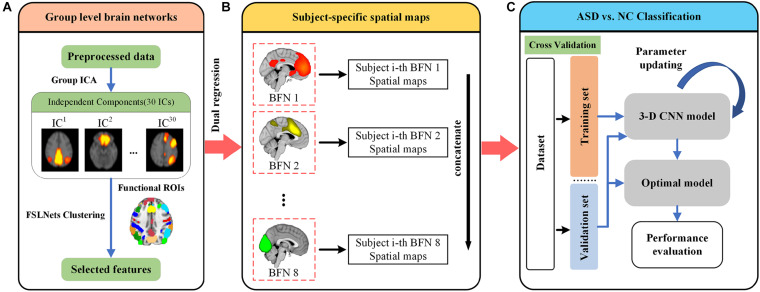
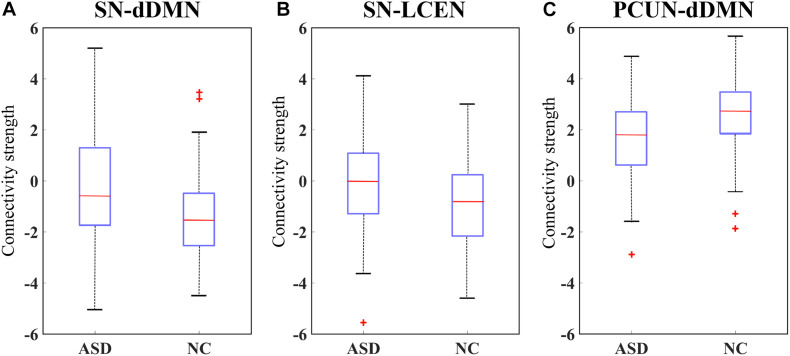
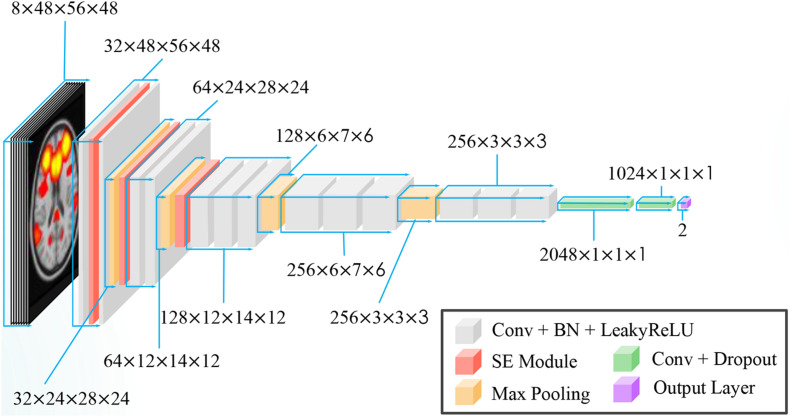
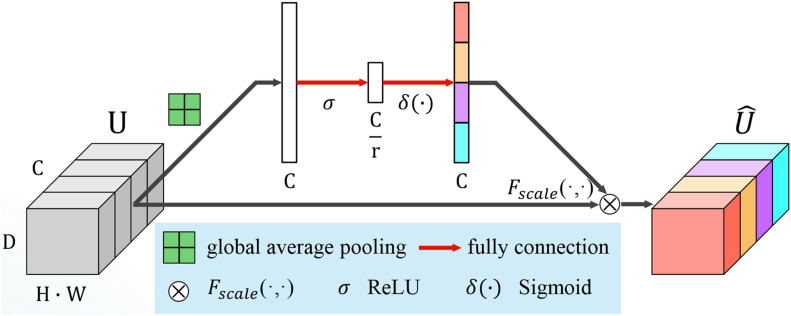
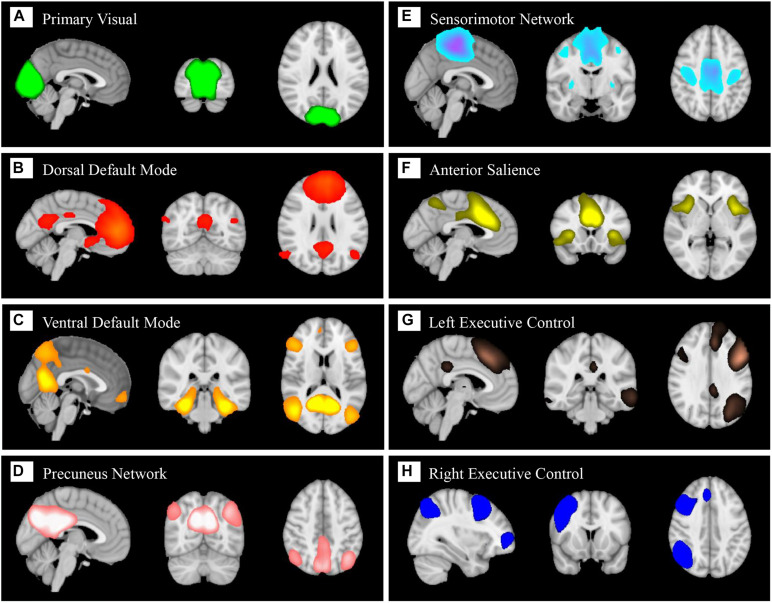
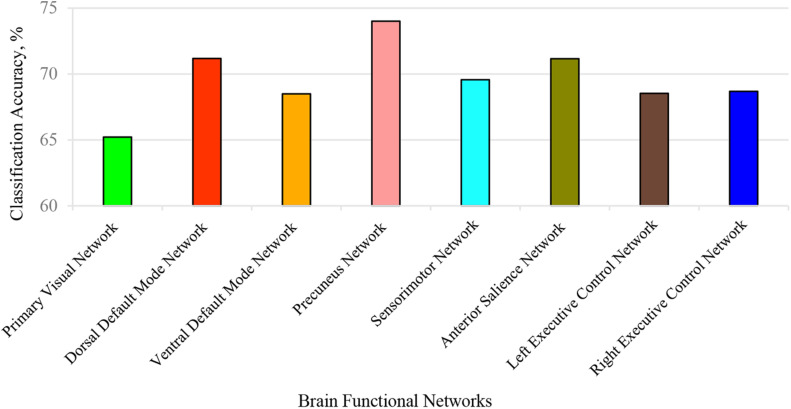
A deep learning framework was proposed that integrated convolutional neural network (CNN) and channel-wise attention mechanism to model both intra- and inter-BFN associations simultaneously for ASD diagnosis. We investigate the effects of each BFN on performance and performed inter-network connectivity analysis between each pair of BFNs. We compared the performance of our CNN model with some state-of-the-art algorithms using functional connectivity features.
We collected 79 ASD patients and 105 NCs from the ABIDE-I dataset. The mean accuracy of our classification algorithm was 77.74% for classification of ASD versus NCs.
The proposed model is able to integrate information from multiple BFNs to improve detection accuracy of ASD.
These findings suggest that large-scale BFNs is promising to serve as reliable biomarkers for diagnosis of ASD.
利用静息态功能磁共振成像(fMRI)构建的脑功能网络(BFNs)已被证明是理解自闭症谱系障碍(ASD)患者异常功能连接的有效方法。将这些特征用作ASD鉴别的潜在生物标志物仍具有挑战性。这项工作的目的是使用从静息态功能磁共振成像(rs-fMRI)得出的脑功能网络(BFNs)对ASD和正常对照(NCs)进行分类。
提出了一种深度学习框架,该框架集成了卷积神经网络(CNN)和通道注意力机制,以同时对脑功能网络内和网络间的关联进行建模,用于ASD诊断。我们研究了每个脑功能网络对性能的影响,并对每对脑功能网络之间进行了网络间连接性分析。我们使用功能连接特征将我们的卷积神经网络(CNN)模型的性能与一些最先进的算法进行了比较。
我们从ABIDE-I数据集中收集了79名ASD患者和105名正常对照。我们的分类算法对ASD与正常对照进行分类的平均准确率为77.74%。
所提出的模型能够整合来自多个脑功能网络的信息,以提高ASD的检测准确率。
这些发现表明,大规模脑功能网络有望作为ASD诊断的可靠生物标志物。