Univ. Bourgogne Franche-Comté, INSERM, EFS BFC, UMR1098, RIGHT Interactions Hôte Greffon-Tumeur/Ingénierie Cellulaire et Génique, Fédération Hospitalo-Universitaire INCREASE, LabEx LipSTIC, Besançon, France.
INSERM, Univ. Bourgogne Franche-Comté, LNC UMR1231, LabEx LipSTIC, Dijon, France.
Front Immunol. 2021 Jun 7;12:658404. doi: 10.3389/fimmu.2021.658404. eCollection 2021.
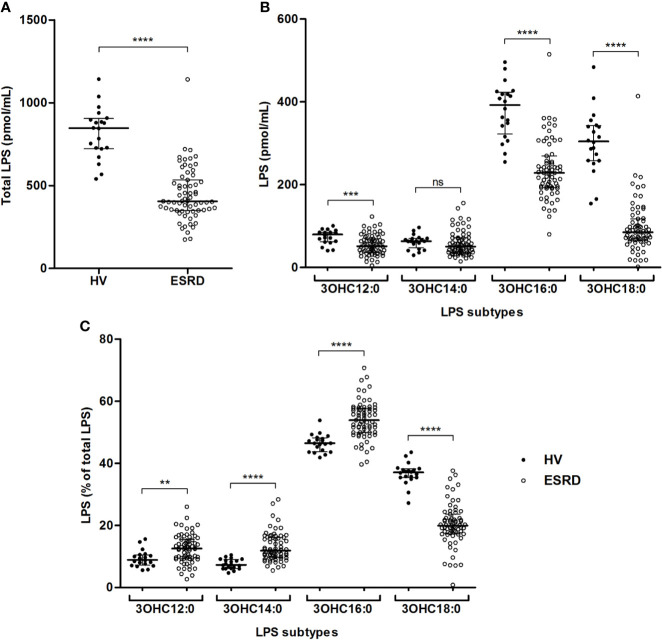
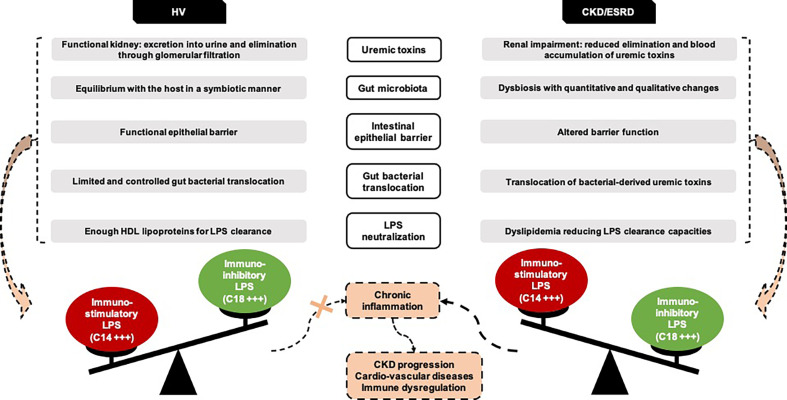
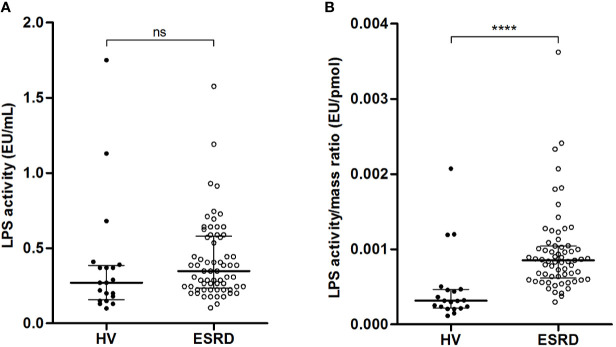
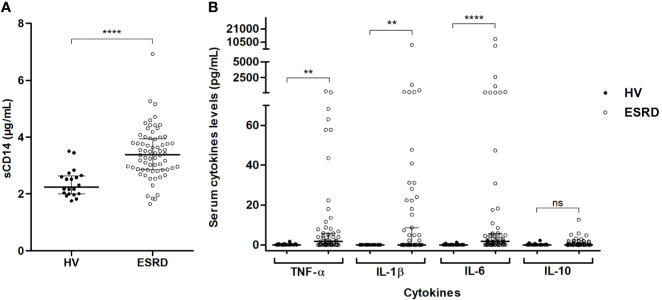
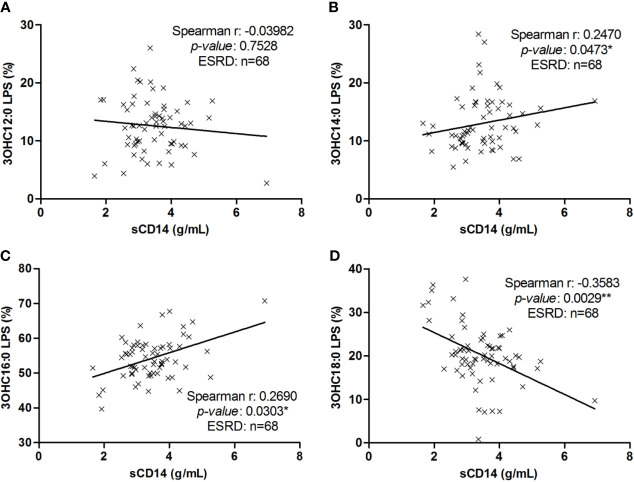
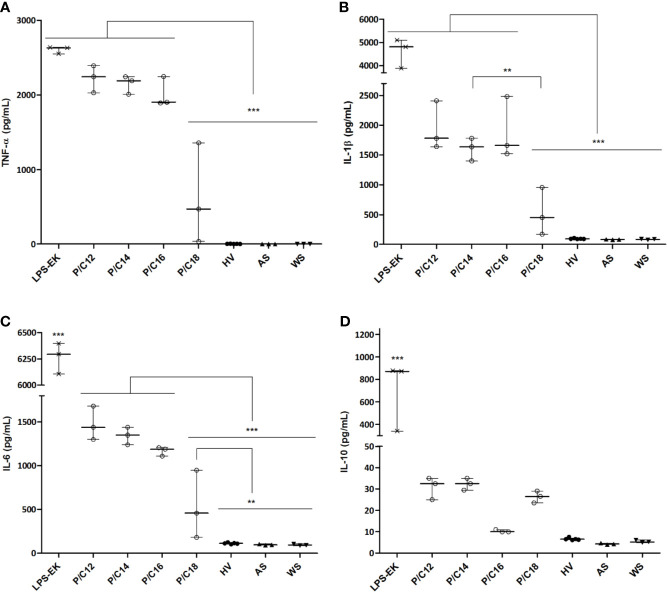
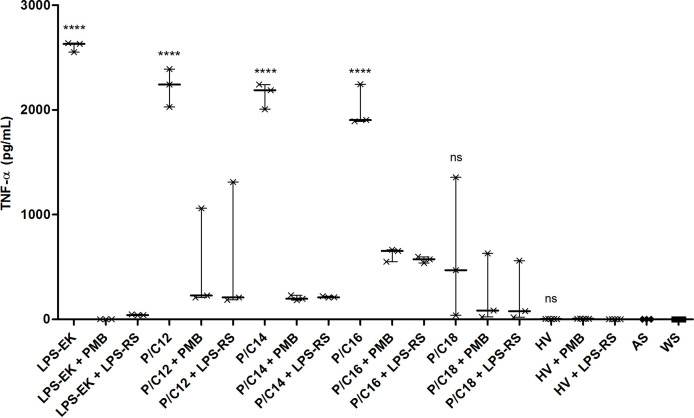
Chronic kidney disease induces disruption of the intestinal epithelial barrier, leading to gut bacterial translocation. Here, we appreciated bacterial translocation by analyzing circulating lipopolysaccharides (LPS) using two methods, one measuring only active free LPS, and the other quantifying total LPS as well as LPS lipid A carbon chain length. This was done in end-stage renal disease (ESRD) patients and healthy volunteers (HV). We observed both higher LPS concentration in healthy volunteers and significant differences in composition of translocated LPS based on lipid A carbon chain length. Lower LPS activity to mass ratio and higher concentration of high-density lipoproteins were found in HV, suggesting a better plasma capacity to neutralize LPS activity. Higher serum concentrations of soluble CD14 and pro-inflammatory cytokines in ESRD patients confirmed this hypothesis. To further explore whether chronic inflammation in ESRD patients could be more related to LPS composition rather than its quantity, we tested the effect of HV and patient sera on cytokine secretion in monocyte cultures. Sera with predominance of 14-carbon chain lipid A-LPS induced higher secretion of pro-inflammatory cytokines than those with predominance of 18-carbon chain lipid A-LPS. TLR4 or LPS antagonists decreased LPS-induced cytokine production by monocytes, demonstrating an LPS-specific effect. Thereby, septic inflammation observed in ESRD patients may be not related to higher bacterial translocation, but to reduced LPS neutralization capacity and differences in translocated LPS subtypes.
慢性肾病会破坏肠道上皮屏障,导致肠道细菌易位。在这里,我们通过两种方法分析循环中的脂多糖(LPS)来评估细菌易位,一种方法仅测量活性游离 LPS,另一种方法则定量总 LPS 以及 LPS 脂质 A 碳链长度。我们在终末期肾病(ESRD)患者和健康志愿者(HV)中进行了这项研究。我们观察到健康志愿者的 LPS 浓度更高,并且基于脂质 A 碳链长度,易位 LPS 的组成存在显著差异。HV 中的 LPS 活性与质量比更低,高密度脂蛋白浓度更高,这表明其血浆中和 LPS 活性的能力更强。ESRD 患者血清中可溶性 CD14 和促炎细胞因子浓度更高,这证实了这一假设。为了进一步探讨慢性炎症是否与 LPS 组成而非数量有关,我们测试了 HV 和患者血清对单核细胞培养中细胞因子分泌的影响。具有 14 碳链脂质 A-LPS 优势的血清诱导的促炎细胞因子分泌高于具有 18 碳链脂质 A-LPS 优势的血清。TLR4 或 LPS 拮抗剂可降低单核细胞中 LPS 诱导的细胞因子产生,表明这是 LPS 特异性的作用。因此,ESRD 患者中观察到的脓毒症炎症可能与更高的细菌易位无关,而是与 LPS 中和能力降低和易位 LPS 亚型的差异有关。