Department of Molecular Biology and Biotechnology, The University of Sheffield, Sheffield S10 2TN, UK.
Department of Infection, Immunity and Cardiovascular Disease, The University of Sheffield, Sheffield S10 2RX, UK.
Cells. 2021 Jun 7;10(6):1419. doi: 10.3390/cells10061419.
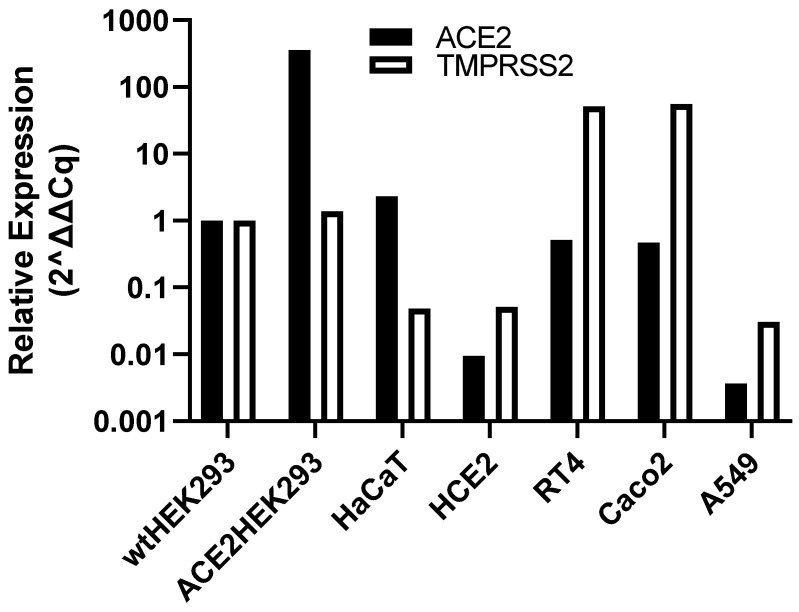
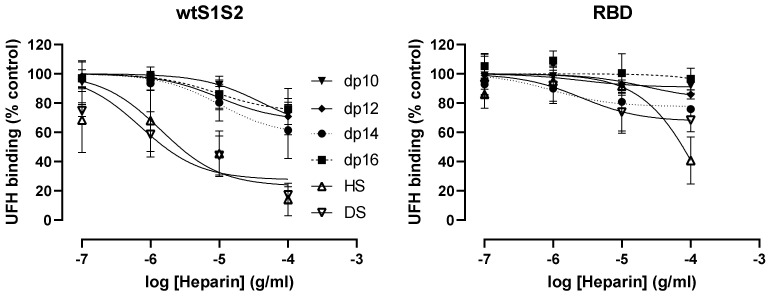
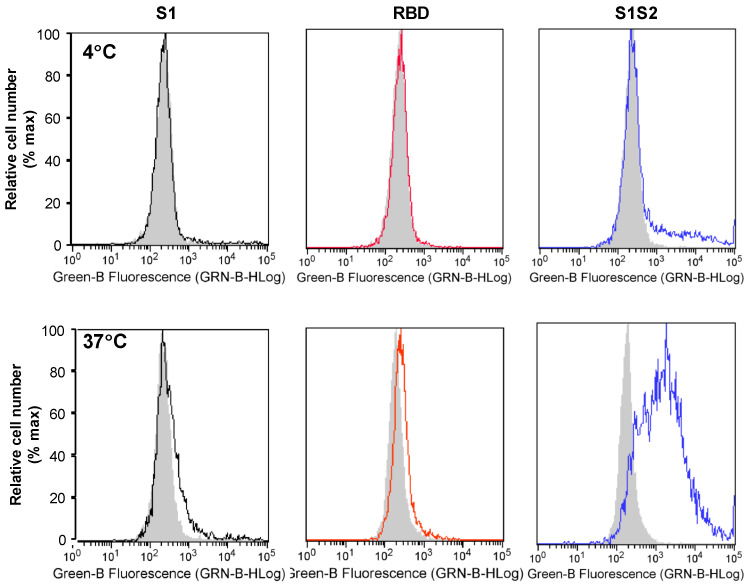
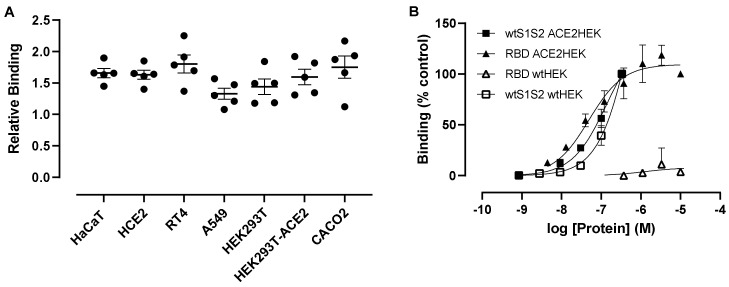
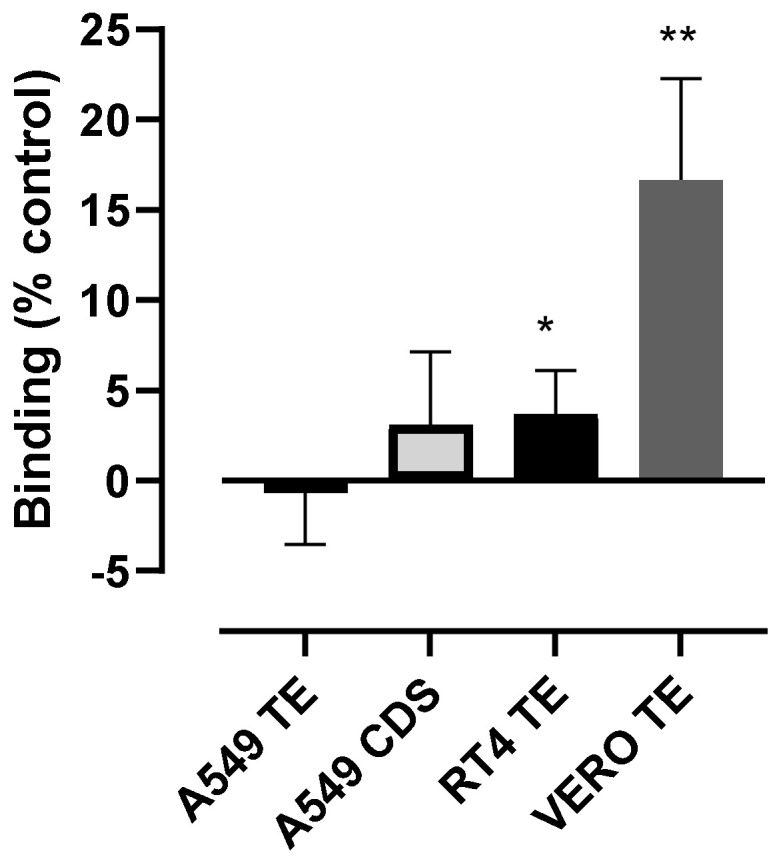
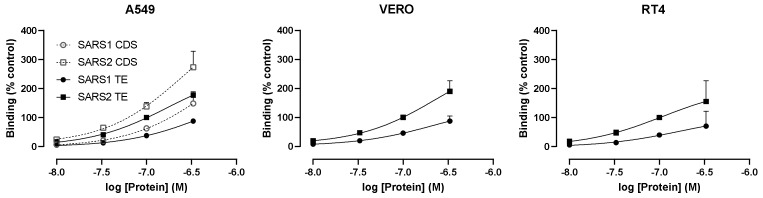
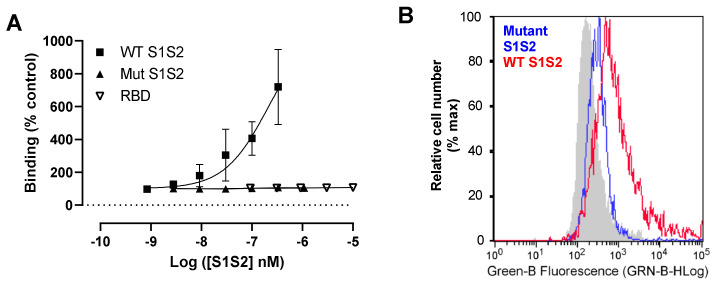
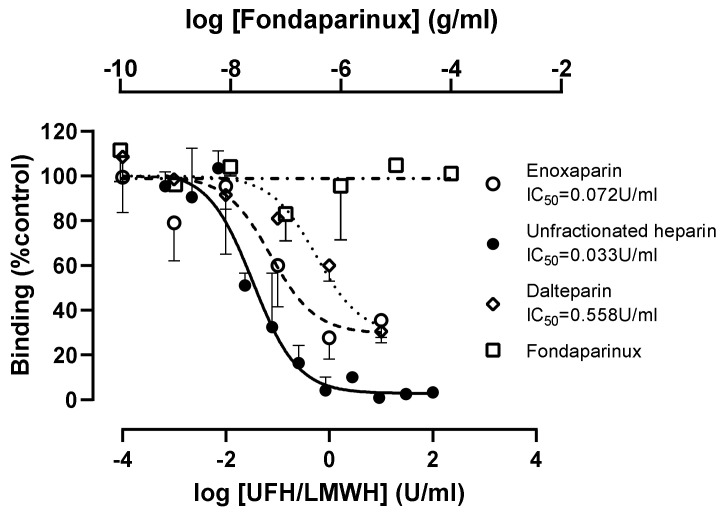
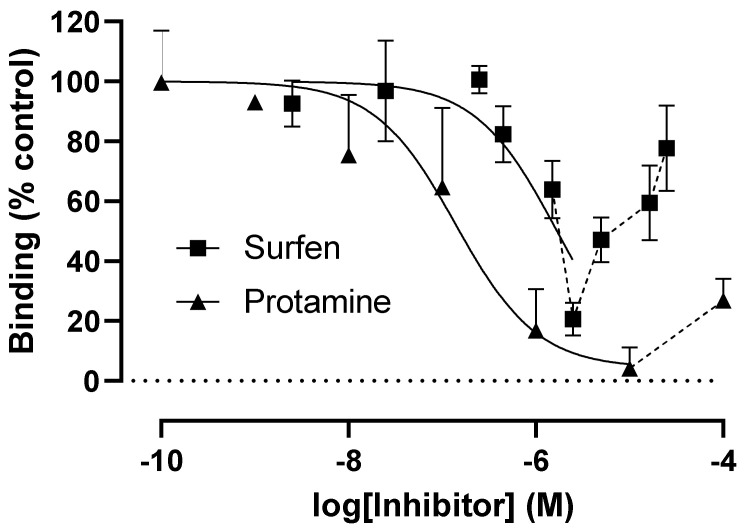
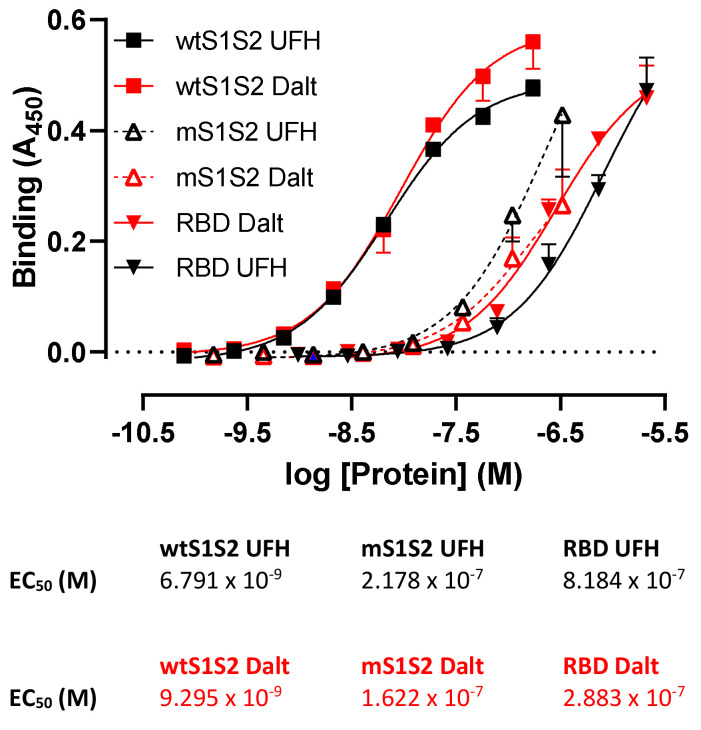
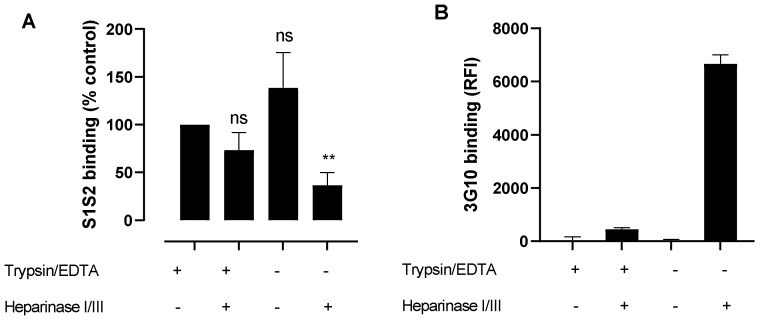
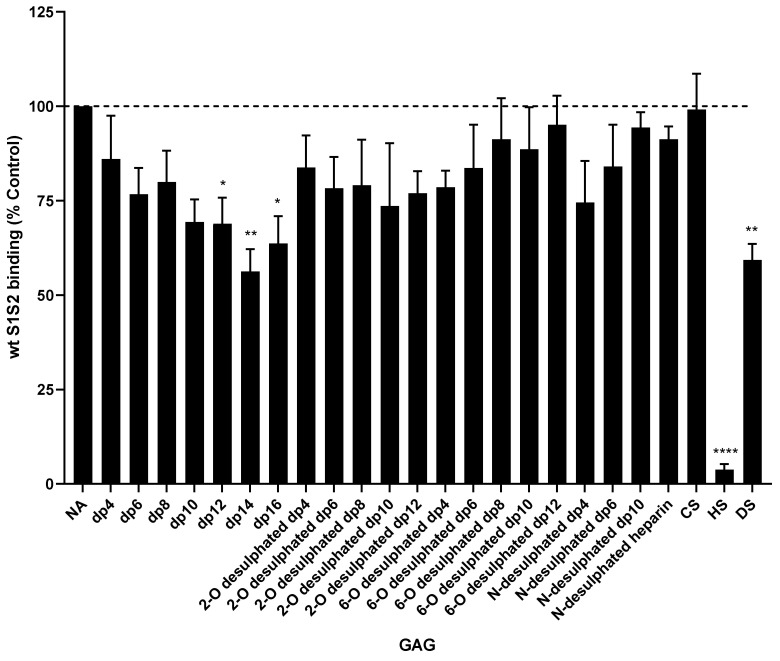
Coronaviruses such as SARS-CoV-2, which is responsible for COVID-19, depend on virus spike protein binding to host cell receptors to cause infection. The SARS-CoV-2 spike protein binds primarily to ACE2 on target cells and is then processed by membrane proteases, including TMPRSS2, leading to viral internalisation or fusion with the plasma membrane. It has been suggested, however, that receptors other than ACE2 may be involved in virus binding. We have investigated the interactions of recombinant versions of the spike protein with human epithelial cell lines that express low/very low levels of ACE2 and TMPRSS2 in a proxy assay for interaction with host cells. A tagged form of the spike protein containing the S1 and S2 regions bound in a temperature-dependent manner to all cell lines, whereas the S1 region alone and the receptor-binding domain (RBD) interacted only weakly. Spike protein associated with cells independently of ACE2 and TMPRSS2, while RBD required the presence of high levels of ACE2 for interaction. As the spike protein has previously been shown to bind heparin, a soluble glycosaminoglycan, we tested the effects of various heparins on ACE2-independent spike protein interaction with cells. Unfractionated heparin inhibited spike protein interaction with an IC value of <0.05 U/mL, whereas two low-molecular-weight heparins were less effective. A mutant form of the spike protein, lacking the arginine-rich putative furin cleavage site, interacted only weakly with cells and had a lower affinity for unfractionated and low-molecular-weight heparin than the wild-type spike protein. This suggests that the furin cleavage site might also be a heparin-binding site and potentially important for interactions with host cells. The glycosaminoglycans heparan sulphate and dermatan sulphate, but not chondroitin sulphate, also inhibited the binding of spike protein, indicating that it might bind to one or both of these glycosaminoglycans on the surface of target cells.
冠状病毒,如导致 COVID-19 的 SARS-CoV-2,依赖病毒刺突蛋白与宿主细胞受体结合引起感染。SARS-CoV-2 的刺突蛋白主要与靶细胞上的 ACE2 结合,然后被包括 TMPRSS2 在内的膜蛋白酶处理,导致病毒内化或与质膜融合。然而,有人认为,除 ACE2 以外的受体可能参与病毒结合。我们研究了在宿主细胞相互作用的替代测定中,以低/极低水平表达 ACE2 和 TMPRSS2 的人上皮细胞系中,重组刺突蛋白与细胞的相互作用。一种包含 S1 和 S2 区的标记形式的刺突蛋白以温度依赖的方式与所有细胞系结合,而 S1 区本身和受体结合域(RBD)仅微弱相互作用。刺突蛋白与细胞结合独立于 ACE2 和 TMPRSS2,而 RBD 与 ACE2 相互作用需要高水平。由于刺突蛋白先前已被证明与肝素结合,一种可溶性糖胺聚糖,我们测试了各种肝素对 ACE2 独立的刺突蛋白与细胞相互作用的影响。未分级肝素以 <0.05 U/mL 的 IC 值抑制刺突蛋白与细胞的相互作用,而两种低分子量肝素的效果较差。一种缺乏富含精氨酸的假定弗林裂解位点的刺突蛋白突变体与细胞的相互作用仅微弱,并且与未分级肝素和低分子量肝素的亲和力低于野生型刺突蛋白。这表明弗林裂解位点也可能是肝素结合位点,并且可能对与宿主细胞的相互作用很重要。糖胺聚糖硫酸乙酰肝素和硫酸皮肤素,但不是硫酸软骨素,也抑制了刺突蛋白的结合,表明它可能与靶细胞表面的一种或两种糖胺聚糖结合。