Lovett Michael L, Nieland Thomas J F, Dingle Yu-Ting L, Kaplan David L
Department of Biomedical Engineering, Tufts University, 4 Colby Street, Medford, MA 02155.
Adv Funct Mater. 2020 Oct 28;30(44). doi: 10.1002/adfm.201909146. Epub 2020 Mar 4.
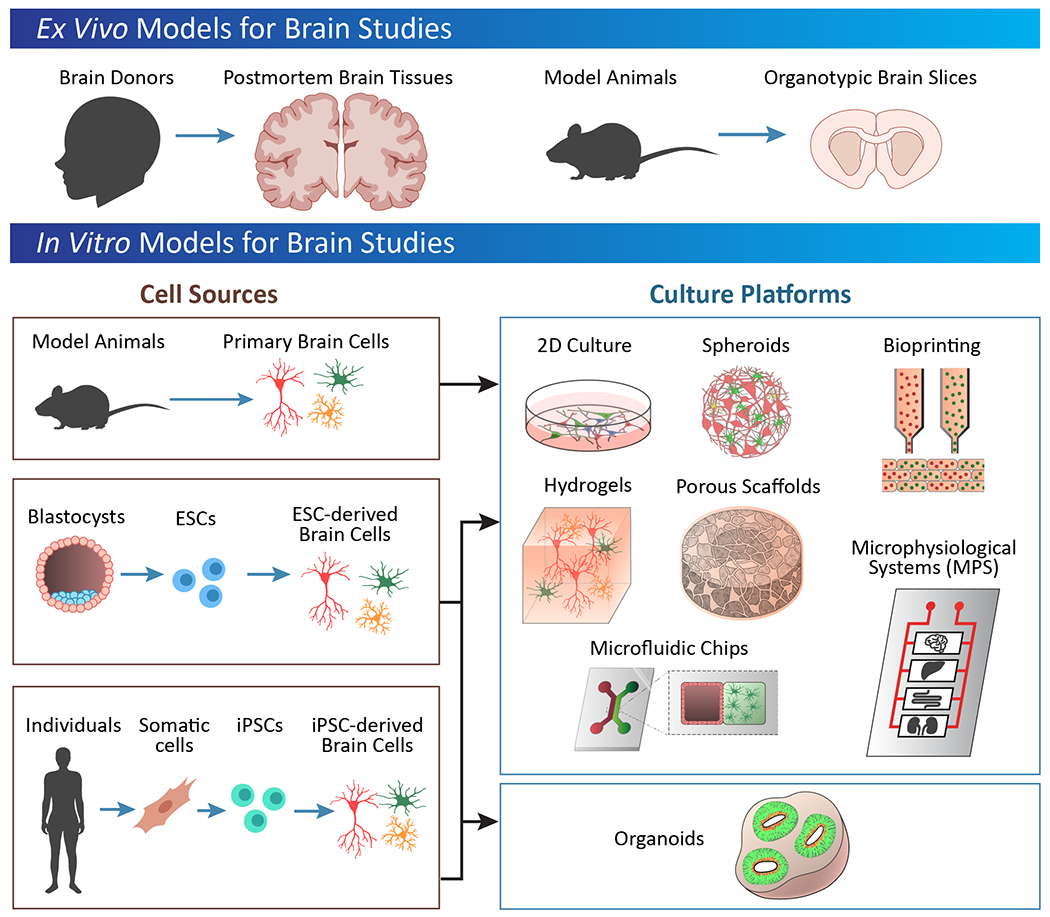
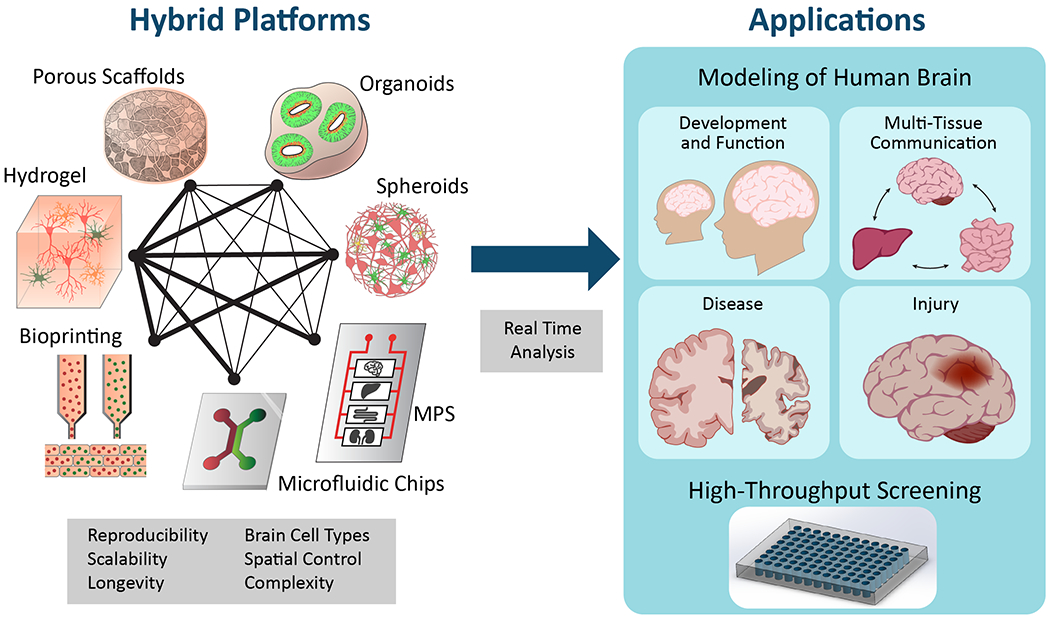
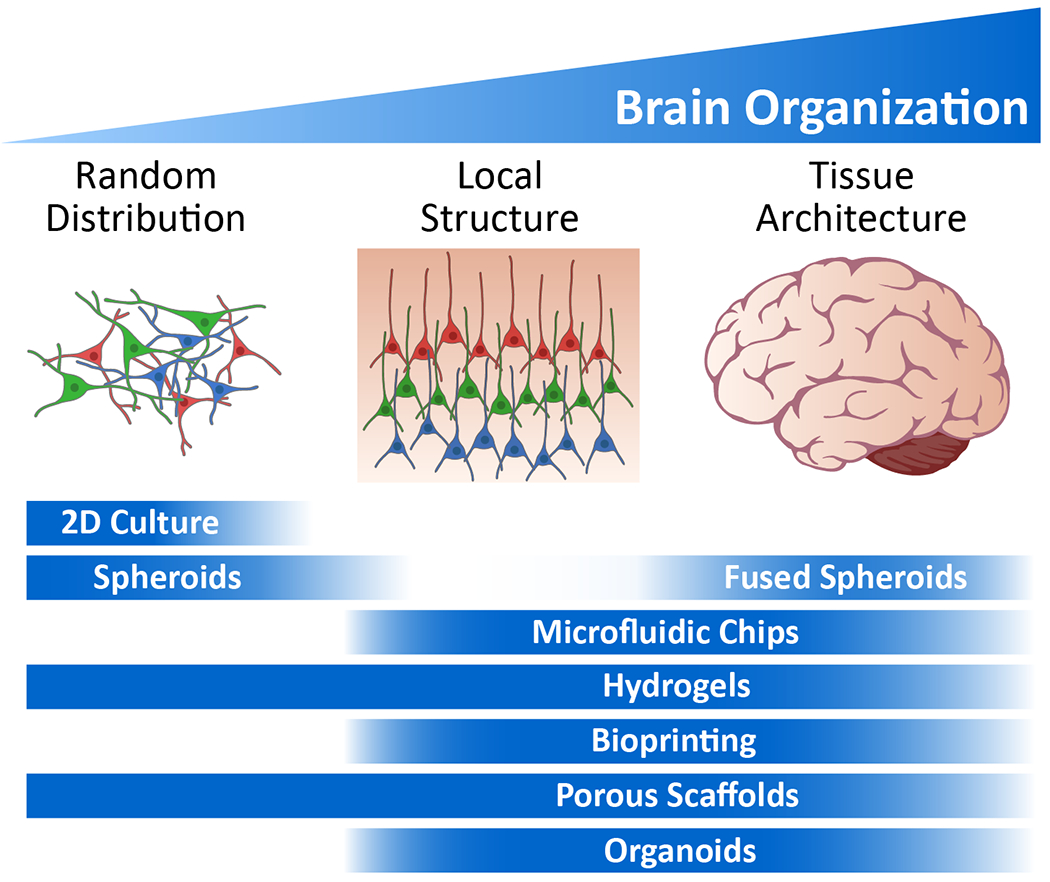
3-dimensional (3D) laboratory tissue cultures have emerged as an alternative to traditional 2-dimensional (2D) culture systems that do not recapitulate native cell behavior. The discrepancy between and tissue-cell-molecular responses impedes understanding of human physiology in general and creates roadblocks for the discovery of therapeutic solutions. Two parallel approaches have emerged for the design of 3D culture systems. The first is biomedical engineering methodology, including bioengineered materials, bioprinting, microfluidics and bioreactors, used alone or in combination, to mimic the microenvironments of native tissues. The second approach is organoid technology, in which stem cells are exposed to chemical and/or biological cues to activate differentiation programs that are reminiscent of human (prenatal) development. This review article describes recent technological advances in engineering 3D cultures that more closely resemble the human brain. The contributions of 3D tissue culture systems to new insights in neurophysiology, neurological diseases and regenerative medicine are highlighted. Perspectives on designing improved tissue models of the human brain are offered, focusing on an integrative approach merging biomedical engineering tools with organoid biology.
三维(3D)实验室组织培养已成为传统二维(2D)培养系统的替代方法,传统二维培养系统无法重现天然细胞行为。体内和体外组织 - 细胞 - 分子反应之间的差异阻碍了对一般人类生理学的理解,并为治疗方案的发现设置了障碍。出现了两种用于设计3D培养系统的并行方法。第一种是生物医学工程方法,包括生物工程材料、生物打印、微流体和生物反应器,单独使用或组合使用,以模拟天然组织的微环境。第二种方法是类器官技术,其中干细胞暴露于化学和/或生物信号以激活让人联想到人类(产前)发育的分化程序。这篇综述文章描述了工程化3D培养的最新技术进展,这些进展更类似于人类大脑。强调了3D组织培养系统对神经生理学、神经疾病和再生医学新见解的贡献。提供了关于设计改进的人类脑组织模型的观点,重点是将生物医学工程工具与类器官生物学相结合的综合方法。