Gubenko Alla, Kirsch Christiane, Smilek Jan Nicola, Lubart Todd, Houssemand Claude
Departement of Education and Social Work, Institute for Lifelong Learning and Guidance, Luxembourg, Luxembourg.
Université de Paris et Université Gustave Eiffel, LaPEA, Boulogne-Billancourt, France.
Front Robot AI. 2021 Jun 16;8:662030. doi: 10.3389/frobt.2021.662030. eCollection 2021.
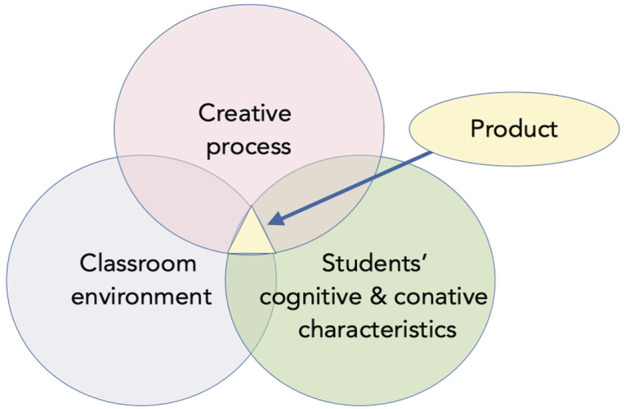
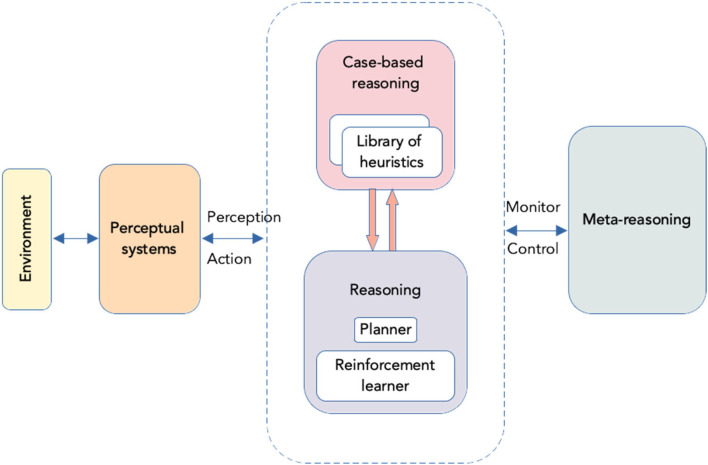
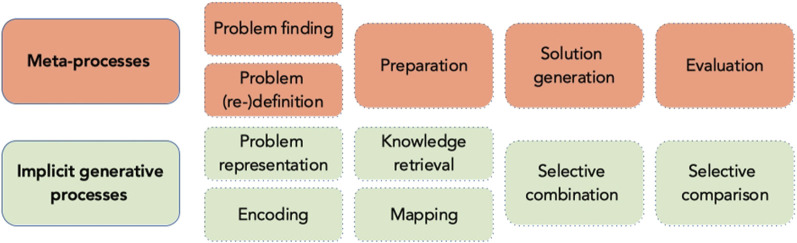
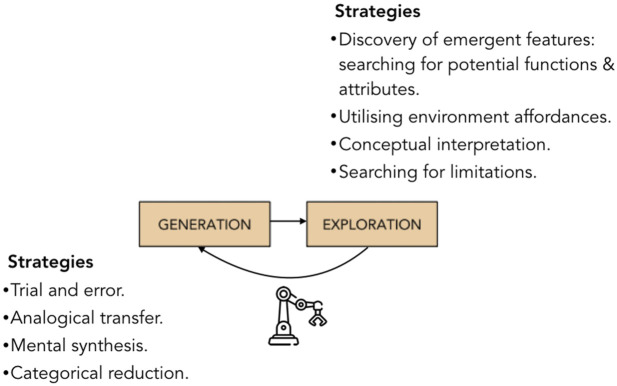
There is a growing literature concerning robotics and creativity. Although some authors claim that robotics in classrooms may be a promising new tool to address the creativity crisis in school, we often face a lack of theoretical development of the concept of creativity and the mechanisms involved. In this article, we will first provide an overview of existing research using educational robotics to foster creativity. We show that in this line of work the exact mechanisms promoted by robotics activities are rarely discussed. We use a confluence model of creativity to account for the positive effect of designing and coding robots on students' creative output. We focus on the cognitive components of the process of constructing and programming robots within the context of existing models of creative cognition. We address as well the question of the role of meta-reasoning and emergent strategies in the creative process. Then, in the second part of the article, we discuss how the notion of creativity applies to robots themselves in terms of the creative processes that can be embodied in these artificial agents. Ultimately, we argue that considering how robots and humans deal with novelty and solve open-ended tasks could help us to understand better some aspects of the essence of creativity.
关于机器人技术与创造力的文献越来越多。尽管一些作者声称,课堂上的机器人技术可能是解决学校创造力危机的一种有前途的新工具,但我们常常面临创造力概念及其相关机制缺乏理论发展的问题。在本文中,我们将首先概述利用教育机器人技术培养创造力的现有研究。我们发现,在这一研究领域中,机器人活动所促进的确切机制很少被讨论。我们使用创造力的汇合模型来解释设计和编写机器人程序对学生创造性成果的积极影响。我们在现有的创造性认知模型背景下,关注构建和编程机器人过程中的认知成分。我们还探讨了元推理和突发策略在创造性过程中的作用问题。然后,在本文的第二部分,我们从这些人工主体所能体现的创造性过程的角度,讨论创造力概念如何应用于机器人本身。最终,我们认为,考虑机器人和人类如何应对新奇事物并解决开放式任务,有助于我们更好地理解创造力本质的某些方面。