Gelebo Deyganto Gergito, Gebremichael Mathewos Alemu, Asale Gistane Ayele, Berbada Dessalegn Ajema
Save the Children International, Konso Project Office, Konso, Ethiopia.
School of Public Health, College of Medicine and Health Sciences, Arba Minch University, Arba Minch, Ethiopia.
BMC Nutr. 2021 Jul 12;7(1):32. doi: 10.1186/s40795-021-00437-z.
Undernutrition during pregnancy is an important public health problem. It is highly prevalent in Ethiopia but not sufficiently addressed yet. Hence, this study aimed to assess the prevalence of undernutrition and its associated factors among pregnant mothers in Konso district, Ethiopia.
Community-based cross-sectional study was conducted with a qualitative inquiry from December 2018 to January 2019. A multistage stratified sampling technique was used to select 527 subjects and quantitative data were collected from these subjects using a structured interviewer-administered questionnaire and additionally qualitative data were generated through two focus group discussions among purposely selected discussants. Mid upper arm circumference (MUAC) was measured by standard non-stretchable MUAC tape. Data were entered into Epi-data version3.1 and analyzed by SPSS version 21. In multivariable binary logistic regression, a statistically significant association was declared at p-value < 0.05 while thematic framework analysis was employed for the qualitative data.
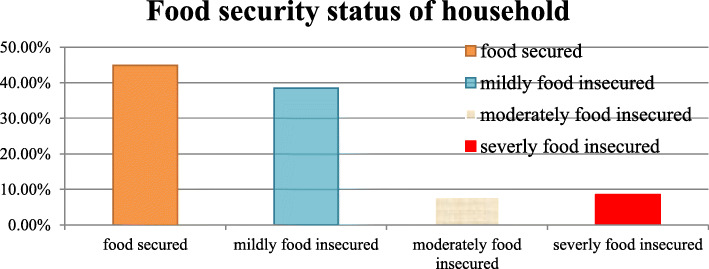
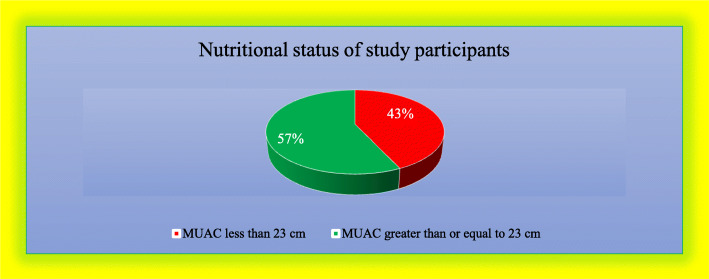
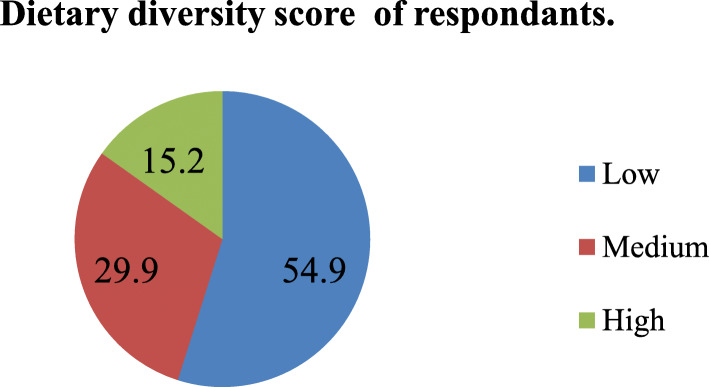
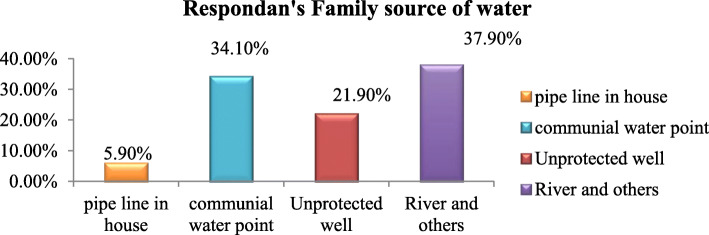
Among 501 participants, the overall prevalence of undernutrition (MUAC < 23 cm) was 43.1% (95% CI 38.7-47.5%). Household food security (AOR = 3.1; 95% CI: 2.1-4.6), low dietary diversity score (AOR = 4.9; 95% CI: 2.6-9.2), medium dietary diversity score (AOR = 2.3; 95% CI: 1.2-4.7), absence of latrine (AOR = 1.8; 95% CI: 1.2-2.6) and having family resource decision making by husband only (AOR = 1.7; 95% CI: 1.1-2.6) were significantly associated factors. Traditional believes to restrict food such as egg, milk, and milk products, avocado for women, weak nutrition education and malnutrition screening program, daily consumption of locally prepared alcoholic drink called "Cheka", drought-prone nature of this setting, traditional way of farming practices and low socio-economic status were found to be barriers for women's undernutrition.
The prevalence of undernutrition was found to be higher than previously reported findings. Household food security, dietary diversity, latrine availability, family resource decision making, food restrictions, weak maternal nutrition education, and malnutrition screening program, the practice of depending on a local alcoholic drink called "Cheka", drought, traditional way of farming and low socio-economic status were identified factors. Hence, interventions targeting maternal nutrition education, hygiene, and sanitation promotion, household food insecurity improvement strategies should be implemented to improve the nutritional status of pregnant women.
孕期营养不良是一个重要的公共卫生问题。在埃塞俄比亚极为普遍,但尚未得到充分解决。因此,本研究旨在评估埃塞俄比亚孔索地区孕妇营养不良的患病率及其相关因素。
2018年12月至2019年1月进行了一项基于社区的横断面研究,并进行了定性调查。采用多阶段分层抽样技术选取527名受试者,使用结构化访谈问卷从这些受试者中收集定量数据,并通过在特意挑选的讨论者中进行的两次焦点小组讨论生成定性数据。使用标准的不可拉伸上臂中部周长(MUAC)卷尺测量上臂中部周长。数据录入Epi - data 3.1版本,并使用SPSS 21版本进行分析。在多变量二元逻辑回归中,当p值<0.05时宣布存在统计学显著关联,而定性数据采用主题框架分析。
在501名参与者中,营养不良(MUAC<23厘米)的总体患病率为43.1%(95%置信区间38.7 - 47.5%)。家庭粮食安全(调整后比值比[AOR]=3.1;95%置信区间:2.1 - 4.6)、低饮食多样性得分(AOR = 4.9;95%置信区间:2.6 - 9.2)、中等饮食多样性得分(AOR = 2.3;95%置信区间:1.2 - 4.7)、没有厕所(AOR = 1.8;95%置信区间:1.2 - 2.6)以及仅由丈夫进行家庭资源决策(AOR = 1.7;95%置信区间:1.1 - 2.6)是显著相关因素。传统观念限制女性食用鸡蛋、牛奶和奶制品、鳄梨,营养教育薄弱和营养不良筛查项目不足,每日饮用当地酿造的名为“Cheka”的酒精饮料,该地区易旱的自然条件,传统农耕方式以及社会经济地位低下被发现是导致女性营养不良的障碍。
发现营养不良的患病率高于先前报告的结果。家庭粮食安全、饮食多样性、厕所可用性、家庭资源决策、食物限制、孕产妇营养教育薄弱和营养不良筛查项目、依赖名为“Cheka”的当地酒精饮料的习惯、干旱、传统农耕方式以及社会经济地位低下是已确定的因素。因此,应实施针对孕产妇营养教育、促进卫生和环境卫生的干预措施以及改善家庭粮食不安全的策略,以改善孕妇的营养状况。