ReMedy International Research Agenda Unit, University of Warsaw, Warsaw, Poland.
Laboratory of Mitochondrial Biogenesis, Centre of New Technologies, University of Warsaw, Warsaw, Poland.
EMBO Rep. 2021 Aug 4;22(8):e52071. doi: 10.15252/embr.202052071. Epub 2021 Jul 20.
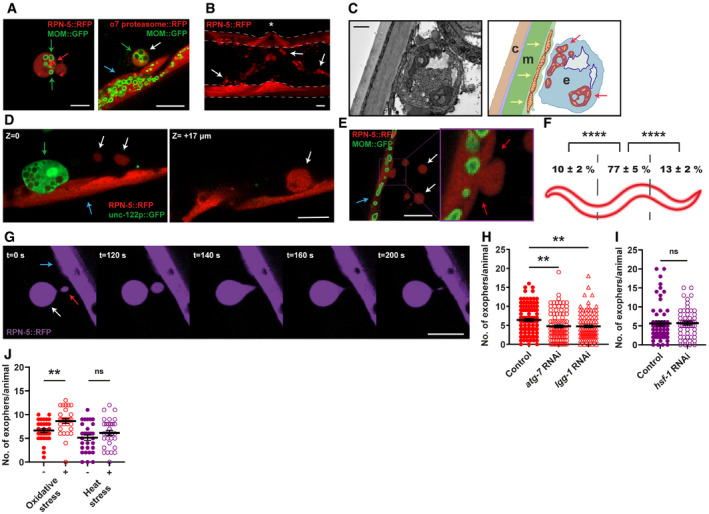
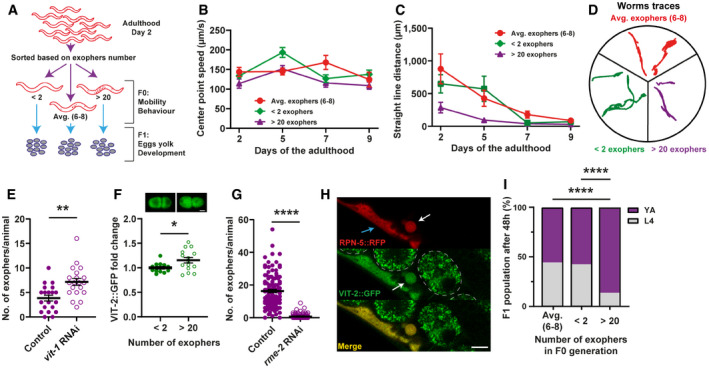
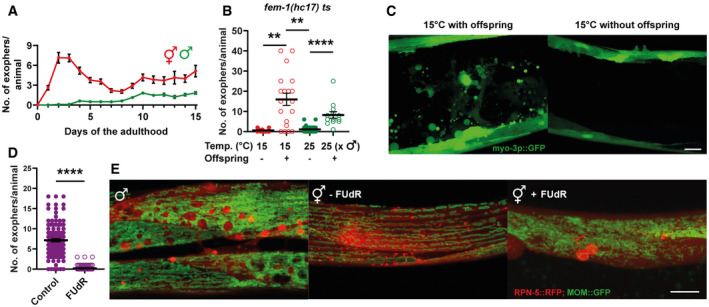
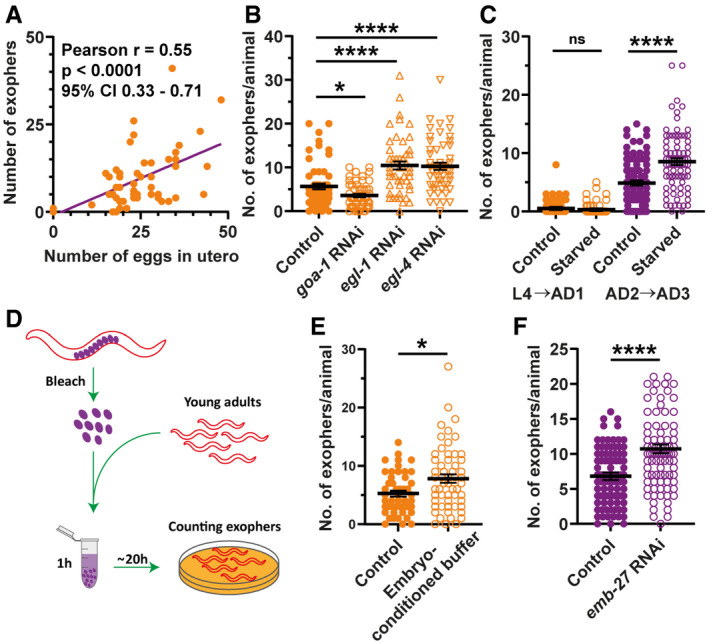
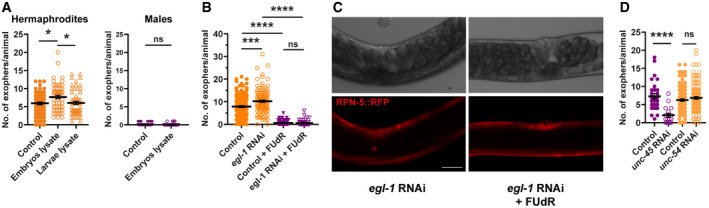
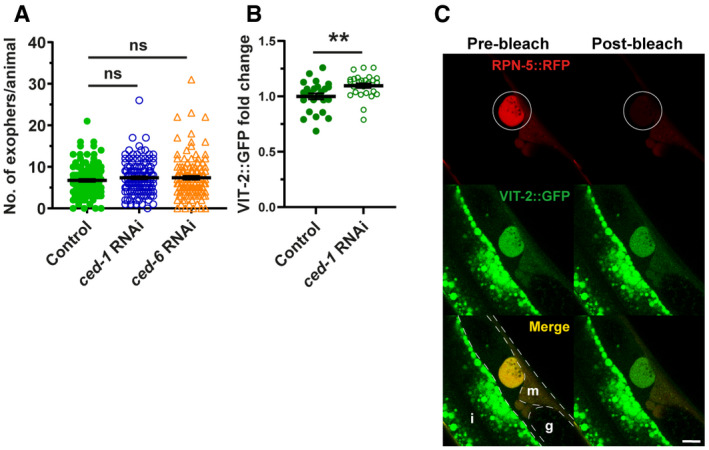
Organismal functionality and reproduction depend on metabolic rewiring and balanced energy resources. However, the crosstalk between organismal homeostasis and fecundity and the associated paracrine signaling mechanisms are still poorly understood. Using Caenorhabditis elegans, we discovered that large extracellular vesicles (known as exophers) previously found to remove damaged subcellular elements in neurons and cardiomyocytes are released by body wall muscles (BWM) to support embryonic growth. Exopher formation (exopheresis) by BWM is sex-specific and a non-cell autonomous process regulated by developing embryos in the uterus. Embryo-derived factors induce the production of exophers that transport yolk proteins produced in the BWM and ultimately deliver them to newly formed oocytes. Consequently, offspring of mothers with a high number of muscle-derived exophers grew faster. We propose that the primary role of muscular exopheresis is to stimulate reproductive capacity, thereby influencing the adaptation of worm populations to the current environmental conditions.
生物体的功能和繁殖依赖于代谢重编程和平衡的能量资源。然而,生物体的内稳态和生育能力之间的相互作用以及相关的旁分泌信号机制仍然知之甚少。我们使用秀丽隐杆线虫发现,先前在神经元和心肌细胞中发现的用于清除受损亚细胞成分的大型细胞外囊泡(称为外泌体),是由体壁肌肉(BWM)释放的,以支持胚胎生长。BWM 的外泌体形成(exopheresis)具有性别特异性,是一个由子宫内发育胚胎调节的非细胞自主过程。胚胎衍生的因子诱导外泌体的产生,这些外泌体将在 BWM 中产生的卵黄蛋白运输,并最终将其递送至新形成的卵母细胞。因此,拥有大量肌肉来源外泌体的母代的后代生长更快。我们提出,肌肉外泌体的主要作用是刺激生殖能力,从而影响虫种群适应当前环境条件的能力。