Department of Otorhinolaryngology-Head and Neck Surgery, Hallym University College of Medicine, Anyang 14068, Korea.
Department of Medicine, Samsung Medical Center, Sungkyunkwan University School of Medicine, Seoul 06351, Korea.
Int J Environ Res Public Health. 2021 Jul 8;18(14):7299. doi: 10.3390/ijerph18147299.
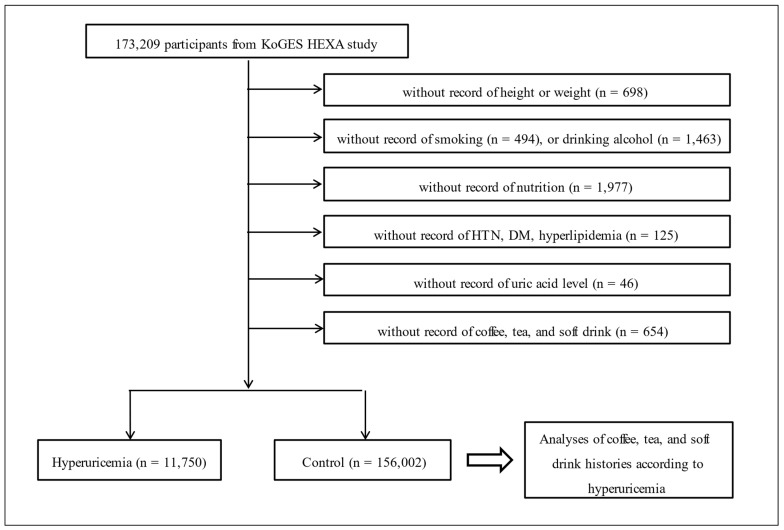
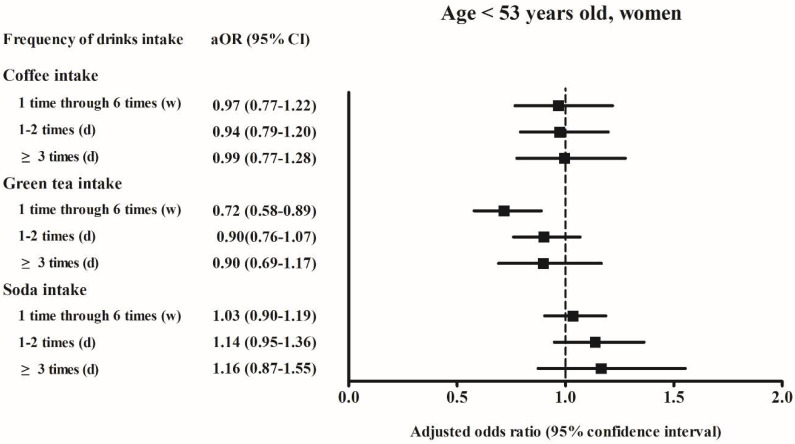
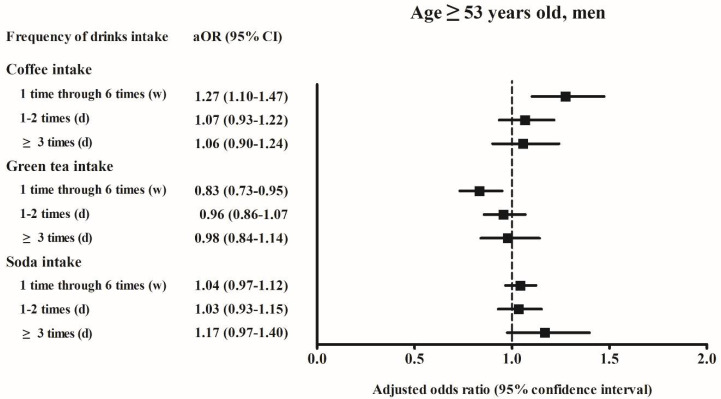
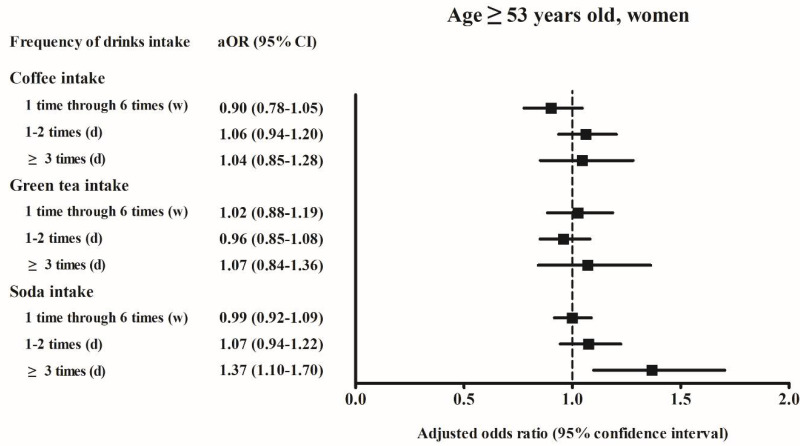
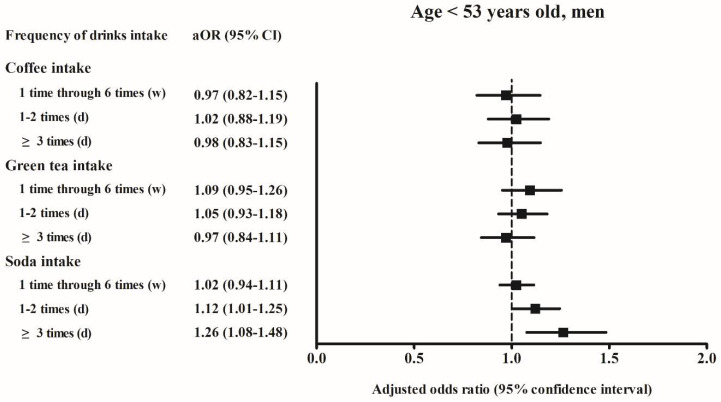
This cross-sectional study aimed to investigate the association between hyperuricemia and the frequency of coffee, tea, and soft drink consumption, based on data from the Korean Genome and Epidemiology Study (KoGES) (2004-2016). We used the KoGES health examinee data, obtained from urban residents aged ≥ 40 years. Information on the participants' medical history, nutrition (total calorie, protein, fat, and carbohydrate intake), frequency of alcohol consumption, smoking status, household income, and frequency of coffee/green tea/soft drink intake was collected. A logistic regression model was used to analyze the data. Subgroup analyses were performed according to the participant's age and sex. Among 173,209 participants, there were 11,750 and 156,002 individuals with hyperuricemia and non-hyperuricemia controls, respectively. In an adjusted model, frequent coffee and green tea consumption did not increase the risk of hyperuricemia, compared to the "no intake" reference group. However, an adjusted odds ratio of hyperuricemia was 1.23 (95% confidence interval, 1.11-1.35, < 0.001) for participants who reported consuming soft drinks ≥ 3 times per day, compared to the respective "no drink" reference group. Even after adjusting for nutritional and sociodemographic factors, frequent soft drink intake was associated with an increased risk of hyperuricemia. Meanwhile, neither coffee nor green tea intake was associated with an increased risk of hyperuricemia.
本横断面研究旨在基于韩国基因组与流行病学研究(KoGES)(2004-2016 年)的数据,探讨高尿酸血症与咖啡、茶和软饮料摄入频率之间的关联。我们使用了 KoGES 健康受检者数据,这些数据来自年龄≥40 岁的城市居民。收集了参与者的病史、营养状况(总热量、蛋白质、脂肪和碳水化合物摄入)、酒精摄入频率、吸烟状况、家庭收入和咖啡/绿茶/软饮料摄入频率等信息。采用逻辑回归模型进行数据分析。根据参与者的年龄和性别进行了亚组分析。在 173209 名参与者中,有 11750 名和 156002 名分别患有高尿酸血症和非高尿酸血症对照组。在调整模型中,与“无摄入”参考组相比,频繁饮用咖啡和绿茶不会增加高尿酸血症的风险。然而,与各自的“无饮用”参考组相比,每天饮用软饮料≥3 次的参与者发生高尿酸血症的调整比值比为 1.23(95%置信区间,1.11-1.35,<0.001)。即使调整了营养和社会人口因素,频繁饮用软饮料仍与高尿酸血症风险增加相关。而咖啡和绿茶的摄入与高尿酸血症风险增加无关。