The First Affiliated Hospital, Jinan University, Guangzhou, China.
Biomedical Translational Research Institute and School of Pharmacy, Jinan University, Guangzhou, China.
Biomed Res Int. 2021 Jul 12;2021:5554991. doi: 10.1155/2021/5554991. eCollection 2021.
Obesity is a main contributing factor for the development of glucose intolerance and type 2 diabetes mellitus (T2D). Roux-en-Y gastric bypass (RYGB) is believed to be one of the most effective treatments to reduce body weight and improve glucose metabolism. In this study, we sought to explore the underlying mechanisms of weight reduction and insulin resistance improvement after RYGB.
This was a prospective observational study using consecutive samples of 14 obese subjects undergoing bariatric surgery. Main assessments were serum indexes (blood metabolites, glucose-lipid regulating hormones, trimethylamine-N-oxide (TMAO), and lipopolysaccharide-binding protein (LBP), fecal short-chain fatty acids (SCFAs), and gut microbiota. Correlation analysis of the factors changed by RYGB was used to indicate the potential mechanism by which surgery improves insulin resistance.
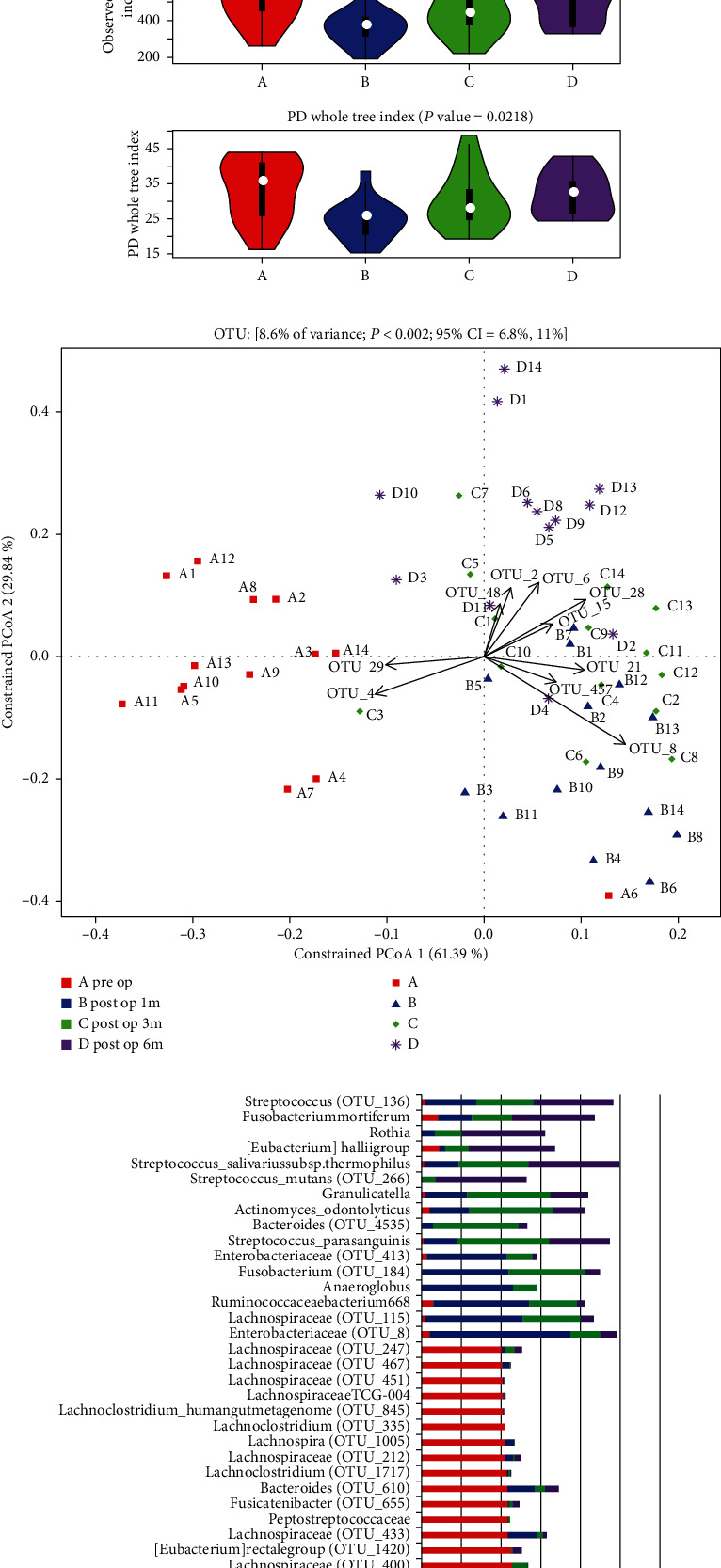
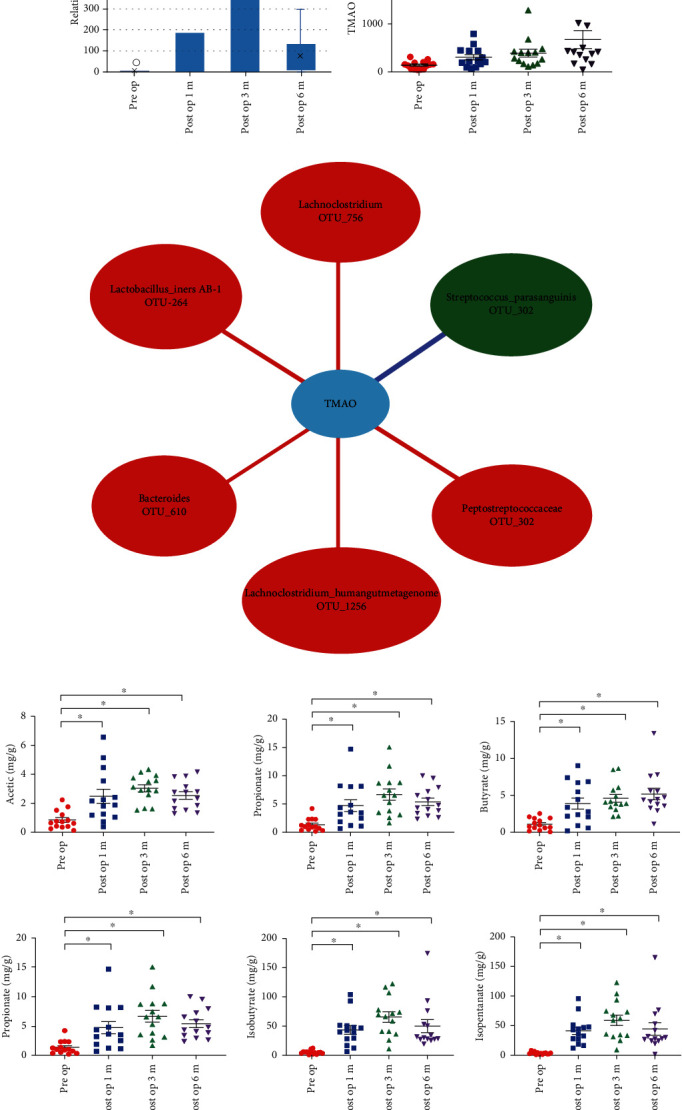
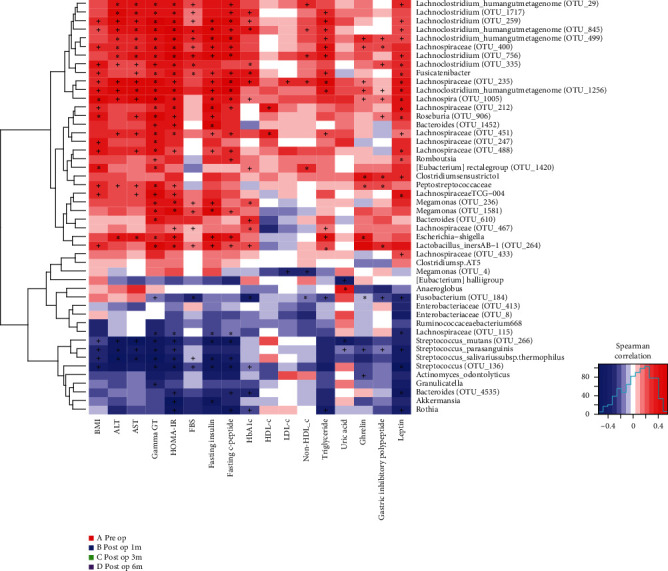
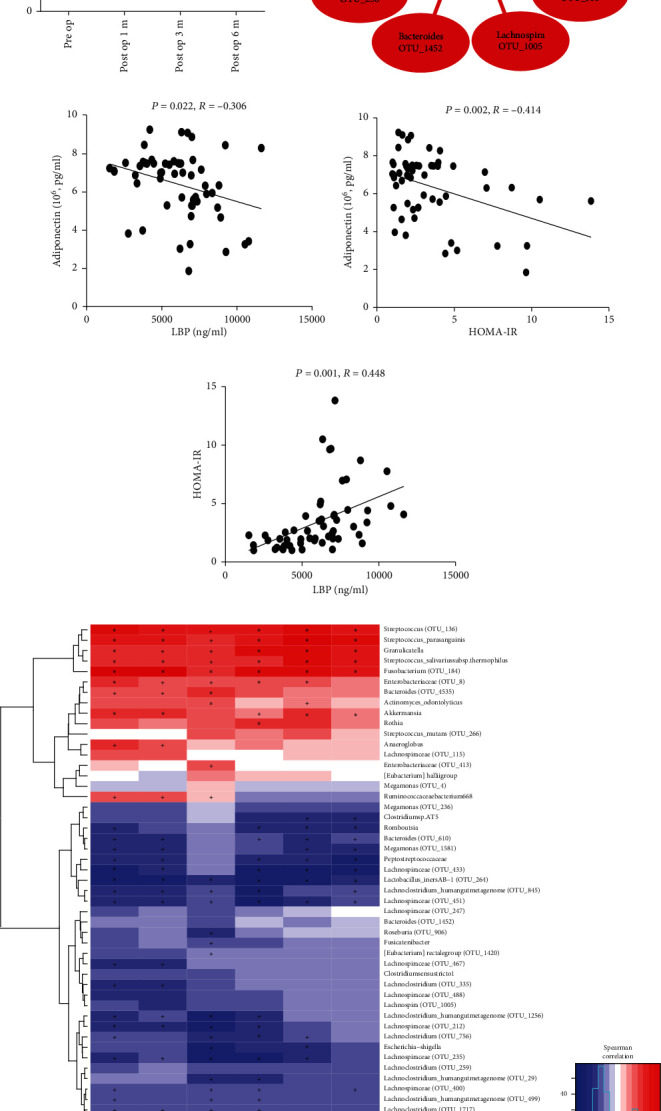
The subjects showed significant improvement on indices of obesity and insulin resistance and a correlated change of gut microbiota components at 1 month, 3 months, and 6 months post-RYGB operation. In particular, the abundance of a counterobese strain, had gradually increased with the postoperative time. Moreover, these changes were negatively correlated to serum levels of LBP and positively correlated to serum TMAO and fecal SCFAs.
Our findings uncovered links between intestinal microbiota alterations, circulating endotoxemia, and insulin resistance. This suggests that the underlying mechanism of protection of the intestine by RYGB in obesity may be through changing the gut microbiota.
肥胖是导致葡萄糖耐量受损和 2 型糖尿病(T2D)的主要因素。Roux-en-Y 胃旁路(RYGB)被认为是降低体重和改善葡萄糖代谢的最有效治疗方法之一。在这项研究中,我们试图探讨 RYGB 后体重减轻和胰岛素抵抗改善的潜在机制。
这是一项使用连续肥胖患者样本的前瞻性观察研究,共纳入 14 名接受减重手术的肥胖患者。主要评估指标包括血清指标(血液代谢物、葡萄糖-脂质调节激素、氧化三甲胺(TMAO)和脂多糖结合蛋白(LBP)、粪便短链脂肪酸(SCFA)和肠道微生物群。通过 RYGB 改变的因素的相关分析表明手术改善胰岛素抵抗的潜在机制。
术后 1 个月、3 个月和 6 个月,患者的肥胖和胰岛素抵抗指标均显著改善,肠道微生物群组成也发生了相关变化。特别是,一种抗肥胖菌株的丰度随着术后时间的推移逐渐增加。此外,这些变化与血清 LBP 水平呈负相关,与血清 TMAO 和粪便 SCFA 水平呈正相关。
我们的发现揭示了肠道微生物群改变、循环内毒素血症和胰岛素抵抗之间的联系。这表明 RYGB 对肥胖的肠道保护的潜在机制可能是通过改变肠道微生物群。