Pollen Biotechnology of Crop Plants group, Margarita Salas Center of Biological Research, CIB-CSIC, Ramiro de Maeztu 9, 28040 Madrid, Spain.
Translational Medicinal and Biological Chemistry group, Margarita Salas Center of Biological Research, CIB-CSIC, Ramiro de Maeztu 9, 28040 Madrid, Spain.
J Exp Bot. 2021 Dec 4;72(22):7808-7825. doi: 10.1093/jxb/erab365.
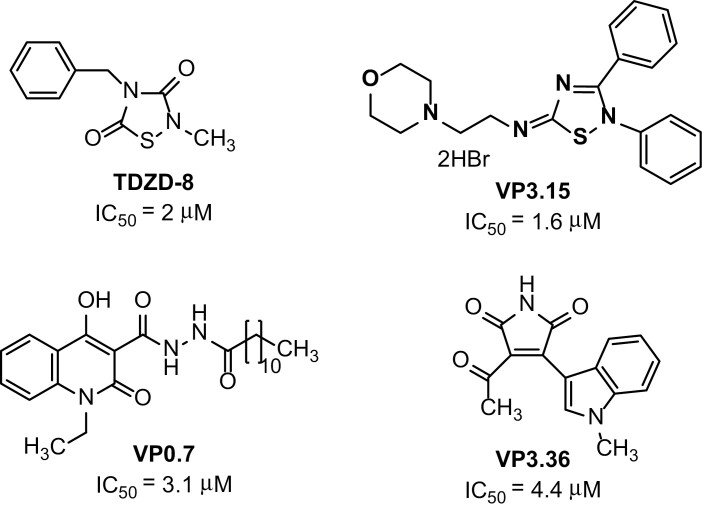
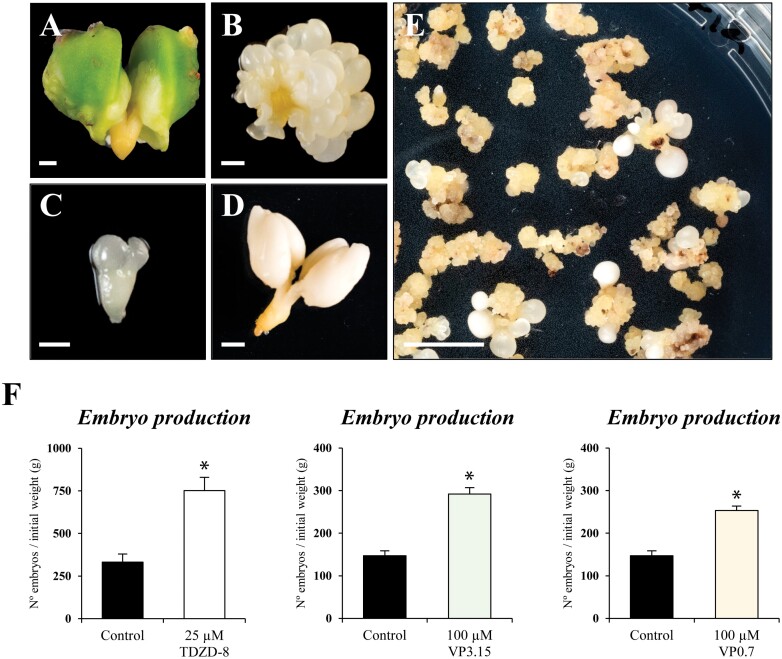
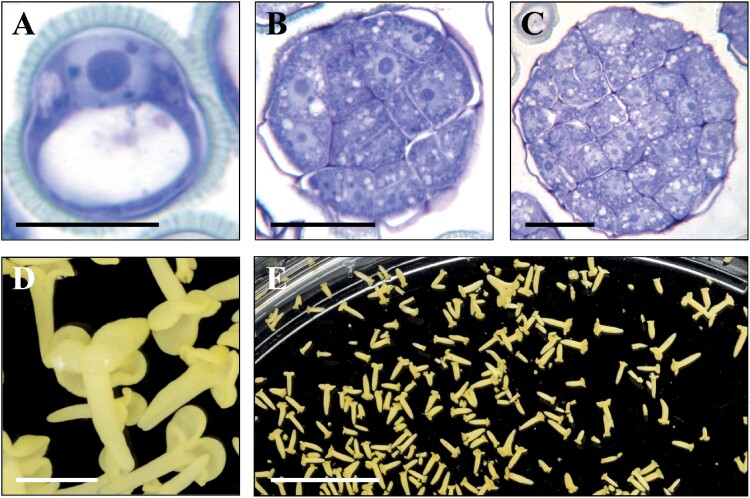
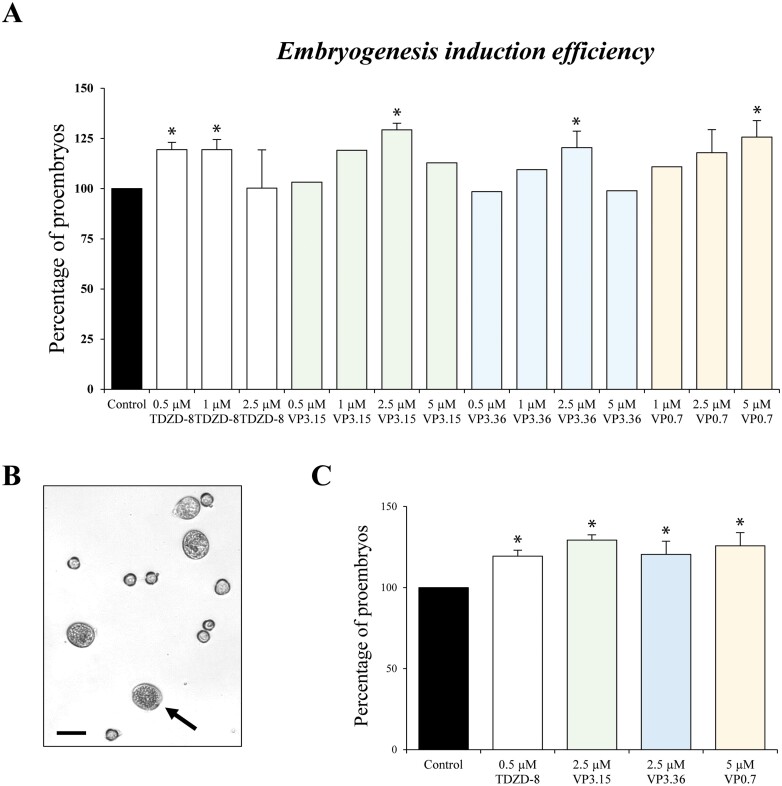
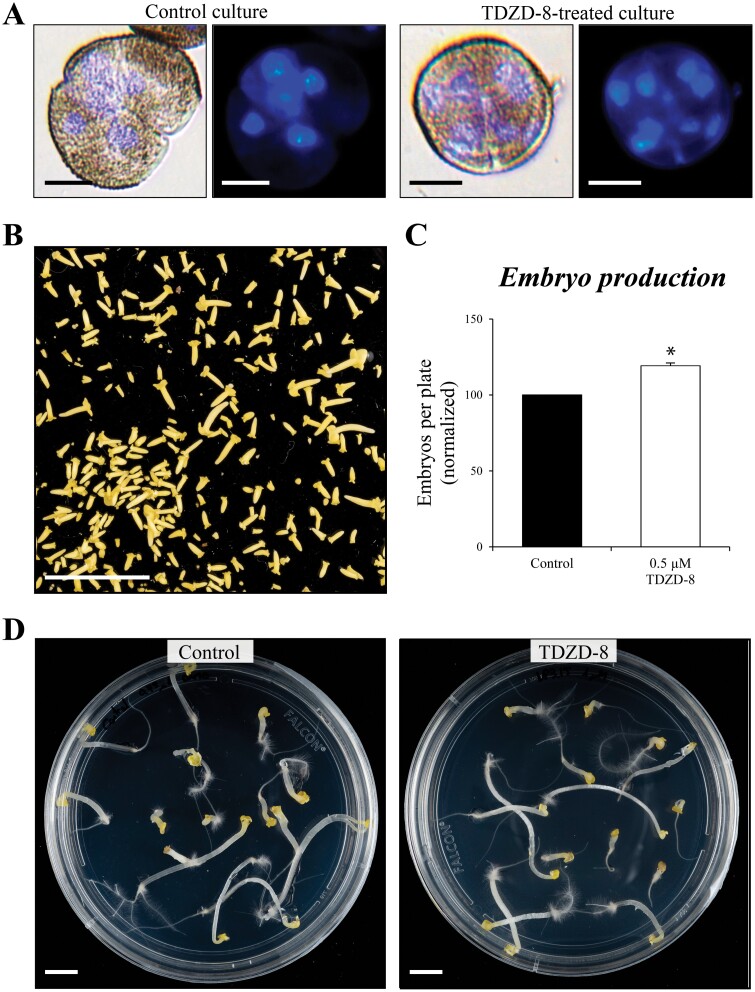
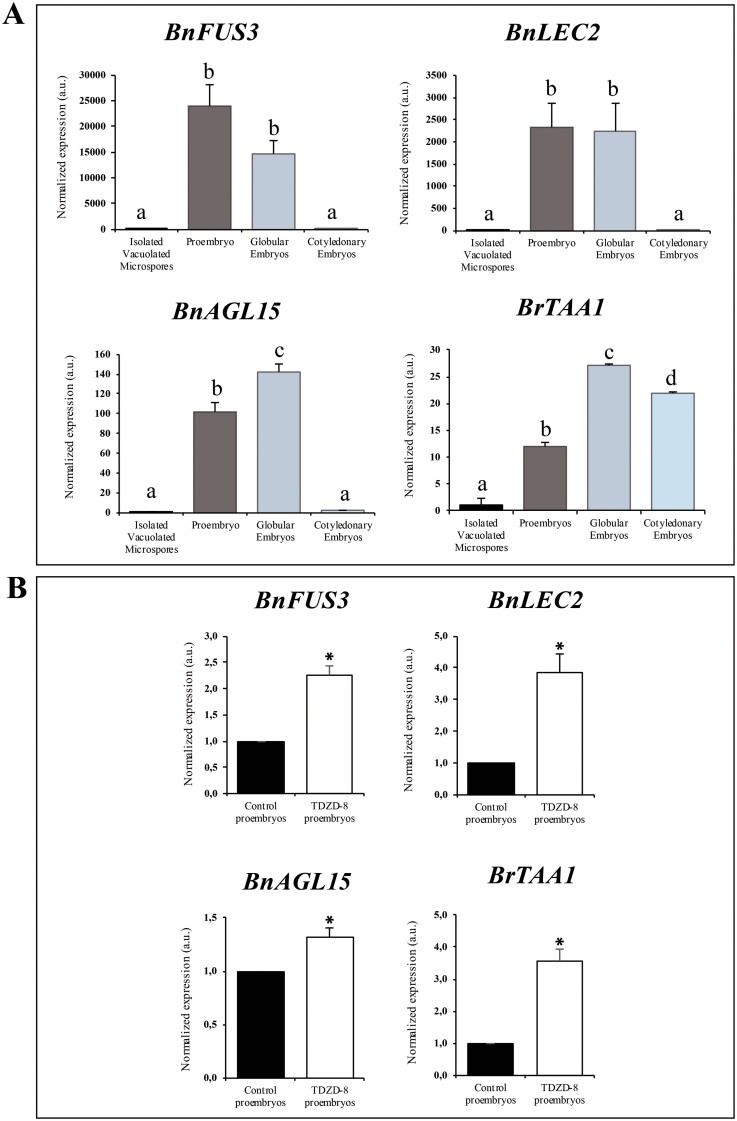
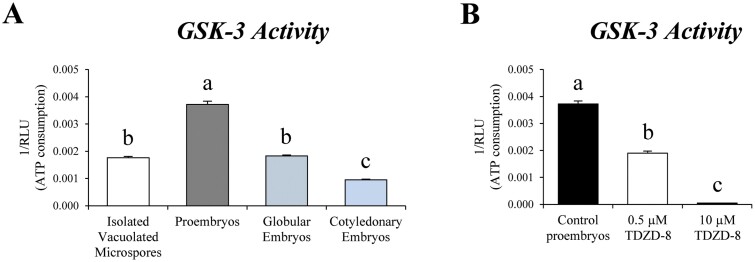
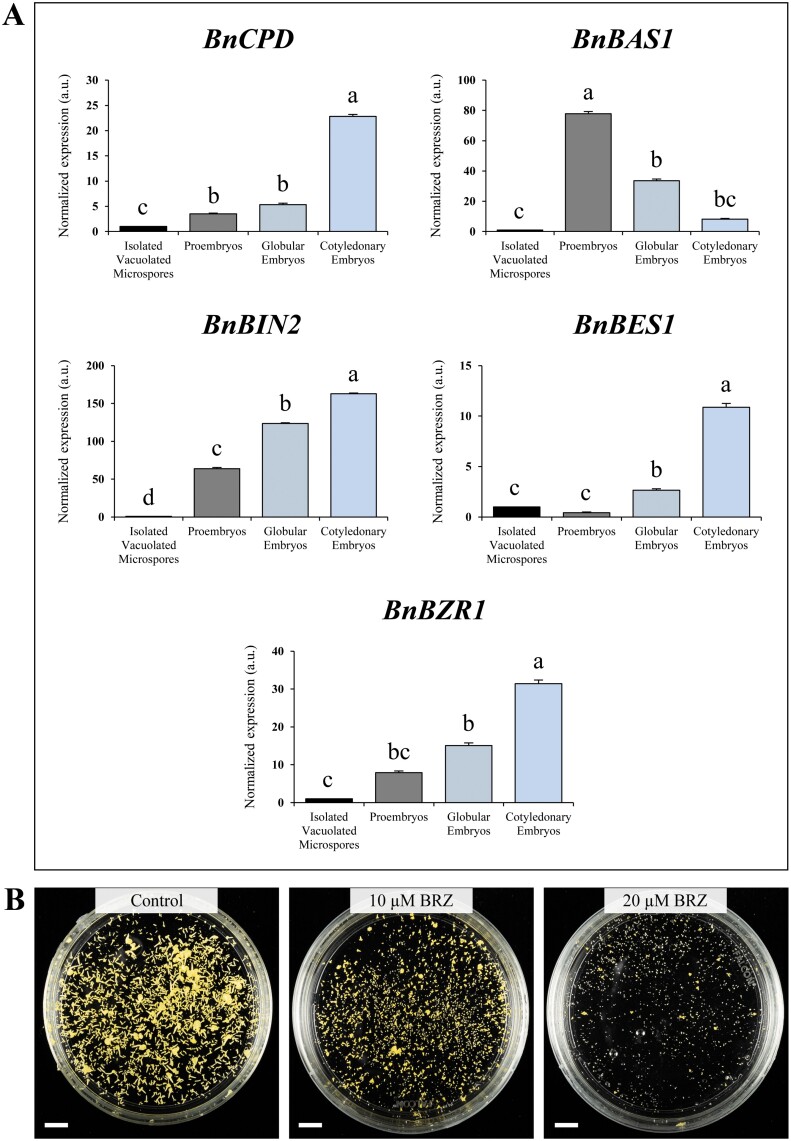
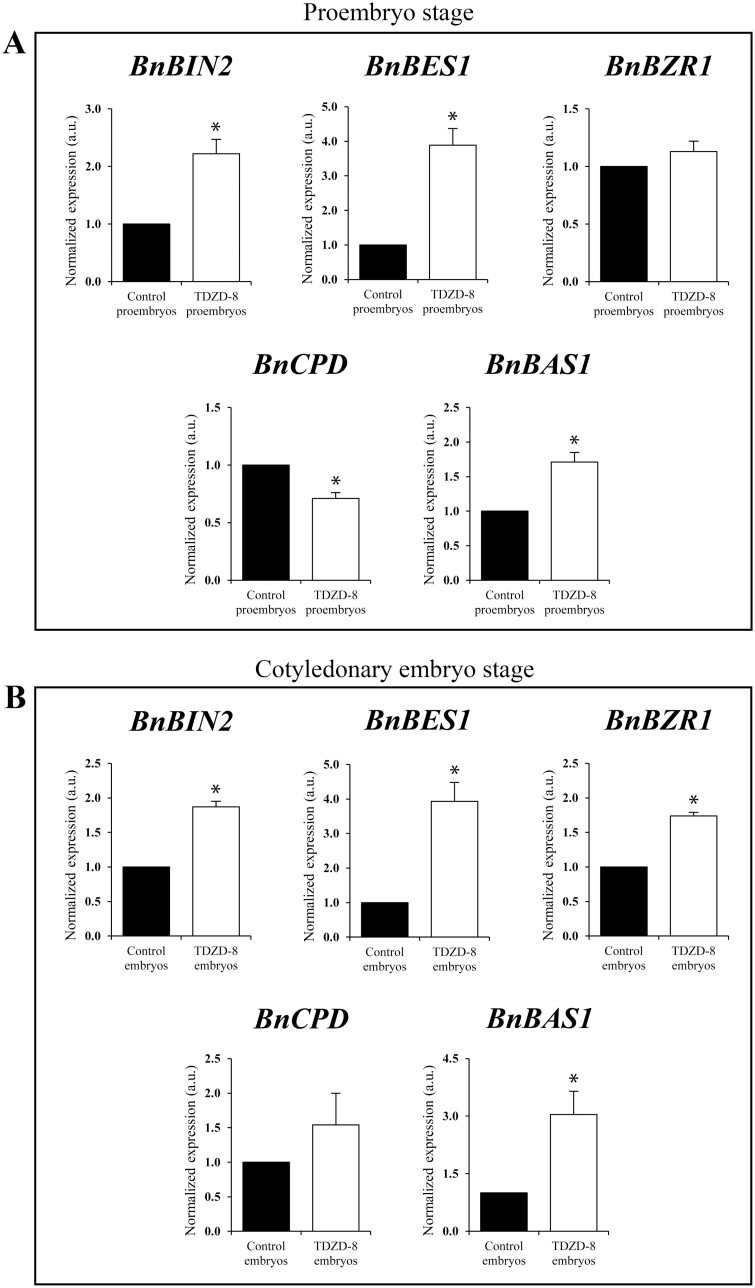
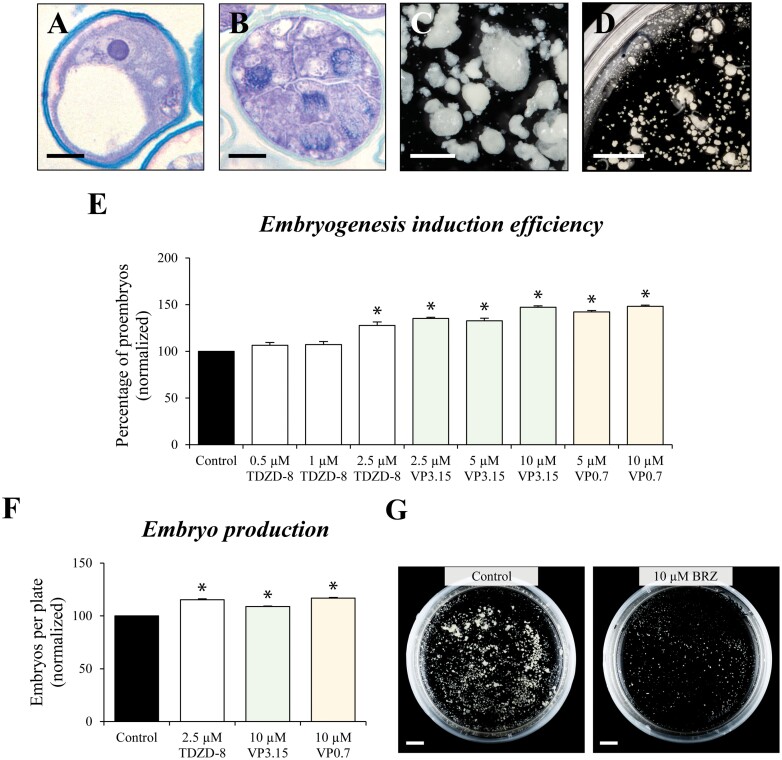
Plant in vitro regeneration systems, such as somatic embryogenesis, are essential in breeding; they permit propagation of elite genotypes, production of doubled-haploids, and regeneration of whole plants from gene editing or transformation events. However, in many crop and forest species, somatic embryogenesis is highly inefficient. We report a new strategy to improve in vitro embryogenesis using synthetic small molecule inhibitors of mammalian glycogen synthase kinase 3β (GSK-3β), never used in plants. These inhibitors increased in vitro embryo production in three different systems and species, microspore embryogenesis of Brassica napus and Hordeum vulgare, and somatic embryogenesis of Quercus suber. TDZD-8, a representative compound of the molecules tested, inhibited GSK-3 activity in microspore cultures, and increased expression of embryogenesis genes FUS3, LEC2, and AGL15. Plant GSK-3 kinase BIN2 is a master regulator of brassinosteroid (BR) signalling. During microspore embryogenesis, BR biosynthesis and signalling genes CPD, GSK-3-BIN2, BES1, and BZR1 were up-regulated and the BAS1 catabolic gene was repressed, indicating activation of the BR pathway. TDZD-8 increased expression of BR signalling elements, mimicking BR effects. The findings support that the small molecule inhibitors promoted somatic embryogenesis by activating the BR pathway, opening up the way for new strategies using GSK-3β inhibitors that could be extended to other species.
植物体外再生系统,如体细胞胚胎发生,在育种中至关重要;它们允许优良基因型的繁殖、双倍单倍体的产生,以及通过基因编辑或转化事件对整株植物的再生。然而,在许多作物和森林物种中,体细胞胚胎发生的效率非常低。我们报告了一种使用哺乳动物糖原合成酶激酶 3β(GSK-3β)的合成小分子抑制剂来改进体外胚胎发生的新策略,这些抑制剂从未在植物中使用过。这些抑制剂在三个不同的系统和物种中增加了体外胚胎的产生,即甘蓝型油菜和大麦的小孢子胚胎发生,以及栓皮栎的体细胞胚胎发生。作为所测试分子的代表化合物,TDZD-8 抑制了小孢子培养物中的 GSK-3 活性,并增加了胚胎发生基因 FUS3、LEC2 和 AGL15 的表达。植物 GSK-3 激酶 BIN2 是油菜素内酯(BR)信号转导的主要调节剂。在小孢子胚胎发生过程中,BR 生物合成和信号转导基因 CPD、GSK-3-BIN2、BES1 和 BZR1 上调,而 BAS1 分解代谢基因被抑制,表明 BR 途径的激活。TDZD-8 增加了 BR 信号转导元件的表达,模拟了 BR 的作用。这些发现支持小分子抑制剂通过激活 BR 途径促进体细胞胚胎发生,为使用 GSK-3β抑制剂开辟了新的策略,这些策略可能扩展到其他物种。