Engsontia Patamarerk, Satasook Chutamas
Division of Biological Science, Faculty of Science, Prince of Songkla University, Songkhla 90110, Thailand.
Princess Maha Chakri Sirindhorn Natural History Museum, Prince of Songkla University, Songkhla 90110, Thailand.
Insects. 2021 Jul 5;12(7):611. doi: 10.3390/insects12070611.
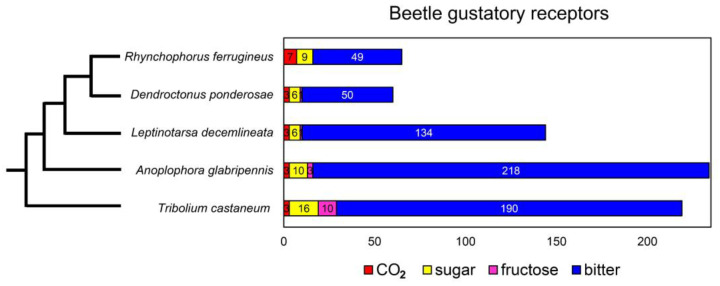
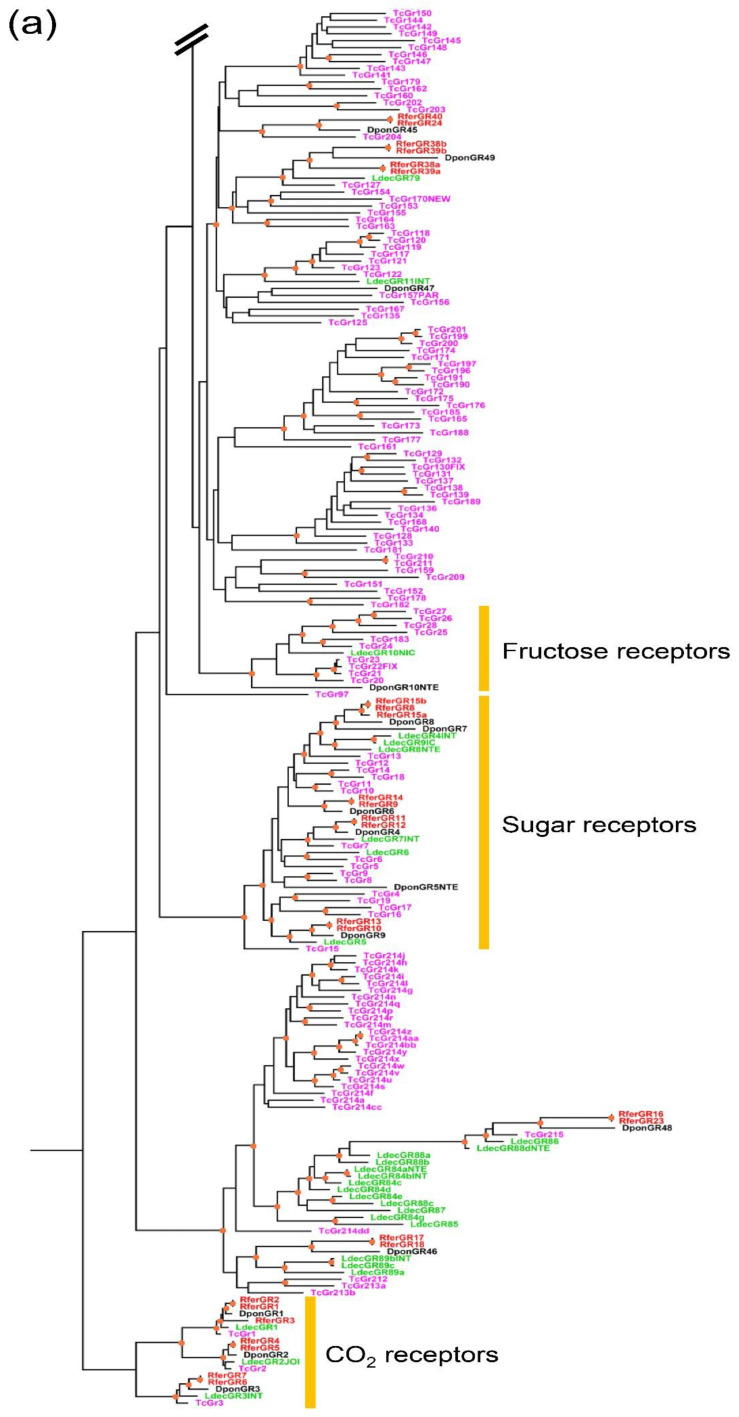
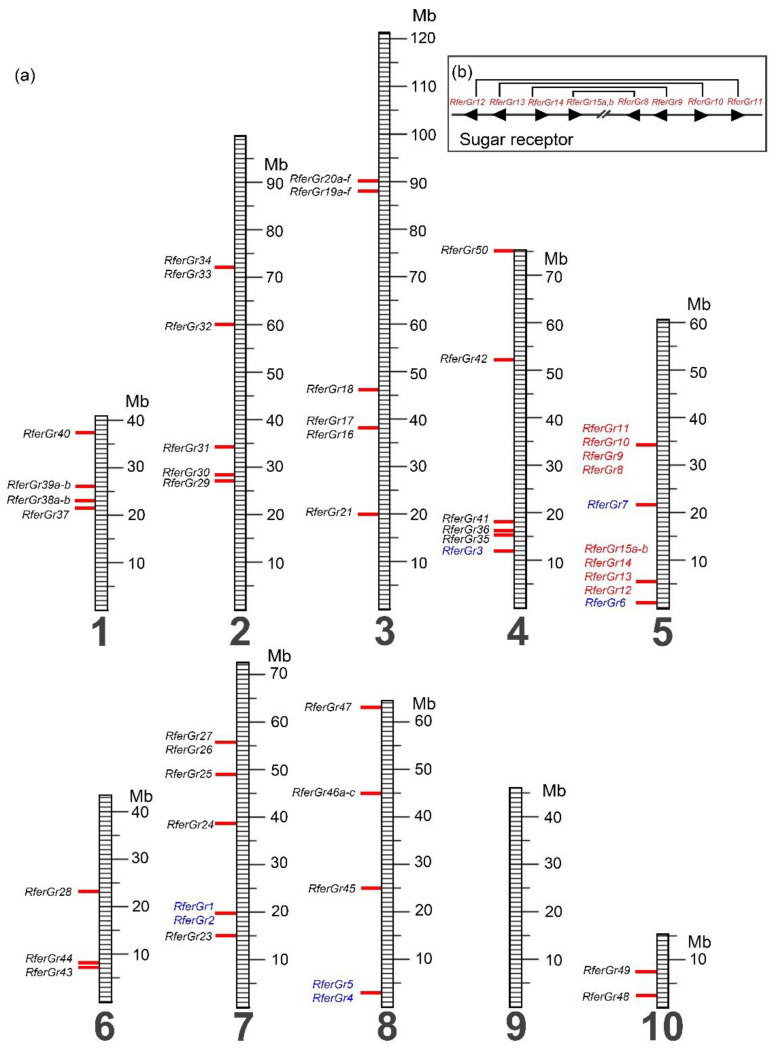
The red palm weevil () is a highly destructive pest of oil palm, date, and coconut in many parts of Asia, Europe, and Africa. The Food and Agriculture Organization of the United Nations has called for international collaboration to develop a multidisciplinary strategy to control this invasive pest. Previous research focused on the molecular basis of chemoreception in this species, particularly olfaction, to develop biosensors for early detection and more effective bait traps for mass trapping. However, the molecular basis of gustation, which plays an essential role in discriminating food and egg-laying sites and chemical communication in this species, is limited because its complete gustatory receptor gene family still has not been characterized. We manually annotated the gene family from the recently available genome and transcriptome data and reported 50 gustatory receptor genes encoding 65 gustatory receptors, including 7 carbon dioxide, 9 sugar, and 49 bitter receptors. This study provides a platform for future functional analysis and comparative chemosensory study. A better understanding of gustation will improve our understanding of this species' complex chemoreception, which is an important step toward developing more effective control methods.
红棕象甲( )是亚洲、欧洲和非洲许多地区油棕、枣椰和椰子的极具破坏性的害虫。联合国粮食及农业组织呼吁开展国际合作,制定多学科战略来控制这种入侵性害虫。先前的研究集中在该物种化学感受的分子基础上,尤其是嗅觉,以开发用于早期检测的生物传感器和用于大规模诱捕的更有效的诱饵诱捕器。然而,味觉的分子基础在该物种辨别食物和产卵地点以及化学通讯中起着至关重要的作用,但由于其完整的味觉受体基因家族仍未得到表征,相关研究有限。我们从最近可得的基因组和转录组数据中手动注释了该基因家族,并报告了50个味觉受体基因,编码65个味觉受体,包括7个二氧化碳、9个糖和49个苦味受体。本研究为未来的功能分析和比较化学感受研究提供了一个平台。更好地理解味觉将增进我们对该物种复杂化学感受的理解,这是朝着开发更有效的控制方法迈出的重要一步。