Irfan Rizwana, Almazroi Abdulwahab Ali, Rauf Hafiz Tayyab, Damaševičius Robertas, Nasr Emad Abouel, Abdelgawad Abdelatty E
Department of Information Technology, College of Computing and Information Technology at Khulais, University of Jeddah, Jeddah 21959, Saudi Arabia.
Centre for Smart Systems, AI and Cybersecurity, Staffordshire University, Stoke-on-Trent ST4 2DE, UK.
Diagnostics (Basel). 2021 Jul 5;11(7):1212. doi: 10.3390/diagnostics11071212.
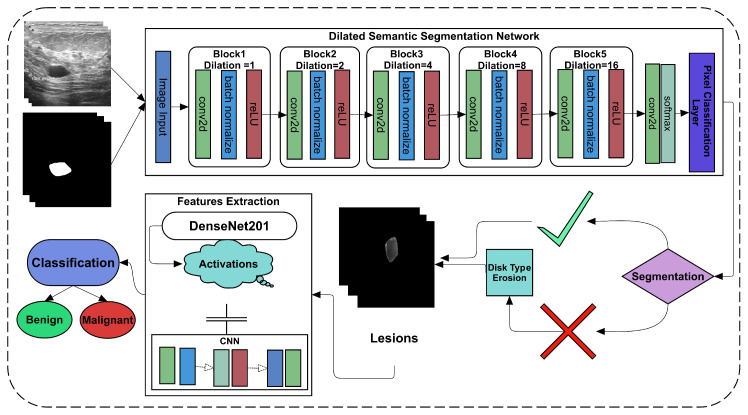
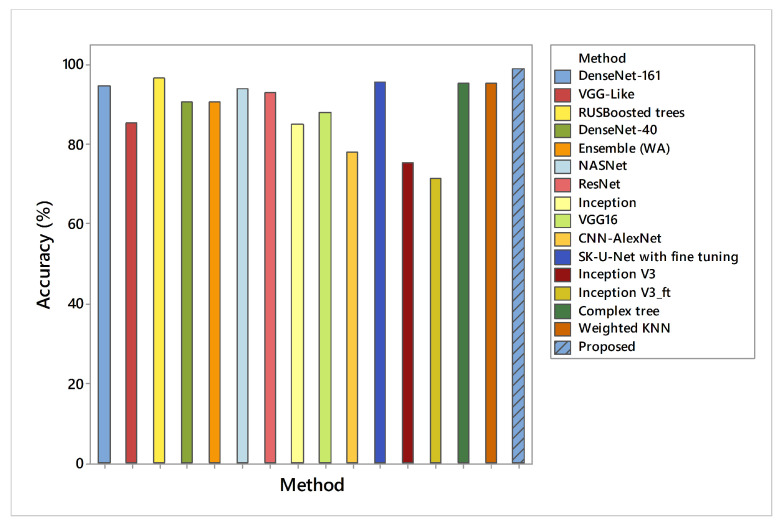
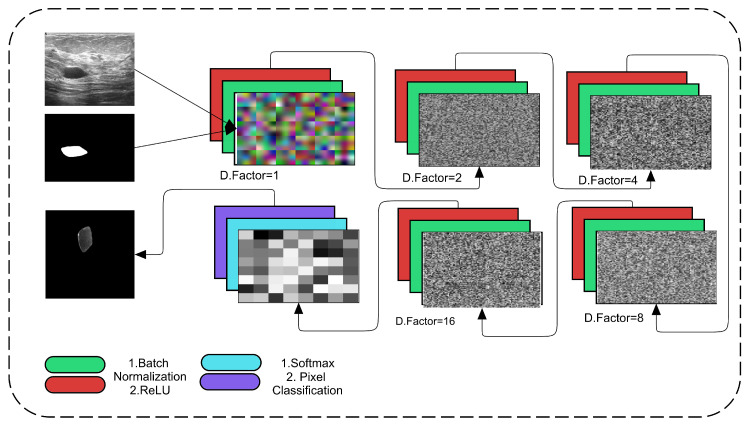
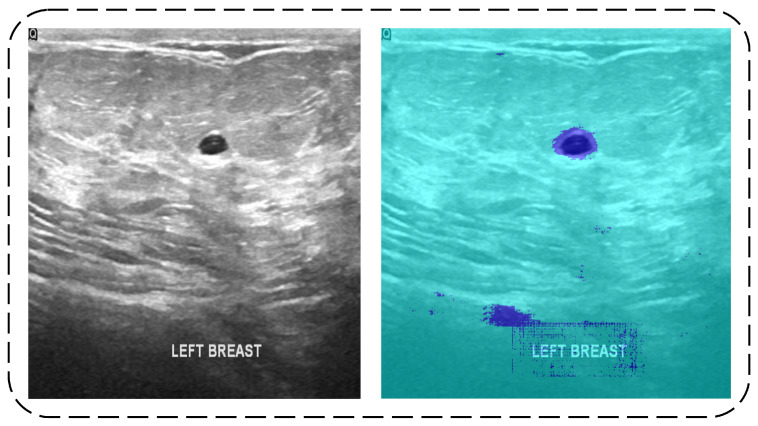
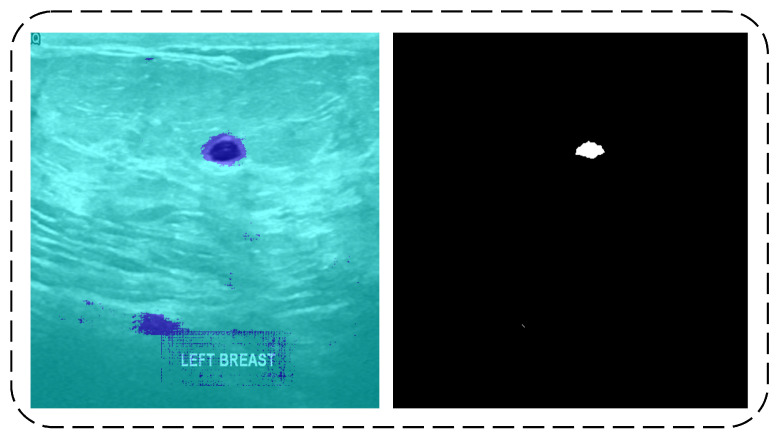
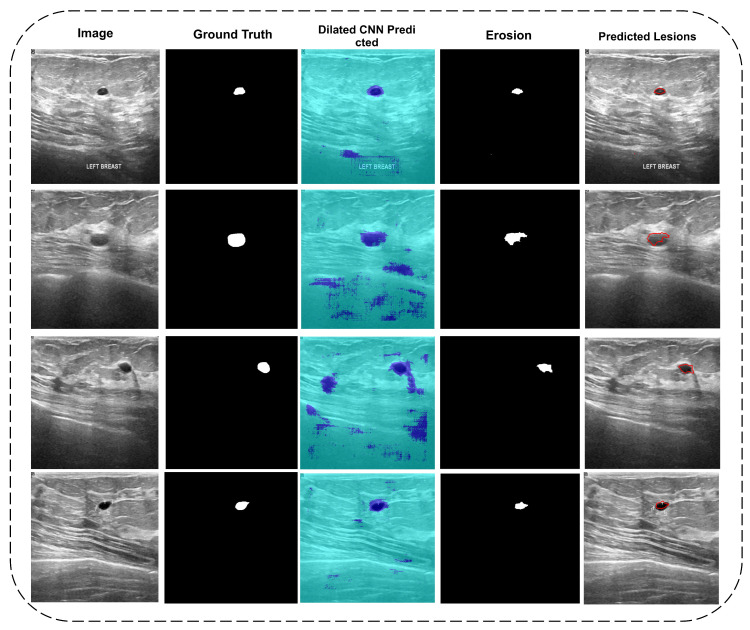
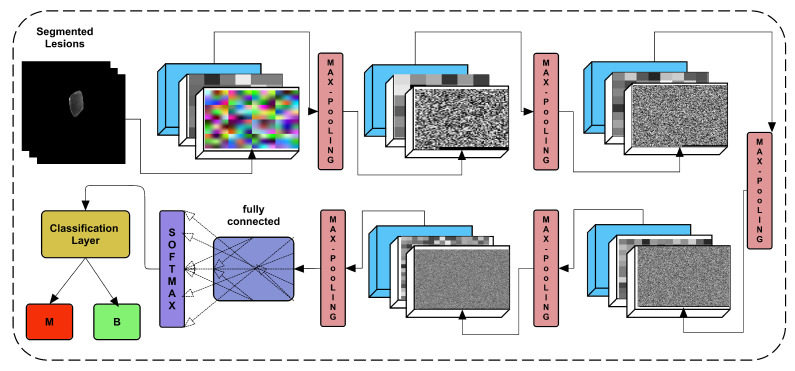
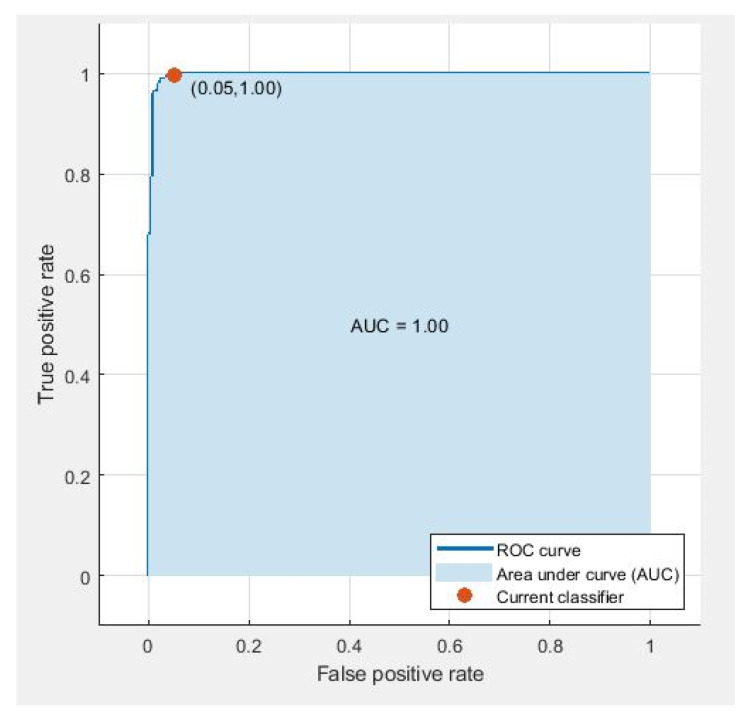
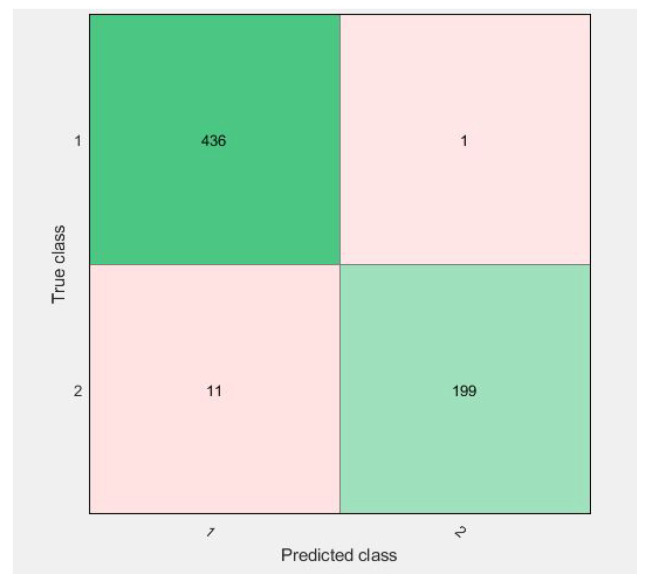
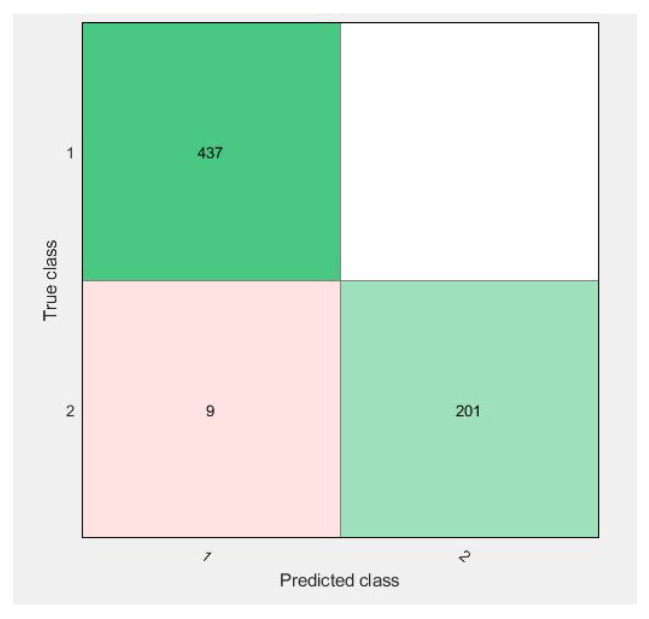
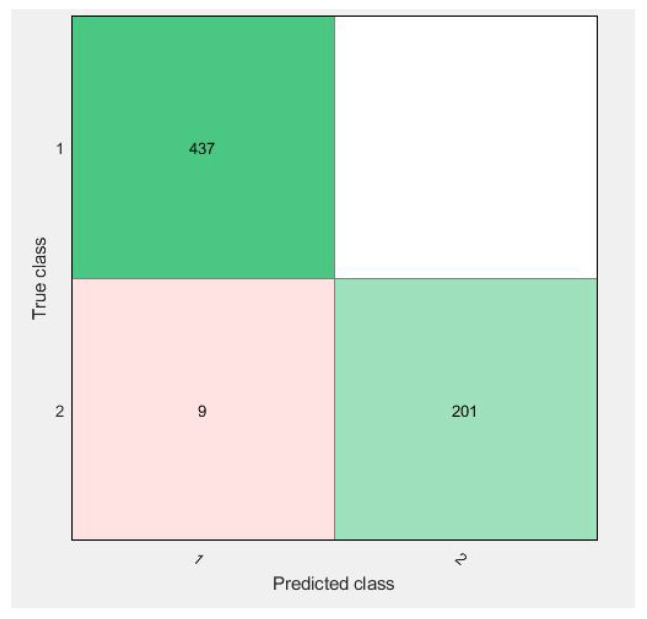
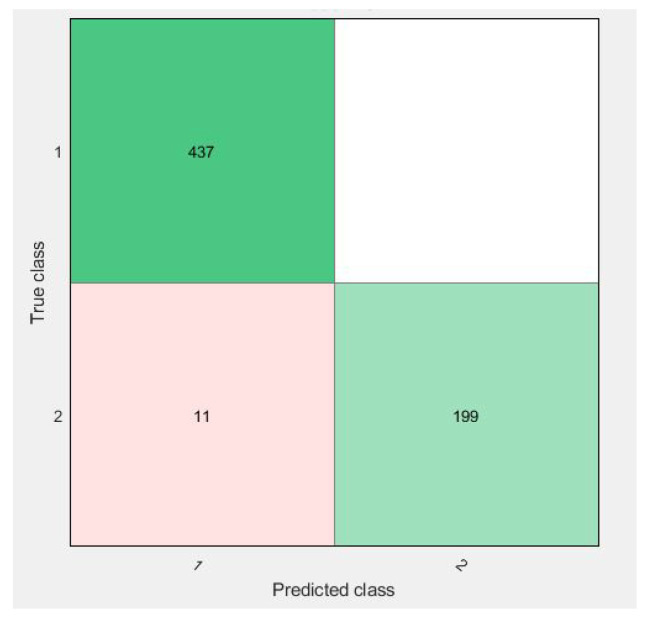
Breast cancer is becoming more dangerous by the day. The death rate in developing countries is rapidly increasing. As a result, early detection of breast cancer is critical, leading to a lower death rate. Several researchers have worked on breast cancer segmentation and classification using various imaging modalities. The ultrasonic imaging modality is one of the most cost-effective imaging techniques, with a higher sensitivity for diagnosis. The proposed study segments ultrasonic breast lesion images using a Dilated Semantic Segmentation Network (Di-CNN) combined with a morphological erosion operation. For feature extraction, we used the deep neural network DenseNet201 with transfer learning. We propose a 24-layer CNN that uses transfer learning-based feature extraction to further validate and ensure the enriched features with target intensity. To classify the nodules, the feature vectors obtained from DenseNet201 and the 24-layer CNN were fused using parallel fusion. The proposed methods were evaluated using a 10-fold cross-validation on various vector combinations. The accuracy of CNN-activated feature vectors and DenseNet201-activated feature vectors combined with the Support Vector Machine (SVM) classifier was 90.11 percent and 98.45 percent, respectively. With 98.9 percent accuracy, the fused version of the feature vector with SVM outperformed other algorithms. When compared to recent algorithms, the proposed algorithm achieves a better breast cancer diagnosis rate.
乳腺癌正日益危险。发展中国家的死亡率正在迅速上升。因此,乳腺癌的早期检测至关重要,可降低死亡率。几位研究人员致力于使用各种成像方式对乳腺癌进行分割和分类。超声成像方式是最具成本效益的成像技术之一,对诊断具有较高的灵敏度。本研究提出使用扩张语义分割网络(Di-CNN)结合形态学腐蚀操作对超声乳腺病变图像进行分割。对于特征提取,我们使用了具有迁移学习的深度神经网络DenseNet201。我们提出了一个24层的卷积神经网络(CNN),它使用基于迁移学习的特征提取来进一步验证并确保具有目标强度的丰富特征。为了对结节进行分类,使用并行融合将从DenseNet201和24层CNN获得的特征向量进行融合。所提出的方法在各种向量组合上使用10折交叉验证进行评估。CNN激活的特征向量和DenseNet201激活的特征向量与支持向量机(SVM)分类器相结合的准确率分别为90.11%和98.45%。特征向量与SVM的融合版本以98.9%的准确率优于其他算法。与最近的算法相比,所提出的算法实现了更好的乳腺癌诊断率。