Department of Cell and Developmental Biology, Institute of Biomedical Sciences, University of Sao Paulo, Sao Paulo 05508-000, Brazil.
Int J Mol Sci. 2021 Jul 27;22(15):7992. doi: 10.3390/ijms22157992.
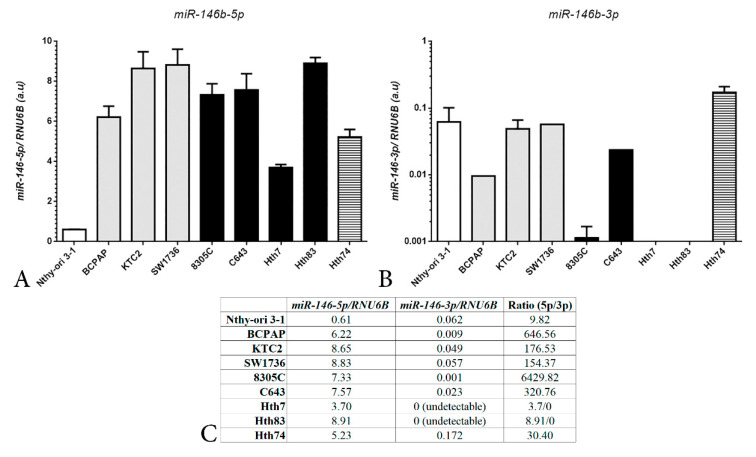
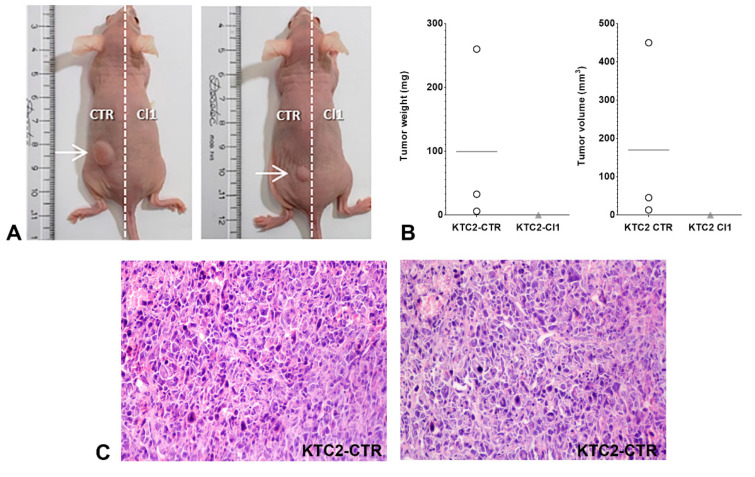
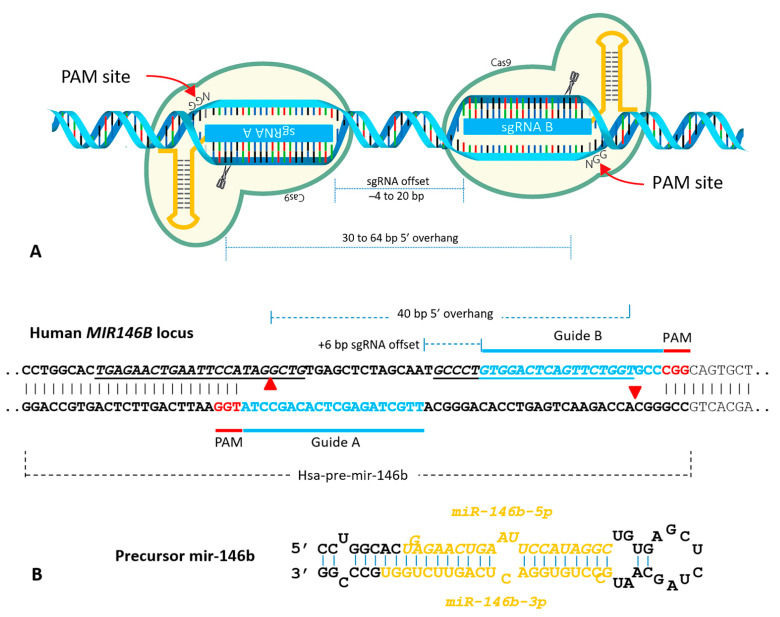
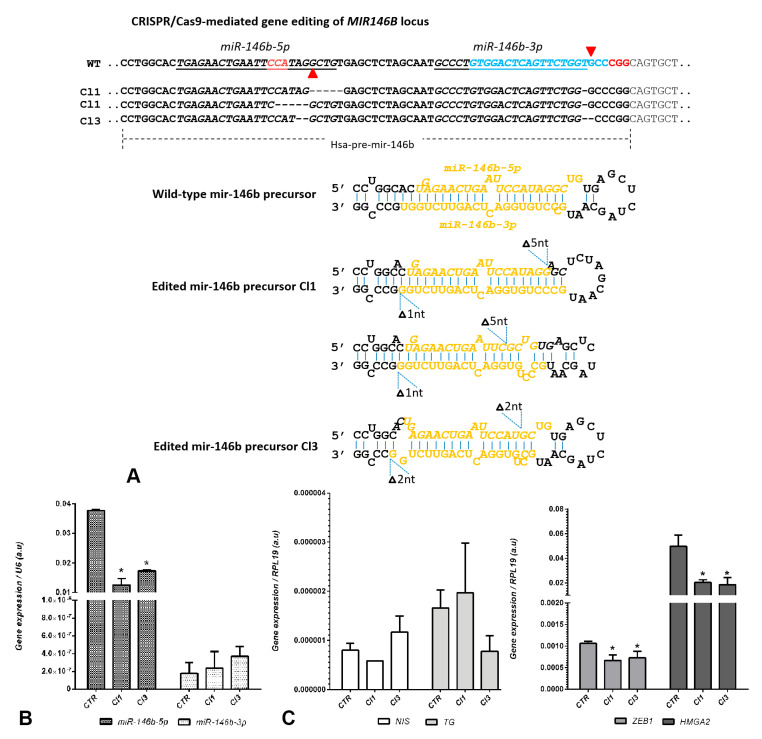
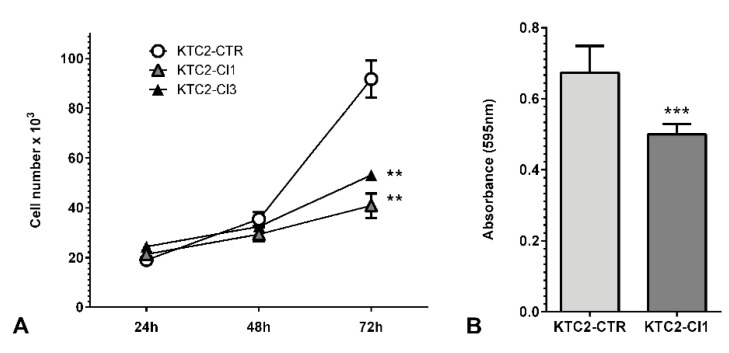
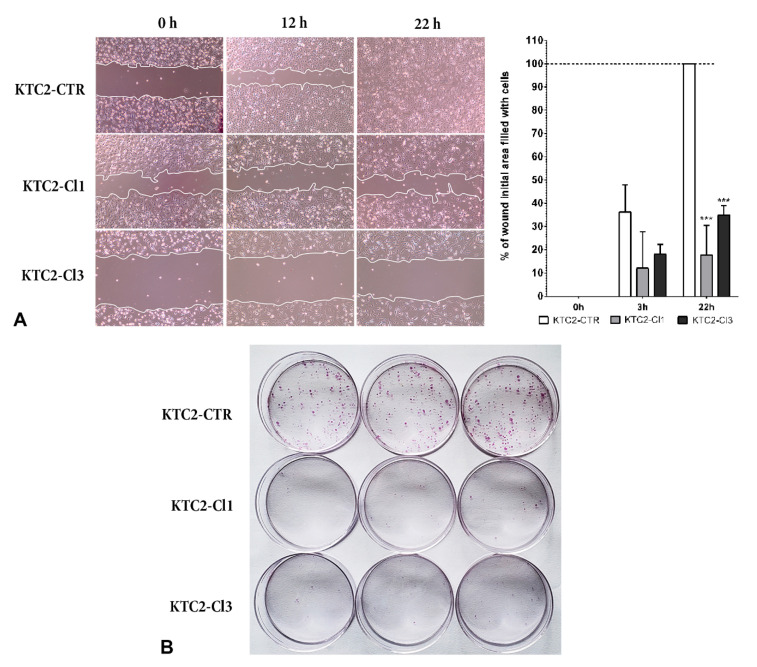
Thyroid cancer is the most common endocrine malignancy, and the characterization of the genetic alterations in coding-genes that drive thyroid cancer are well consolidated in MAPK signaling. In the context of non-coding RNAs, microRNAs (miRNAs) are small non-coding RNAs that, when deregulated, cooperate to promote tumorigenesis by targeting mRNAs, many of which are proto-oncogenes and tumor suppressors. In thyroid cancer, is the most overexpressed miRNA associated with tumor aggressiveness and progression, while the antisense blocking of results in anti-tumoral effect. Therefore, inactivating has been considered as a promising strategy in thyroid cancer therapy. Here, we applied the CRISPR/Cas9n editing system to target the gene in an aggressive anaplastic thyroid cancer (ATC) cell line. For that, we designed two single-guide RNAs cloned into plasmids to direct Cas9 nickase (Cas9n) to the genomic region of the structure to target - and - sequences. In this plasmidial strategy, we cotransfected pSp-Cas9n--GuideA-puromycin and pSp-Cas9n--GuideB-GFP plasmids in KTC2 cells and selected the puromycin resistant + GFP positive clones (KTC2-Cl). As a result, we observed that the ATC cell line KTC2-Cl1 showed a 60% decrease in the expression of compared to the control, also showing reduced cell viability, migration, colony formation, and blockage of tumor development in immunocompromised mice. The analysis of the edited sequence shows a 5 nt deletion in the region and a 1 nt deletion in the region in KTC2-Cl1. Thus, we developed an effective CRISPR/Cas9n system to edit the miRNA gene and reduce expression which constitutes a potential molecular tool for the investigation of miRNAs function in thyroid cancer.
甲状腺癌是最常见的内分泌恶性肿瘤,在 MAPK 信号通路中,编码基因的遗传改变特征已被很好地确定,这些改变与甲状腺癌的发生有关。在非编码 RNA 方面,微小 RNA(miRNA)是小的非编码 RNA,当其失调时,通过靶向许多原癌基因和肿瘤抑制基因的 mRNA 来协同促进肿瘤发生。在甲状腺癌中,是与肿瘤侵袭性和进展最相关的过度表达 miRNA,而 的反义阻断则导致抗肿瘤作用。因此,失活 已被认为是甲状腺癌治疗的一种很有前途的策略。在这里,我们应用 CRISPR/Cas9n 编辑系统靶向侵袭性间变性甲状腺癌(ATC)细胞系中的 基因。为此,我们设计了两个单引导 RNA 克隆到质粒中,以指导 Cas9 切口酶(Cas9n)靶向 结构的基因组区域,以靶向 - 和 - 序列。在这种质粒策略中,我们共转染了 pSp-Cas9n--GuideA-puromycin 和 pSp-Cas9n--GuideB-GFP 质粒到 KTC2 细胞中,并选择了嘌呤霉素抗性+ GFP 阳性克隆(KTC2-Cl)。结果表明,与对照相比,ATC 细胞系 KTC2-Cl1 中的 表达降低了 60%,同时细胞活力、迁移、集落形成和免疫缺陷小鼠肿瘤发展的阻断也降低了。对 编辑序列的分析表明,KTC2-Cl1 中 区域有 5 个核苷酸缺失, 区域有 1 个核苷酸缺失。因此,我们开发了一种有效的 CRISPR/Cas9n 系统来编辑 miRNA 基因并降低 的表达,这为研究甲状腺癌中 miRNA 的功能提供了一种潜在的分子工具。