Institute of Nutritional Medicine, University of Hohenheim, Fruwirthstr. 12, 70593, Stuttgart, Germany.
Institute of Nutritional Medicine, University of Hohenheim, Fruwirthstr. 12, 70593, Stuttgart, Germany.
Appetite. 2021 Dec 1;167:105638. doi: 10.1016/j.appet.2021.105638. Epub 2021 Aug 10.
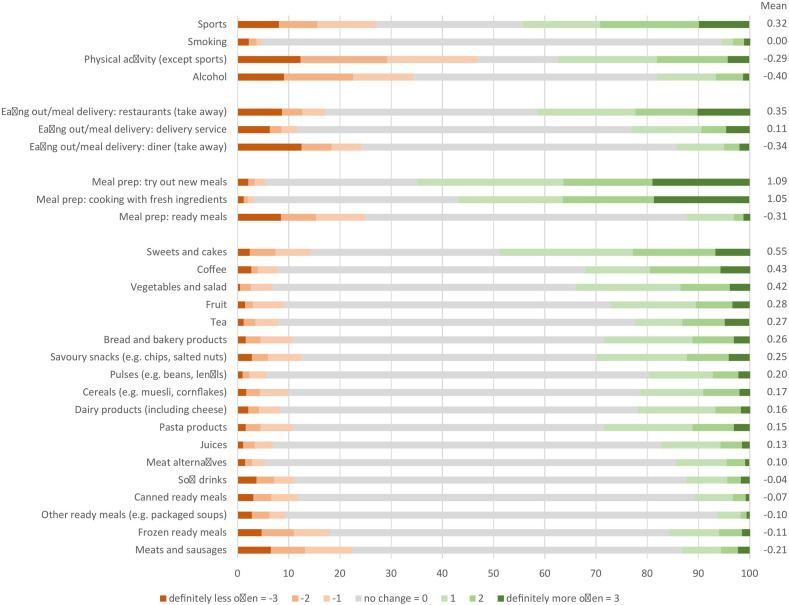
Changes in lifestyle and body weight were examined retrospectively in students at a German university during the first COVID-19 lockdown period (March 12- May 3, 2020) using an online survey. Data from a total of 827 participants was used. Almost half of the students reported perceived body weight changes with about 27% gaining weight and around 22% losing weight. Regression analyses showed that consumption changes in the following food categories: fruits, sweets and cakes, bread and bakery products, pasta, savoury snacks, and meats and sausages were predictive of weight changes. Additionally, changes in the frequency of cooking with fresh ingredients, physical activity, exercise, smoking, and alcohol consumption as well as pre-lockdown BMI were all predictive of weight changes. Given the continuous global pandemic, increased and innovative public health efforts to support this population group are needed.
在 2020 年 3 月 12 日至 5 月 3 日德国大学第一波 COVID-19 封锁期间,使用在线调查回顾性地检查了学生生活方式和体重的变化。共使用了 827 名参与者的数据。近一半的学生报告称体重发生了变化,约 27%的学生体重增加,约 22%的学生体重减轻。回归分析表明,以下食物类别的消费变化:水果、甜食和蛋糕、面包和烘焙食品、意大利面、咸味小吃以及肉类和香肠,都与体重变化有关。此外,烹饪新鲜食材的频率、体力活动、锻炼、吸烟和饮酒以及封锁前的 BMI 变化也都与体重变化有关。鉴于持续的全球大流行,需要加大和创新公共卫生工作力度,为这一人群提供支持。