Park Min Sue, Jo Hyeontae, Lee Haeun, Jung Se Young, Hwang Hyung Ju
Department of Mathematics, Pohang University of Science and Technology, Pohang, Republic of Korea.
Basic Science Research Institute, Pohang University of Science and Technology, Pohang, Republic of Korea.
Infect Dis Ther. 2022 Apr;11(2):787-805. doi: 10.1007/s40121-022-00600-4. Epub 2022 Feb 16.
A prompt severity assessment model of patients with confirmed infectious diseases could enable efficient diagnosis while alleviating burden on the medical system. This study aims to develop a SARS-CoV-2 severity assessment model and establish a medical system that allows patients to check the severity of their cases and informs them to visit the appropriate clinic center on the basis of past treatment data of other patients with similar severity levels.
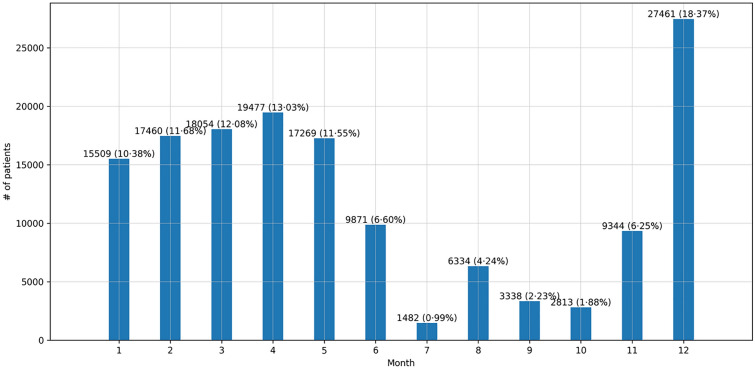
This paper provides the development processes of a severity assessment model using machine learning techniques and its application on SARS-CoV-2-infected patients. The proposed model is trained on a nationwide data set provided by a Korean government agency and only requires patients' basic personal data, allowing them to judge the severity of their own cases. After modeling, the boosting-based decision tree model was selected as the classifier while mortality rate was interpreted as the probability score. The data set was collected from all Korean citizens with confirmed COVID-19 between February 2020 and July 2021 (N = 149,471).
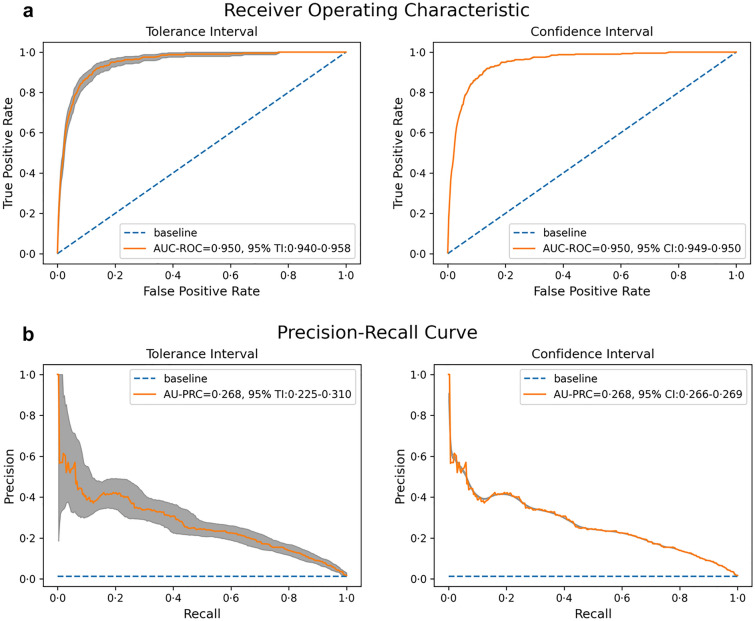
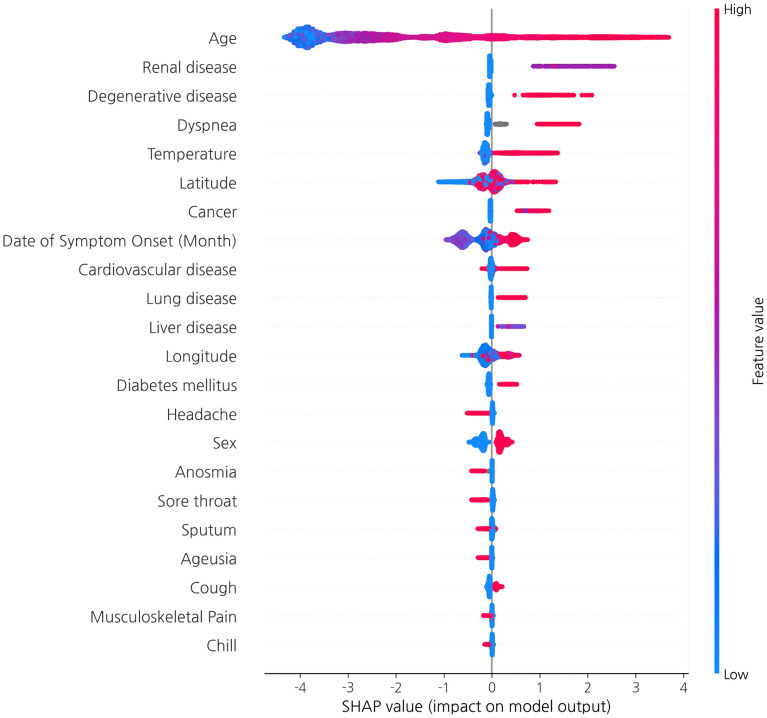
The experiments achieved high model performance with an approximate precision of 0.923 and area under the curve of receiver operating characteristic (AUROC) score of 0.950 [95% tolerance interval (TI) 0.940-0.958, 95% confidence interval (CI) 0.949-0.950]. Moreover, our experiments identified the most important variables affecting the severity in the model via sensitivity analysis.
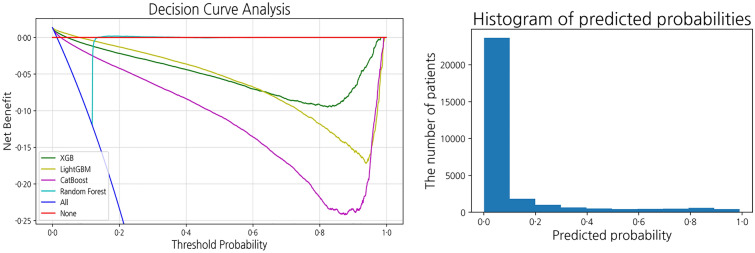
A prompt severity assessment model for managing infectious people has been attained through using a nationwide data set. It has demonstrated its superior performance by surpassing that of conventional risk assessments. With the model's high performance and easily accessible features, the triage algorithm is expected to be particularly useful when patients monitor their health status by themselves through smartphone applications.
一种针对确诊传染病患者的快速严重程度评估模型能够实现高效诊断,同时减轻医疗系统的负担。本研究旨在开发一种新冠病毒严重程度评估模型,并建立一个医疗系统,该系统可让患者根据其他病情严重程度相似患者的过往治疗数据,检查自身病情的严重程度,并告知他们前往合适的诊疗中心就诊。
本文介绍了使用机器学习技术开发严重程度评估模型的过程及其在新冠病毒感染患者中的应用。所提出的模型基于韩国政府机构提供的全国数据集进行训练,仅需患者的基本个人数据,即可让患者判断自身病情的严重程度。建模后,选择基于提升的决策树模型作为分类器,将死亡率解释为概率得分。该数据集收集自2020年2月至2021年7月期间所有确诊感染新冠病毒的韩国公民(N = 149471)。
实验取得了较高的模型性能,近似精度约为0.923,受试者操作特征曲线下面积(AUROC)得分为0.950 [95%容忍区间(TI)0.940 - 0.958,95%置信区间(CI)0.949 - 0.950]。此外,我们的实验通过敏感性分析确定了模型中影响严重程度的最重要变量。
通过使用全国数据集,已获得一种用于管理传染病患者的快速严重程度评估模型。它通过超越传统风险评估的表现证明了其卓越性能。凭借该模型的高性能和易于获取的特点,当患者通过智能手机应用自行监测健康状况时,分诊算法预计将特别有用。