Department of Microbiology, Science Campus, Alagappa University, Karaikudi, Tamilnadu, India.
Centre for for Material Engineering and Regenerative Medicine Bharath Institute of Higher Education, Chennai, India.
PLoS One. 2021 Sep 2;16(9):e0256748. doi: 10.1371/journal.pone.0256748. eCollection 2021.
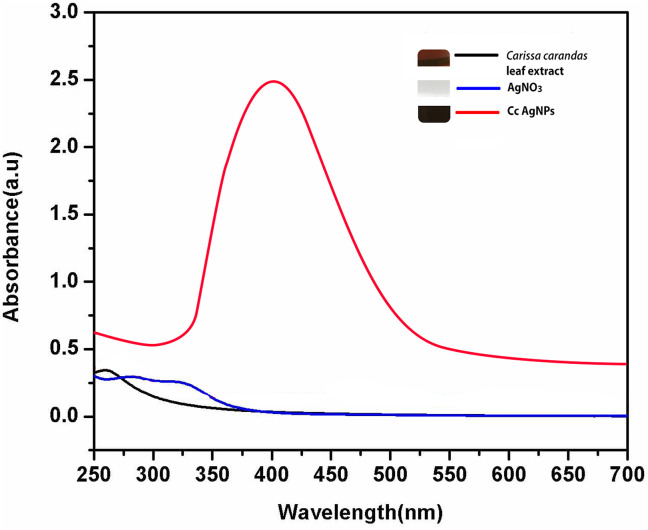
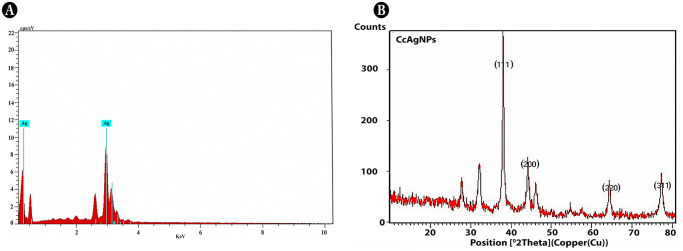
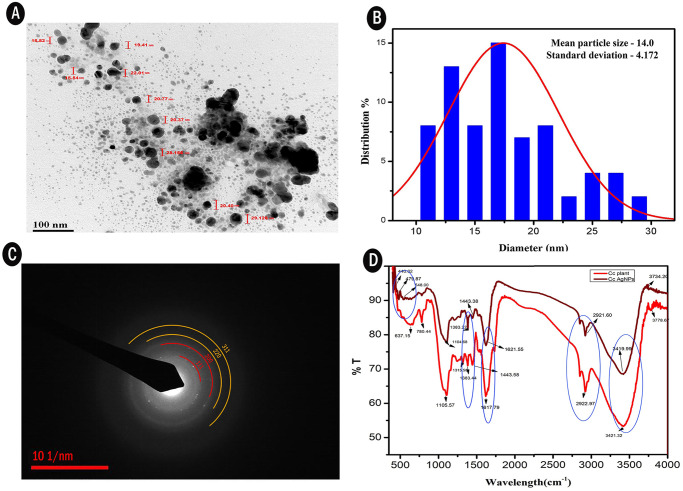
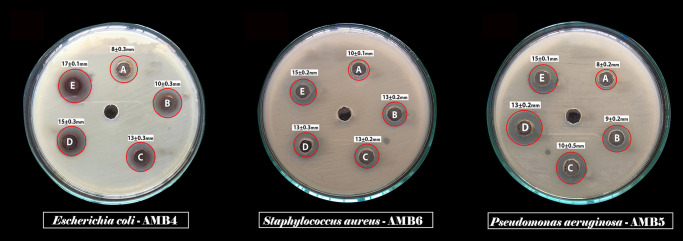
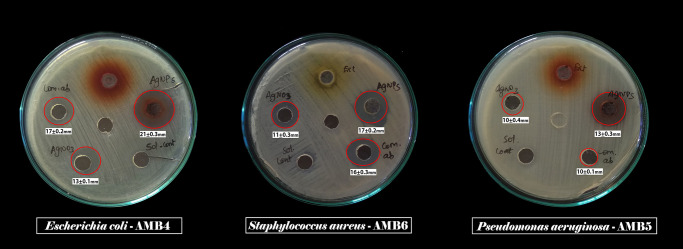
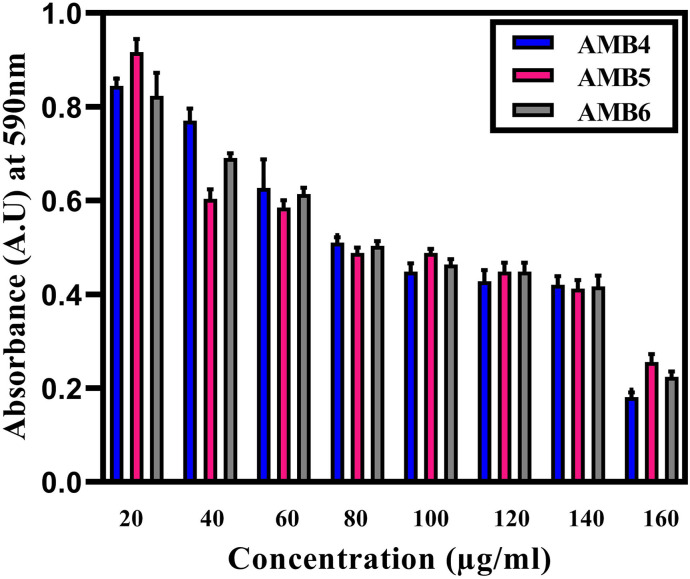
Rising incidents of urinary tract infections (UTIs) among catheterized patients is a noteworthy problem in clinic due to their colonization of uropathogens on abiotic surfaces. Herein, we have examined the surface modification of urinary catheter by embedding with eco-friendly synthesized phytomolecules-capped silver nanoparticles (AgNPs) to prevent the invasion and colonization of uropathogens. The preliminary confirmation of AgNPs production in the reaction mixture was witnessed by the colour change and surface resonance plasmon (SRP) band at 410nm by UV-visible spectroscopy. The morphology, size, crystalline nature, and elemental composition of attained AgNPs were further confirmed by the transmission electron microscopy (TEM), selected area electron diffraction (SAED), X-ray diffraction (XRD) technique, Scanning electron microscopy (SEM) and energy dispersive spectroscopy (EDS). The functional groups of AgNPs with stabilization/capped phytochemicals were detected by Fourier-transform infrared spectroscopy (FTIR). Further, antibiofilm activity of synthesized AgNPs against biofilm producers such as Staphylococcus aureus, Escherichia coli and Pseudomonas aeruginosa were determined by viability assays and micrographically. AgNPs coated and coating-free catheters performed to treat with bacterial pathogen to analyze the mat formation and disruption of biofilm formation. Synergistic effect of AgNPs with antibiotic reveals that it can enhance the activity of antibiotics, AgNPs coated catheter revealed that, it has potential antimicrobial activity and antibiofilm activity. In summary, C. carandas leaf extract mediated synthesized AgNPs will open a new avenue and a promising template to embed on urinary catheter to control clinical pathogens.
在临床上,由于留置导尿管患者的泌尿道感染(UTI)发生率上升,因此其在非生物表面定植尿路病原体是一个值得关注的问题。在此,我们通过在导尿管中嵌入环保合成的植物分子封端的银纳米粒子(AgNPs)来检查导尿管的表面改性,以防止尿路病原体的入侵和定植。通过紫外可见光谱观察到反应混合物中 AgNPs 生成的初步确认,其表现为颜色变化和表面共振等离子体(SRP)带在 410nm 处。通过透射电子显微镜(TEM)、选区电子衍射(SAED)、X 射线衍射(XRD)技术、扫描电子显微镜(SEM)和能谱(EDS)进一步证实了所获得的 AgNPs 的形貌、尺寸、结晶性质和元素组成。AgNPs 与稳定/封端植物化学物质的官能团通过傅里叶变换红外光谱(FTIR)进行检测。此外,通过活力测定和显微镜观察来测定合成的 AgNPs 对生物膜生产者(如金黄色葡萄球菌、大肠杆菌和铜绿假单胞菌)的抗生物膜活性。用细菌病原体处理涂有和未涂 AgNPs 的导管,以分析生物膜形成和破坏。AgNPs 与抗生素的协同作用表明,它可以增强抗生素的活性,涂有 AgNPs 的导管表明,它具有潜在的抗菌活性和抗生物膜活性。总之,C. carandas 叶提取物介导合成的 AgNPs 将为控制临床病原体提供一个新的途径和有前途的模板,将其嵌入到导尿管中。