University of Gothenburg, Institute of Medicine, Sahlgrenska Academy, School of Public Health and Community Medicine, Gothenburg, Sweden.
RISE, Research Institutes of Sweden, Gothenburg, Sweden.
Ann Work Expo Health. 2022 Feb 18;66(2):163-177. doi: 10.1093/annweh/wxab070.
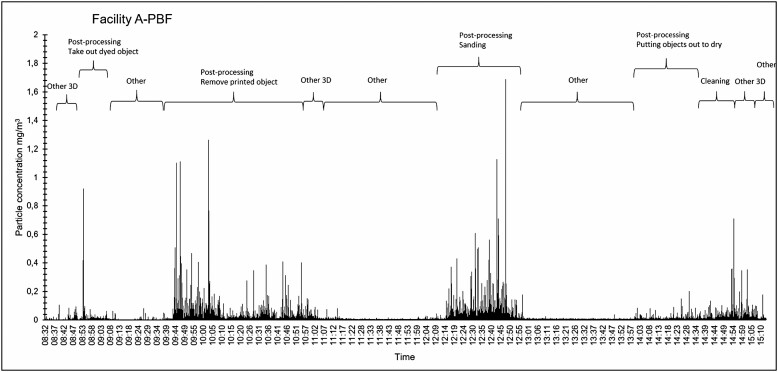
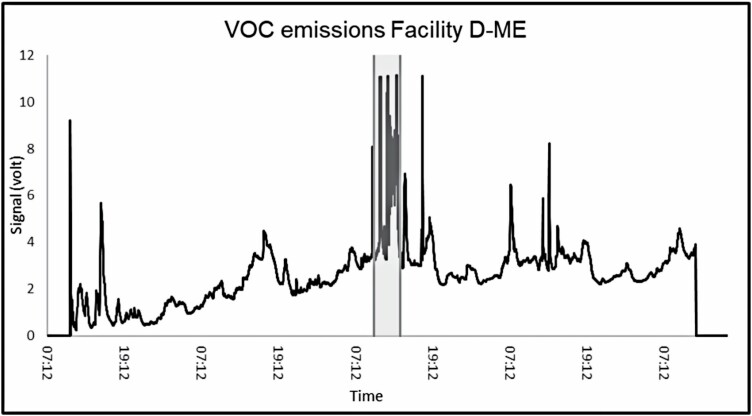
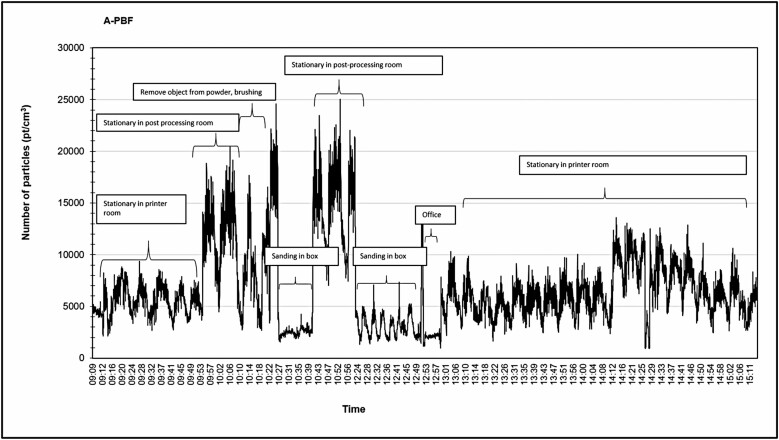
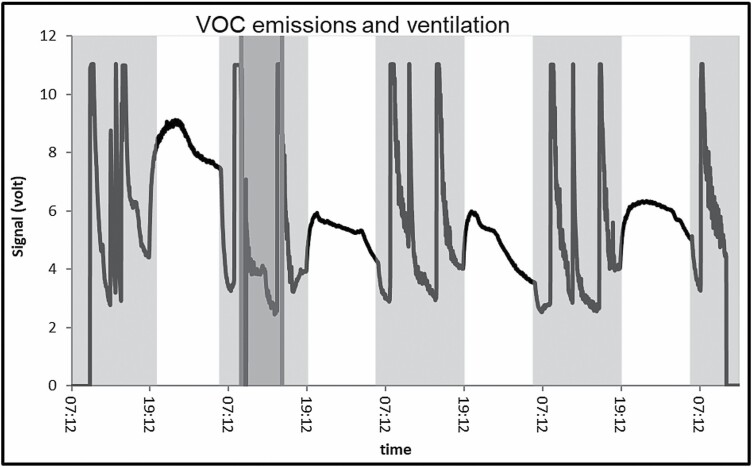
3D printing, a type of additive manufacturing (AM), is a rapidly expanding field. Some adverse health effects have been associated with exposure to printing emissions, which makes occupational exposure studies important. There is a lack of exposure studies, particularly from printing methods other than material extrusion (ME). The presented study aimed to evaluate measurement methods for exposure assessment in AM environments and to measure exposure and emissions from four different printing methods [powder bed fusion (PBF), material extrusion (ME), material jetting (MJ), and vat photopolymerization] in industry. Structured exposure diaries and volatile organic compound (VOC) sensors were used over a 5-day working week. Personal and stationary VOC samples and real-time particle measurements were taken for 1 day per facility. Personal inhalable and respirable dust samples were taken during PBF and MJ AM. The use of structured exposure diaries in combination with measurement data revealed that comparatively little time is spent on actual printing and the main exposure comes from post-processing tasks. VOC and particle instruments that log for a longer period are a useful tool as they facilitate the identification of work tasks with high emissions, highlight the importance of ventilation and give a more gathered view of variations in exposure. No alarming levels of VOCs or dust were detected during print nor post-processing in these facilities as adequate preventive measures were installed. As there are a few studies reporting negative health effects, it is still important to keep the exposure as low as reasonable.
3D 打印是一种增材制造(AM)技术,是一个快速发展的领域。已经有一些研究表明接触打印排放物会对健康产生不良影响,这使得职业暴露研究变得尤为重要。目前,这方面的研究还比较缺乏,尤其是针对除材料挤压(ME)以外的其他打印方法。本研究旨在评估 AM 环境中暴露评估的测量方法,并测量四种不同打印方法(粉末床融合(PBF)、材料挤压(ME)、材料喷射(MJ)和光聚合(VAT))在工业环境中的暴露和排放情况。在一周的 5 天工作日内,使用结构化的暴露日记和挥发性有机化合物(VOC)传感器进行测量。每天对每个设施进行个人和固定 VOC 采样以及实时粒子测量。在 PBF 和 MJ AM 期间,采集个人可吸入和可呼吸粉尘样本。使用结构化的暴露日记和测量数据相结合的方法,结果显示人们实际打印的时间相对较少,主要暴露来自于后处理任务。长时间记录数据的 VOC 和粒子仪器是一种有用的工具,因为它们有助于识别具有高排放的工作任务,突出通风的重要性,并更全面地了解暴露的变化。在这些设施中,无论是打印过程中还是后处理过程中,都没有检测到 VOC 或粉尘的危险水平,因为已经安装了足够的预防措施。由于目前只有少数研究报告了负面健康影响,因此仍然需要将暴露保持在尽可能低的水平。