Elbediwi Mohammed, Tang Yanting, Shi Dawei, Ramadan Hazem, Xu Yaohui, Xu Sihong, Li Yan, Yue Min
Department of Veterinary Medicine, Institute of Preventive Veterinary Sciences, Zhejiang University College of Animal Sciences, Hangzhou, China.
National Institutes for Food and Drug Control, Beijing, China.
Front Microbiol. 2021 Aug 23;12:684400. doi: 10.3389/fmicb.2021.684400. eCollection 2021.
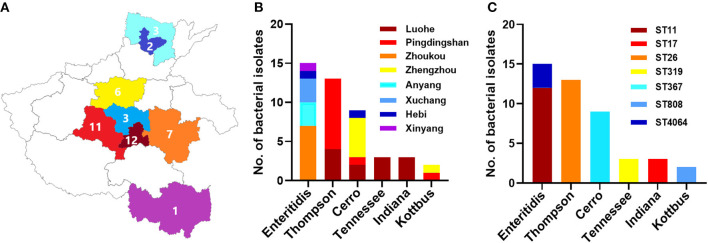
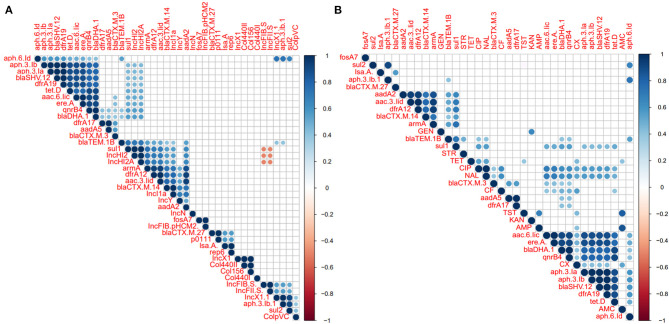
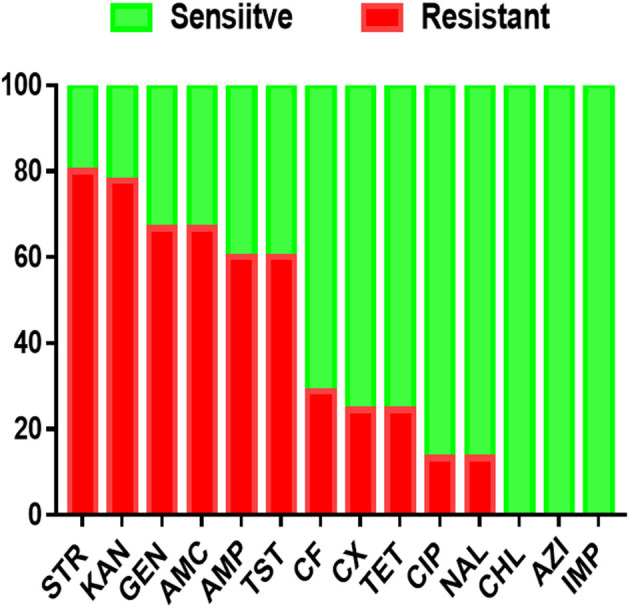
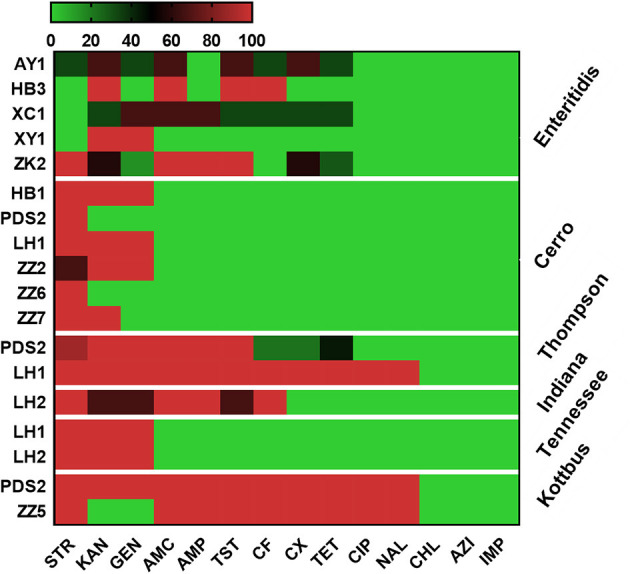
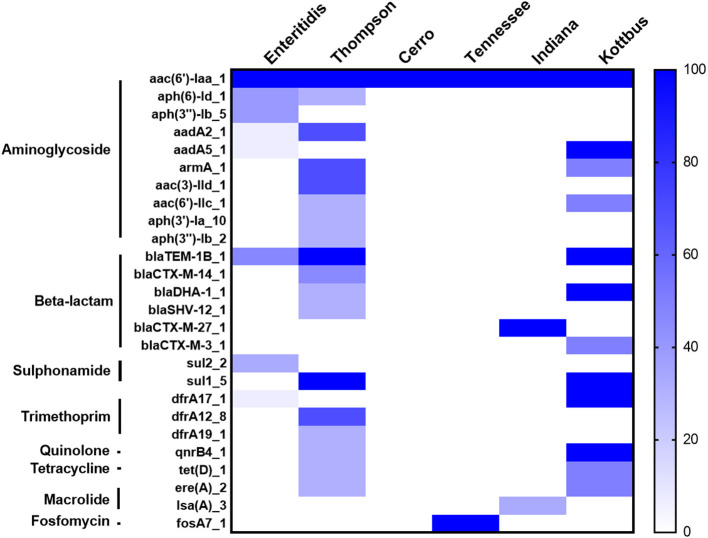
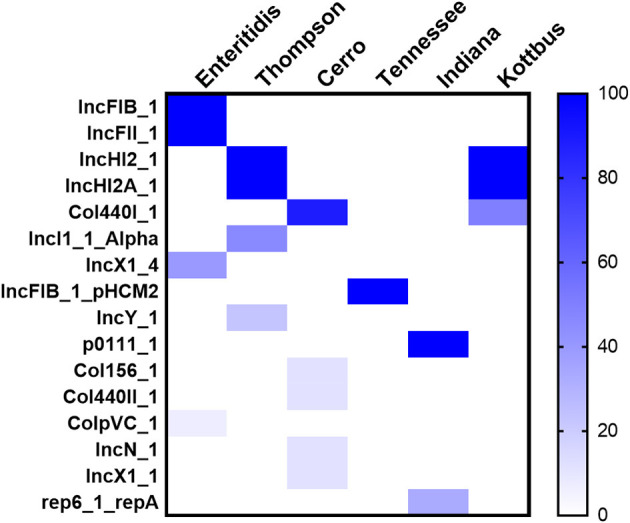
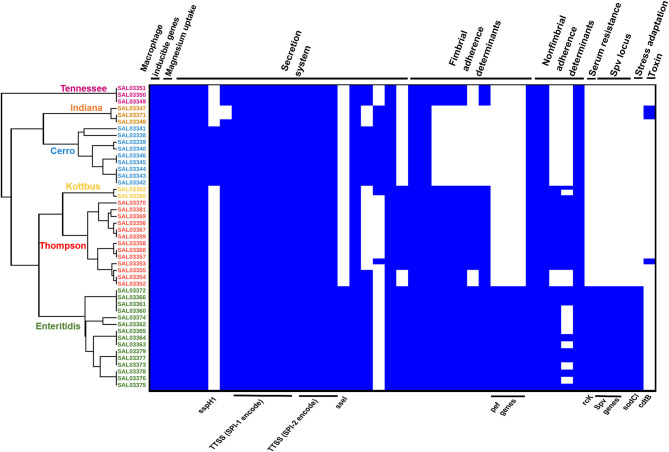
spp. is recognized as an important zoonotic pathogen. The emergence of antimicrobial resistance in poses a great public health concern worldwide. While the knowledge on the incidence and the characterization of different serovars causing chick embryo death remains obscure in China. In this study, we obtained 45 isolates from 2,139 dead chick embryo samples collected from 28 breeding chicken hatcheries in Henan province. The antimicrobial susceptibility assay was performed by the broth microdilution method and the results showed that 31/45 (68.8%) isolates were multidrug-resistant (≥3 antimicrobial classes). Besides the highest resistance rate was observed in the aminoglycoside class, all the isolates were susceptible to chloramphenicol, azithromycin, and imipenem. Furthermore, genomic characterization revealed that . Enteritidis (33.33%; 15/45) was a frequent serovar that harbored a higher number of virulence factors compared to other serovars. Importantly, genes encoding β-lactamases were identified in three serovars (Thompson, Enteritidis, and Kottbus), whereas plasmid-mediated quinolone resistance genes () were detected in certain isolates of . Thompson and the two . Kottbus isolates. All the examined isolates harbored the typical virulence factors from pathogenicity islands 1 and 2 (SPI-1 and SPI-2). Additionally, a correlation analysis between the antimicrobial resistance genes, phenotype, and plasmids was conducted among isolates. It showed strong positive correlations ( < 0.6) between the different antimicrobial-resistant genes belonging to certain antimicrobial classes. Besides, IncF plasmid showed a strong negative correlation ( > -0.6) with IncHI2 and IncHI2A plasmids. Together, our study demonstrated antimicrobial-resistant circulating in breeding chicken hatcheries in Henan province, highlighting the advanced approach, by using genomic characterization and statistical analysis, in conducting the routine monitoring of the emerging antimicrobial-resistant pathogens. Our findings also proposed that the day-old breeder chicks trading could be one of the potential pathways for the dissemination of multidrug-resistant serovars.
某菌被认为是一种重要的人畜共患病原体。该菌中抗菌药物耐药性的出现引起了全球范围内极大的公共卫生关注。然而,在中国,关于导致鸡胚死亡的不同血清型的发病率和特征的了解仍然很少。在本研究中,我们从河南省28个种鸡孵化场收集的2139份死亡鸡胚样本中获得了45株某菌分离株。采用肉汤微量稀释法进行药敏试验,结果显示31/45(68.8%)的分离株对多种药物耐药(≥3类抗菌药物)。除氨基糖苷类耐药率最高外,所有分离株对氯霉素、阿奇霉素和亚胺培南敏感。此外,基因组特征分析表明,肠炎某菌(33.33%;15/45)是常见血清型,与其他血清型相比,其携带的毒力因子数量更多。重要的是,在三个血清型(汤普森、肠炎和科特布斯)中鉴定出了编码β-内酰胺酶的基因,而在汤普森某菌的某些分离株以及两株科特布斯某菌中检测到了质粒介导的喹诺酮耐药基因。所有检测的分离株都含有来自致病岛1和2(SPI-1和SPI-2)的典型毒力因子。此外,对某菌分离株进行了抗菌耐药基因、表型和质粒之间的相关性分析。结果显示,属于某些抗菌药物类别的不同抗菌耐药基因之间存在强正相关(<0.6)。此外,IncF质粒与IncHI2和IncHI2A质粒呈强负相关(>-0.6)。总之,我们的研究证明了某菌在河南省种鸡孵化场中存在抗菌药物耐药性,突出了利用基因组特征分析和统计分析对新出现的抗菌药物耐药病原体进行常规监测的先进方法。我们的研究结果还表明,一日龄种鸡交易可能是多重耐药某菌血清型传播的潜在途径之一。