Spinal Cord Injury Center of Western Denmark, Regional Hospital Viborg, Viborg, Denmark.
Department of Clinical Medicine, Aarhus University, Aarhus, Denmark.
Spinal Cord. 2022 Feb;60(2):135-141. doi: 10.1038/s41393-021-00703-8. Epub 2021 Sep 9.
Randomized sham-controlled clinical trial.
The objective of this study is to investigate the effects of repetitive transcranial magnetic stimulation (rTMS) compared to sham stimulation, on the development of lower limb muscle strength and gait function during rehabilitation of spinal cord injury (SCI).
SCI rehabilitation hospital in Viborg, Denmark.
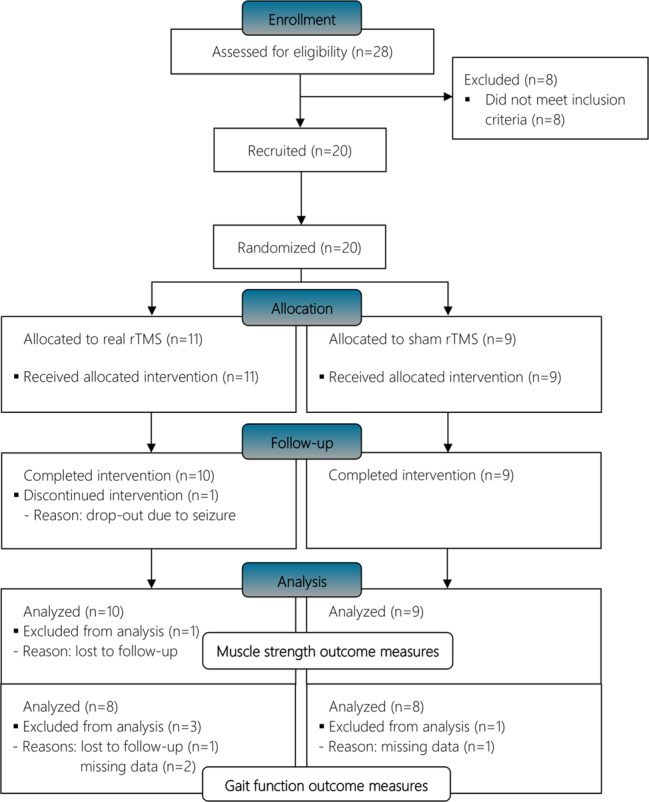
Twenty individuals with SCI were randomized to receive rTMS (REAL, n = 11) or sham stimulation (SHAM, n = 9) and usual care for 4 weeks. rTMS (20 Hz, 1800 pulses per session) or sham stimulation was delivered over leg M1 Monday-Friday before lower limb resistance training or physical therapy. Lower limb maximal muscle strength (MVC) and gait function were assessed pre- and post intervention. Lower extremity motor score (LEMS) was assessed at admission and at discharge.
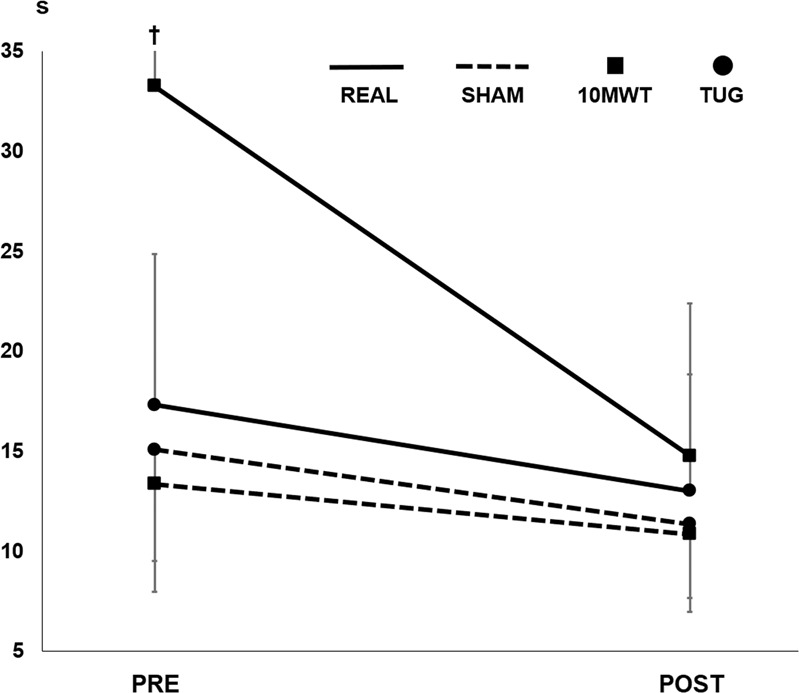
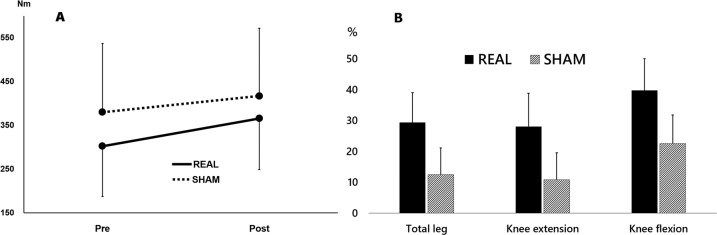
One individual dropped out due to seizure. More prominent increases in total leg (effect size (ES): 0.40), knee flexor (ES: 0.29), and knee extensor MVC (ES: 0.34) were observed in REAL compared to SHAM; however, repeated-measures ANOVA revealed no clear main effects for any outcome measure (treatment p > 0.15, treatment × time p > 0.76, time p > 0.23). LEMS improved significantly for REAL at discharge, but not for SHAM, and REAL demonstrated greater improvement in LEMS than SHAM (p < 0.02). Similar improvements in gait performance were observed between groups.
High-frequency rTMS may increase long-term training-induced recovery of lower limb muscle strength following SCI. The effect on short-term recovery is unclear. Four weeks of rTMS, when delivered in conjunction with resistance training, has no effect on recovery of gait function, indicating a task-specific training effect.
随机假刺激对照临床试验。
本研究旨在探讨重复经颅磁刺激(rTMS)与假刺激相比,对脊髓损伤(SCI)康复期间下肢肌肉力量和步态功能发展的影响。
丹麦维堡的 SCI 康复医院。
20 名 SCI 患者被随机分为 rTMS(REAL,n=11)或假刺激(SHAM,n=9)组,并接受 4 周的常规护理。rTMS(20Hz,每次 1800 个脉冲)或假刺激在周一至周五下肢阻力训练或物理治疗前作用于腿部 M1。在干预前后评估下肢最大肌肉力量(MVC)和步态功能。入院时和出院时评估下肢运动评分(LEMS)。
由于癫痫发作,有 1 名患者退出。与 SHAM 相比,REAL 观察到总腿(效应量(ES):0.40)、膝关节屈肌(ES:0.29)和膝关节伸肌 MVC(ES:0.34)的增加更为显著;然而,重复测量方差分析显示,任何结果测量均无明显的主要治疗效应(治疗 p>0.15,治疗×时间 p>0.76,时间 p>0.23)。REAL 组在出院时 LEMS 显著改善,但 SHAM 组无明显改善,REAL 组 LEMS 的改善明显优于 SHAM 组(p<0.02)。两组的步态表现均有类似的改善。
高频 rTMS 可能增加 SCI 后下肢肌肉力量的长期训练诱导恢复。短期恢复的效果尚不清楚。4 周的 rTMS 联合阻力训练对步态功能的恢复没有影响,表明存在特定任务的训练效果。