Rodríguez Susana, Valle Antonio, Piñeiro Isabel, Rodríguez-Llorente Carolina, Guerrero Estefanía, Martins Ludmila
Department of Psychology, Universidade da Coruña, 15071 A Coruña, Spain.
Eur J Investig Health Psychol Educ. 2020 Dec 3;10(4):1095-1105. doi: 10.3390/ejihpe10040077.
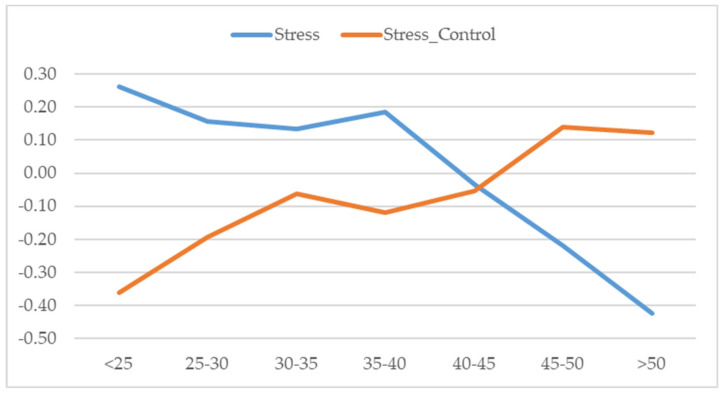
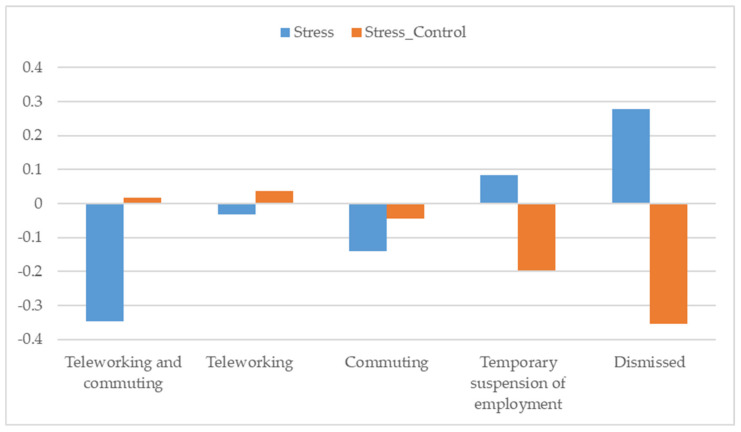
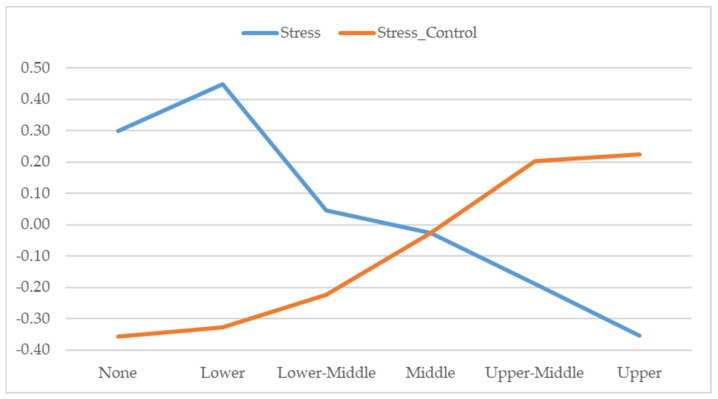
This study responds to the need to explore the individual characteristics that may help us to understand the levels of stress involved in the significant COVID-19-related restrictions to people's daily lives. In order to understand levels of stress and stress control during the COVID-19 confinement, 1269 people from Spain (17.5% men) aged between 18 and 70 completed the Perceived Stress Scale (PSS-14). The results indicated that people aged under 40, and especially those under 25, women, and those on low incomes reported higher rates of confinement stress. The nature of where people live, and their working situation during confinement also contributed to people's stress response, although with lower levels of impact. In this context, our study suggests that the levels of stress in those who combine remote working with in situ working were lower than those who had other working conditions. Our study contributes significant information to understanding the effects of confinement, and its results may be used to inform intervention tools and programs.
本研究回应了探索个体特征的需求,这些特征可能有助于我们理解与新冠疫情相关的对人们日常生活的重大限制所涉及的压力水平。为了了解新冠疫情居家隔离期间的压力水平和压力控制情况,来自西班牙的1269人(17.5%为男性),年龄在18至70岁之间,完成了感知压力量表(PSS-14)。结果表明,40岁以下的人,尤其是25岁以下的人、女性以及低收入者报告的隔离压力率更高。人们居住的地点性质以及他们在隔离期间的工作状况也对人们的压力反应有影响,尽管影响程度较低。在这种情况下,我们的研究表明,将远程工作与现场工作相结合的人的压力水平低于有其他工作条件的人。我们的研究为理解隔离的影响提供了重要信息,其结果可用于为干预工具和项目提供参考。