Department of Pharmaceutics, Wuya College of Innovation, Shenyang Pharmaceutical University, Shenyang, 110016, People's Republic of China.
J Nanobiotechnology. 2021 Sep 20;19(1):282. doi: 10.1186/s12951-021-01037-6.
Photothermal therapy (PTT) has been extensively investigated as a tumor-localizing therapeutic modality for neoplastic disorders. However, the hyperthermia effect of PTT is greatly restricted by the thermoresistance of tumor cells. Particularly, the compensatory expression of heat shock protein 90 (HSP90) has been found to significantly accelerate the thermal tolerance of tumor cells. Thus, a combination of HSP90 inhibitor and photothermal photosensitizer is expected to significantly enhance antitumor efficacy of PTT through hyperthermia sensitization. However, it remains challenging to precisely co-deliver two or more drugs into tumors.
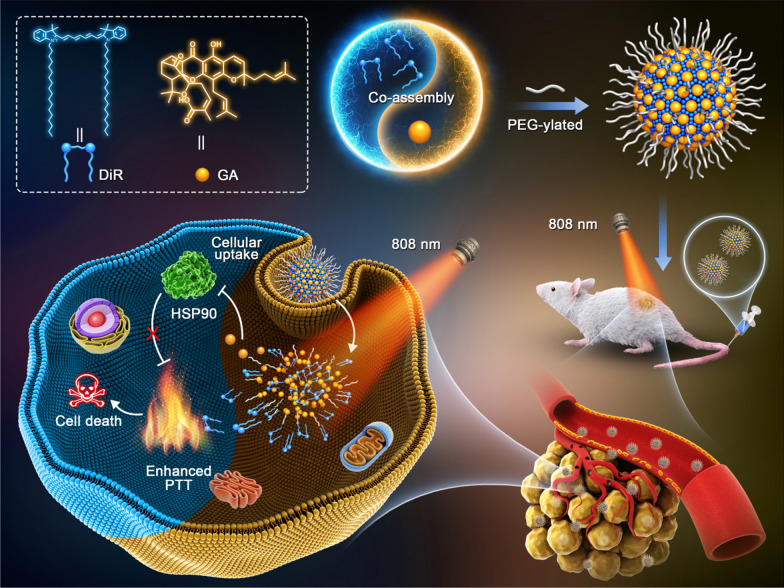
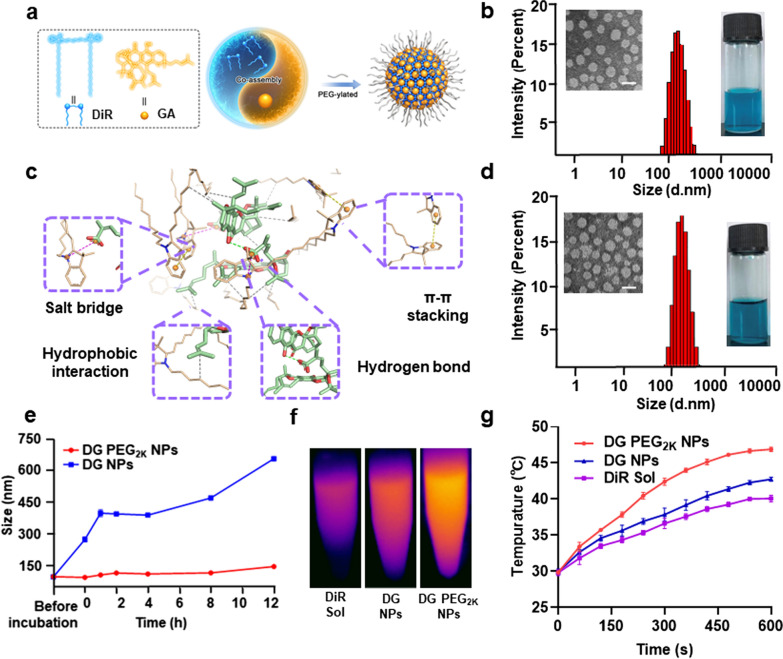
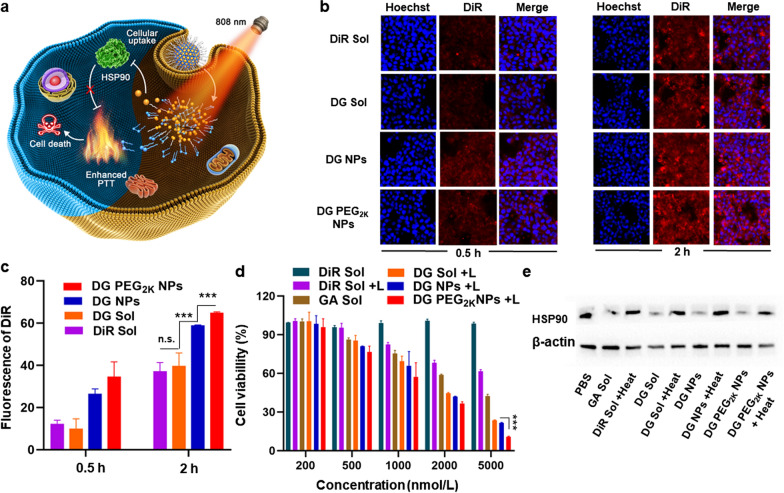
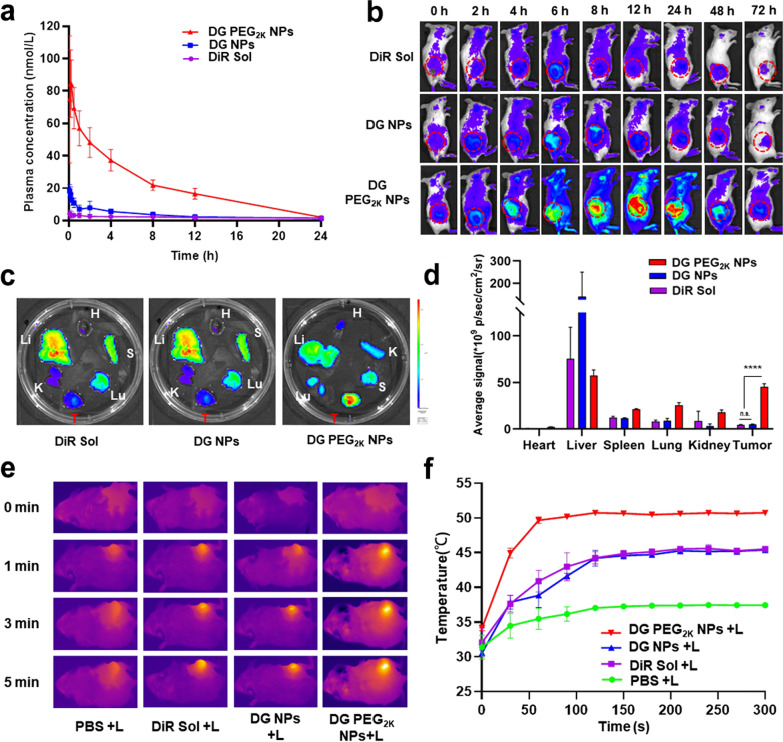
A carrier-free co-delivery nanoassembly of gambogic acid (GA, a HSP90 inhibitor) and DiR is ingeniously fabricated based on a facile and precise molecular co-assembly technique. The assembly mechanisms, photothermal conversion efficiency, laser-triggered drug release, cellular uptake, synergistic cytotoxicity of the nanoassembly are investigated in vitro. Furthermore, the pharmacokinetics, biodistribution and self-enhanced PTT efficacy were explored in vivo.
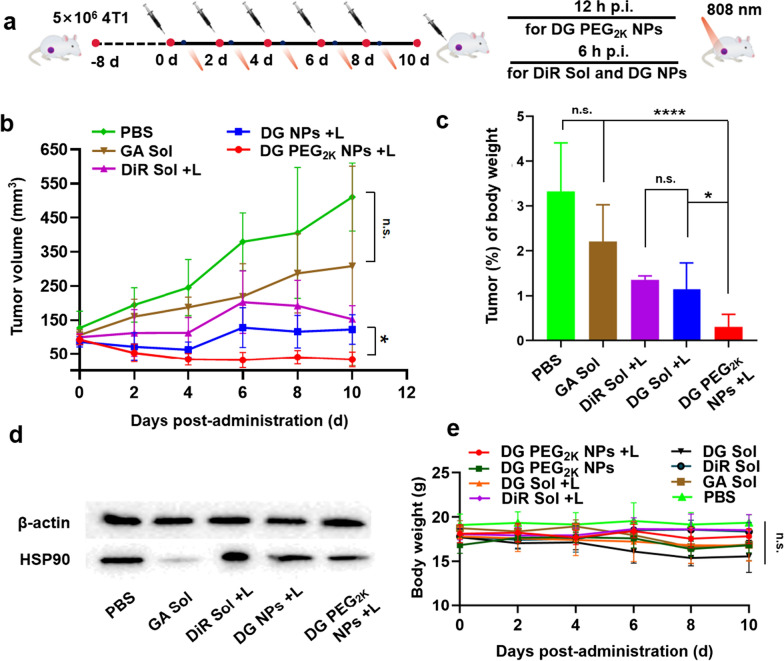
The nanoassembly presents multiple advantages throughout the whole drug delivery process, including carrier-free fabrication with good reproducibility, high drug co-loading efficiency with convenient dose adjustment, synchronous co-delivery of DiR and GA with long systemic circulation, as well as self-tracing tumor accumulation with efficient photothermal conversion. As expected, HSP90 inhibition-augmented PTT is observed in a 4T1 tumor BALB/c mice xenograft model.
Our study provides a novel and facile dual-drug co-assembly strategy for self-sensitized cancer therapy.
光热疗法(PTT)已被广泛研究作为肿瘤定位治疗方法用于治疗肿瘤疾病。然而,PTT 的热疗效果受到肿瘤细胞耐热性的极大限制。特别是,热休克蛋白 90(HSP90)的代偿性表达已被发现显著加速肿瘤细胞的耐热性。因此,通过热疗增敏,HSP90 抑制剂和光热光敏剂的联合应用有望显著提高 PTT 的抗肿瘤疗效。然而,精确地将两种或更多药物递送到肿瘤中仍然具有挑战性。
基于简便而精确的分子共组装技术,巧妙地构建了藤黄酸(GA,一种 HSP90 抑制剂)和 DiR 的无载体共递药纳米组装体。研究了纳米组装体的组装机制、光热转换效率、激光触发药物释放、细胞摄取以及协同细胞毒性。此外,还在体内研究了纳米组装体的药代动力学、生物分布和自增强 PTT 疗效。
纳米组装体在整个药物递送过程中具有多种优势,包括具有良好重现性的无载体制造、高药物共载效率和方便的剂量调整、DiR 和 GA 的同步共递药和长循环系统、以及高效光热转换的自追踪肿瘤积累。正如预期的那样,在 4T1 肿瘤 BALB/c 小鼠异种移植模型中观察到 HSP90 抑制增强的 PTT。
我们的研究为自敏化癌症治疗提供了一种新颖而简便的双药物共组装策略。