Molecular Biomedicine, Charles Perkins Centre, School of Medical Sciences, The University of Sydney, Sydney, NSW 2006, Australia.
Department of Anatomy, College of Medicine, King AbdulAziz University, Rabigh 21589, Saudi Arabia.
Nutrients. 2021 Sep 18;13(9):3256. doi: 10.3390/nu13093256.
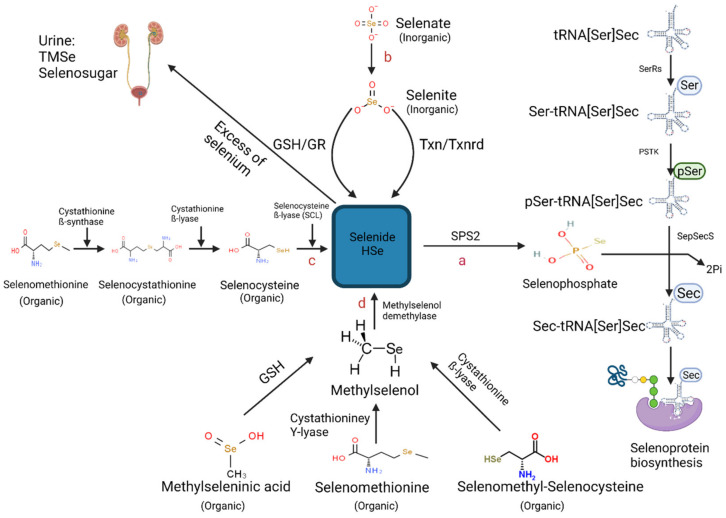
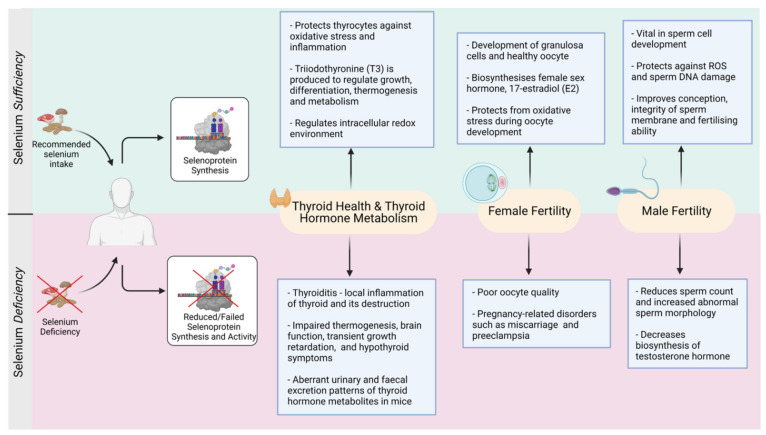
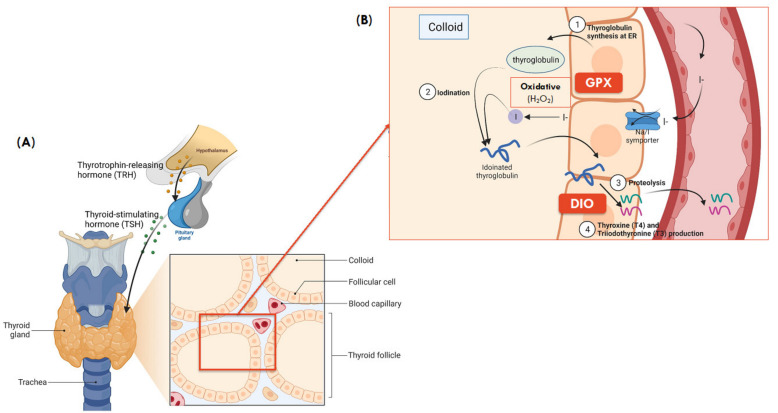
Selenium (Se) is a micronutrient essential for life. Dietary intake of Se within the physiological range is critical for human health and reproductive functions. Selenium levels outside the recommended range have been implicated in infertility and variety of other human diseases. However, presently it is not clear how different dietary Se sources are processed in our bodies, and in which form or how much dietary Se is optimum to maintain metabolic homeostasis and boost reproductive health. This uncertainty leads to imprecision in published dietary guidelines and advice for human daily intake of Se and in some cases generating controversies and even adverse outcomes including mortality. The chief aim for this review is to describe the sources of organic and inorganic Se, the metabolic pathways of selenoproteins synthesis, and the critical role of selenprotenis in the thyroid gland homeostasis and reproductive/fertility functions. Controversies on the use of Se in clinical practice and future directions to address these challenges are also described and discussed herein.
硒(Se)是生命必需的微量元素。在生理范围内摄入硒对人类健康和生殖功能至关重要。硒含量超出推荐范围与不孕和多种其他人类疾病有关。然而,目前尚不清楚我们的身体如何处理不同的膳食硒源,以及以何种形式或多少膳食硒是最佳的,以维持代谢平衡并促进生殖健康。这种不确定性导致发表的膳食指南和人类每日硒摄入量的建议不精确,在某些情况下会产生争议,甚至产生不良后果,包括死亡率。本综述的主要目的是描述有机硒和无机硒的来源、硒蛋白合成的代谢途径,以及硒蛋白在甲状腺平衡和生殖/生育功能中的关键作用。本文还描述并讨论了在临床实践中使用硒的争议以及解决这些挑战的未来方向。