Botany and Microbiology Department, College of Science King Saud University, P. O. BOX 2455, Riyadh, 11451, Saudi Arabia.
Sci Rep. 2021 Sep 27;11(1):19136. doi: 10.1038/s41598-021-98607-3.
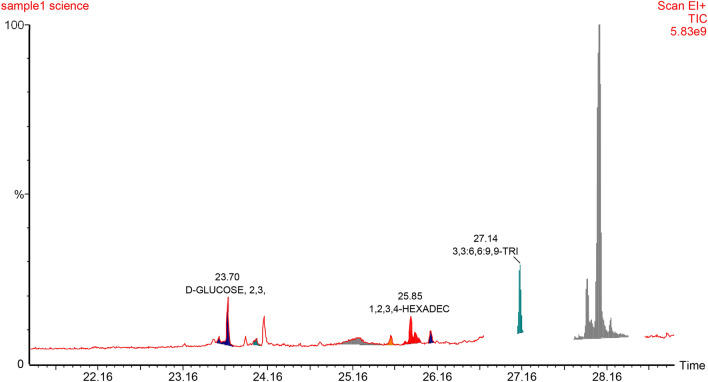
Biosynthesized nanoparticles have played vital role recently, as suggested to be alternative to physical and chemical methods. In this study, biosynthesis of zinc oxide nanoparticles (ZnO NPs) were carried out using leaf extracts of Phoenix dactylifera L. and Zinc nitrate. The effect of ZnO nanoparticles on biomass and biochemical parameters was investigated. Biosynthesized ZnO nanostructure was characterized using X-ray diffraction (XRD), transmission electron microscopy (TEM), UV-visible spectrophotometer and Fourier transform infrared spectroscopy (FTIR). Which resulted in spherical shape with size ranging between 16 to 35 nm of Biosynthesized ZnO nanoparticles and UV absorption beak at 370.5 nm with clear peaks of functional groups. The impact of different concentrations (0.0 mg/L, 80 mg/L and 160 mg/L) of biosynthesized ZnO nanoparticles on biomass and bioactive compounds production of Juniperus procera in vitro was investigated. The results showed that, biosynthesized ZnO NPs (80 mg/L and 160 mg/L) concentrations were boosted the growth of J. Procera with significantly compared to non-treated plants in vitro. The highest concentration (160 mg/L) of ZnO NPs was enhanced the growth of plant at beginning period, one month later shoots became yellow and callus turned to be brownish. Moreover, the influence of ZnO NPs on phytochemical compounds in callus of Juniperus procera was examined using GC-MS analysis. The differences among treatments were recoded. Overall, zinc oxide nanoparticles substantially improved the growth of shoots and callus with increasing of biochemical parameters such as chlorophyll a, total phenolic and flavonoids contents, besides the total protein and, SOD, CAT and APX activity. ZnO NPs might be induced some phytochemical compounds as well as inhibit.
生物合成纳米粒子最近发挥了重要作用,被认为是物理和化学方法的替代方法。在这项研究中,使用 Phoenix dactylifera L. 和硝酸锌的叶提取物进行了氧化锌纳米粒子 (ZnO NPs) 的生物合成。研究了 ZnO 纳米粒子对生物量和生化参数的影响。使用 X 射线衍射 (XRD)、透射电子显微镜 (TEM)、紫外-可见分光光度计和傅里叶变换红外光谱 (FTIR) 对生物合成 ZnO 纳米结构进行了表征。结果得到了球形 ZnO 纳米粒子,尺寸在 16 到 35nm 之间,生物合成 ZnO 纳米粒子的紫外吸收峰在 370.5nm,具有清晰的官能团峰。研究了不同浓度(0.0mg/L、80mg/L 和 160mg/L)的生物合成 ZnO 纳米粒子对 Juniperus procera 体外生物量和生物活性化合物生产的影响。结果表明,与未处理的植物相比,生物合成 ZnO NPs(80mg/L 和 160mg/L)浓度显著促进了 J.Procera 的生长。最高浓度(160mg/L)的 ZnO NPs 在初期促进了植物的生长,一个月后,新芽变黄,愈伤组织变成棕色。此外,还使用 GC-MS 分析研究了 ZnO NPs 对 Juniperus procera 愈伤组织中植物化学化合物的影响。记录了处理之间的差异。总体而言,氧化锌纳米粒子显著改善了芽和愈伤组织的生长,并增加了生化参数,如叶绿素 a、总酚和类黄酮含量,以及总蛋白、SOD、CAT 和 APX 活性。ZnO NPs 可能诱导了一些植物化学化合物,同时也抑制了它们。