Chen Tiantian, Li Yongpeng, Xie Lihui, Hao Xiaolong, Liu Hang, Qin Wei, Wang Chen, Yan Xin, Wu-Zhang Kuanyu, Yao Xinghao, Peng Bowen, Zhang Yaojie, Fu Xueqing, Li Ling, Tang Kexuan
Joint International Research Laboratory of Metabolic and Developmental Sciences, Frontiers Science Center for Transformative Molecules, Plant Biotechnology Research Center, Fudan-SJTU-Nottingham Plant Biotechnology R&D Center, School of Agriculture and Biology, Shanghai Jiao Tong University, Shanghai, 200240, China.
Laboratory of Medicinal Plant Biotechnology, College of Pharmacy, Zhejiang Chinese Medical University, Hangzhou, 310053, China.
Hortic Res. 2021 Oct 1;8(1):217. doi: 10.1038/s41438-021-00652-6.
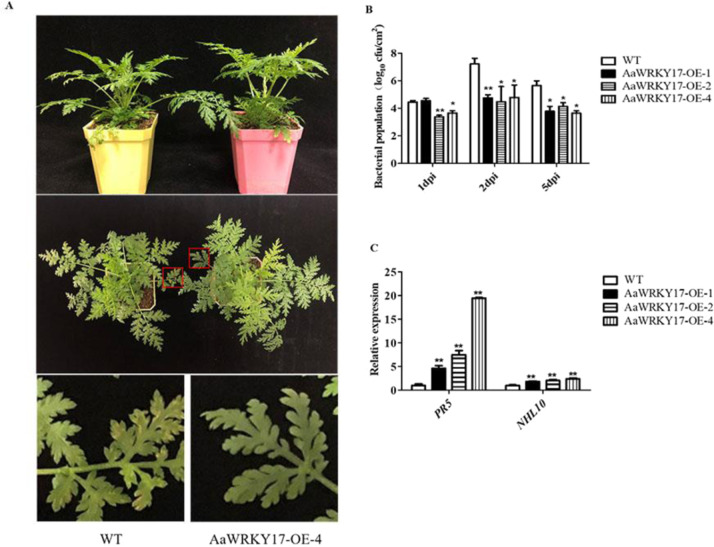
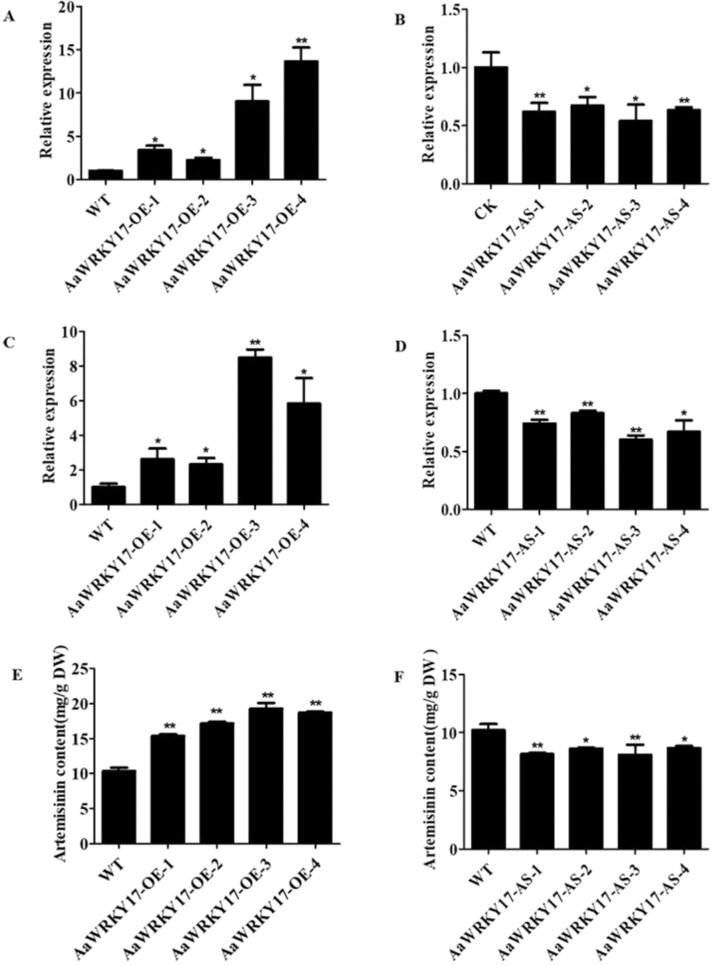
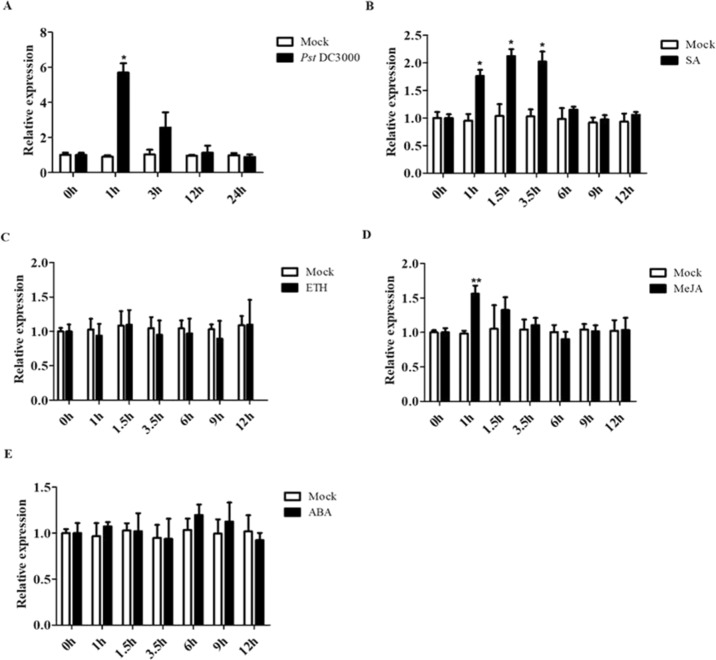
Artemisia annua, a traditional Chinese medicinal plant, remains the only plant source for artemisinin production, yet few genes have been identified to be involved in both the response to biotic stresses, such as pathogens, and artemisinin biosynthesis. Here, we isolated and identified the WRKY transcription factor (TF) AaWRKY17, which could significantly increase the artemisinin content and resistance to Pseudomonas syringae in A. annua. Yeast one-hybrid (Y1H), dual-luciferase (dual-LUC), and electrophoretic mobility shift assay (EMSA) results showed that AaWRKY17 directly bound to the W-box motifs in the promoter region of the artemisinin biosynthetic pathway gene amorpha-4,11-diene synthase (ADS) and promoted its expression. Real-time quantitative PCR (RT-qPCR) analysis revealed that the transcript levels of two defense marker genes, Pathogenesis-Related 5 (PR5) and NDR1/HIN1-LIKE 10 (NHL10), were greatly increased in AaWRKY17-overexpressing transgenic A. annua plants. Additionally, overexpression of AaWRKY17 in A. annua resulted in decreased susceptibility to P. syringae. These results indicated that AaWRKY17 acted as a positive regulator in response to P. syringae infection. Together, our findings demonstrated that the novel WRKY transcription factor AaWRKY17 could potentially be used in transgenic breeding to improve the content of artemisinin and pathogen tolerance in A. annua.
青蒿是一种传统的中药材,仍然是青蒿素生产的唯一植物来源,但很少有基因被确定参与对生物胁迫(如病原体)的反应以及青蒿素的生物合成。在这里,我们分离并鉴定了WRKY转录因子(TF)AaWRKY17,它可以显著提高青蒿中青蒿素的含量和对丁香假单胞菌的抗性。酵母单杂交(Y1H)、双荧光素酶(dual-LUC)和电泳迁移率变动分析(EMSA)结果表明,AaWRKY17直接与青蒿素生物合成途径基因紫穗槐-4,11-二烯合酶(ADS)启动子区域的W-box基序结合并促进其表达。实时定量PCR(RT-qPCR)分析表明,在过表达AaWRKY17的转基因青蒿植株中,两个防御标记基因病程相关蛋白5(PR5)和NDR1/HIN1样蛋白10(NHL10)的转录水平显著增加。此外,在青蒿中过表达AaWRKY17导致对丁香假单胞菌的易感性降低。这些结果表明,AaWRKY17在响应丁香假单胞菌感染时起正调控作用。总之,我们的研究结果表明,新型WRKY转录因子AaWRKY17可能可用于转基因育种,以提高青蒿中青蒿素的含量和对病原体的耐受性。