University of Guelph, Guelph, Ontario, Canada.
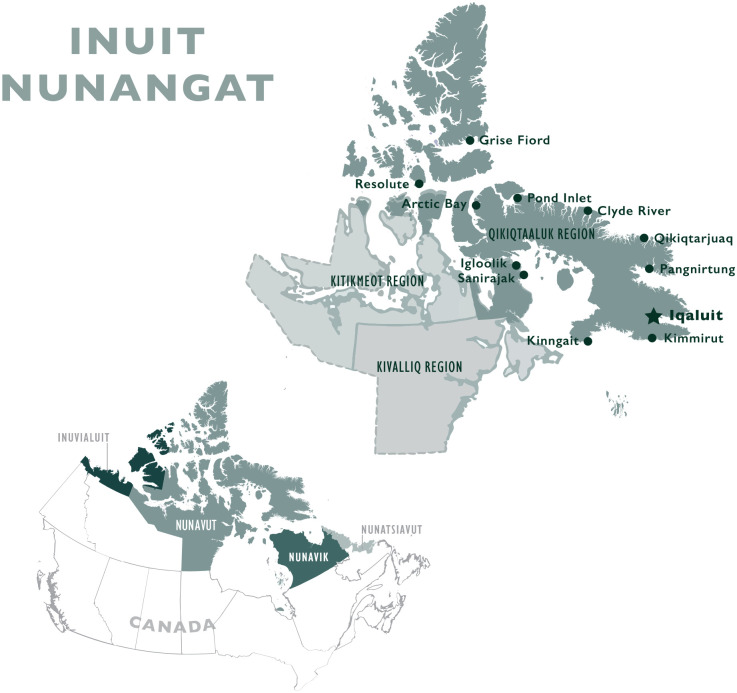
Iqaluit, Nunavut, Canada.
Qual Health Res. 2021 Dec;31(14):2602-2616. doi: 10.1177/10497323211042869. Epub 2021 Oct 4.
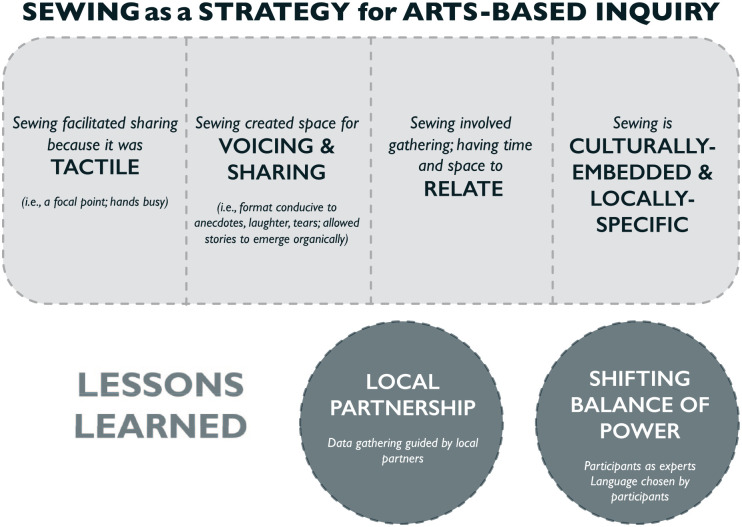
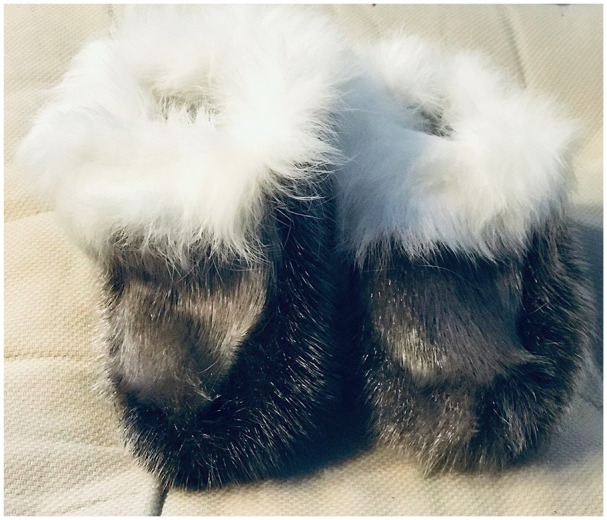
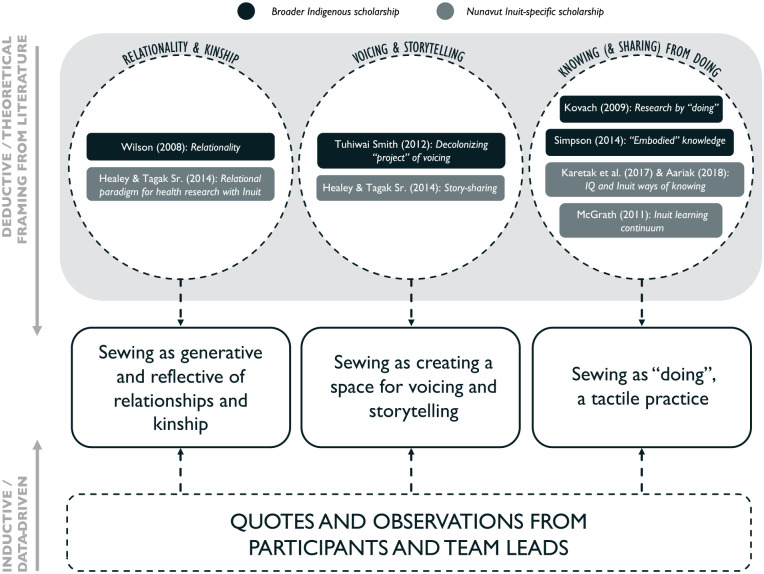
In this article, we present a case study of sewing as a strategy for arts-based inquiry in health research, situated within a broader project that highlighted Nunavut Inuit women's childbirth experiences. Five focus groups were hosted as sewing sessions with pregnant women ( = 19) in Iqaluit, Nunavut (2017-2018). Women's reflections on the sessions, and the significance of sewing to Inuit, were integrated with researchers' critical reflections to examine the value of sewing as a strategy for arts-based inquiry within a focus group method: results related to the flexibility of the sessions; how collective sewing created space for voicing, sharing, and relating; sewing as a tactile and place-specific practice tied to Inuit knowledge and tradition; and lessons learned. Our results underscore the possibilities of arts-based approaches, such as sewing, to enhance data gathering within a focus group method and to contribute to more locally appropriate, place-based methods for Indigenous health research.
在本文中,我们展示了缝纫作为健康研究中基于艺术的探究策略的案例研究,该研究是在一个更广泛的项目中进行的,该项目强调了努纳武特因纽特妇女的分娩经历。2017 年至 2018 年,在努纳武特的伊卡卢伊特,我们以缝纫会的形式接待了五组孕妇(=19 人)。将女性对缝纫会的反思,以及缝纫对因纽特人的重要性,与研究人员的批判性反思相结合,考察了缝纫作为一种基于艺术的探究策略在焦点小组方法中的价值:结果与会议的灵活性有关;集体缝纫如何为发声、分享和联系创造空间;缝纫作为一种与因纽特知识和传统相关的触觉和特定场所的实践;以及经验教训。我们的研究结果强调了艺术方法(如缝纫)的可能性,这些方法可以增强焦点小组方法中的数据收集,并为基于当地情况、适合于本土的原住民健康研究方法做出贡献。